


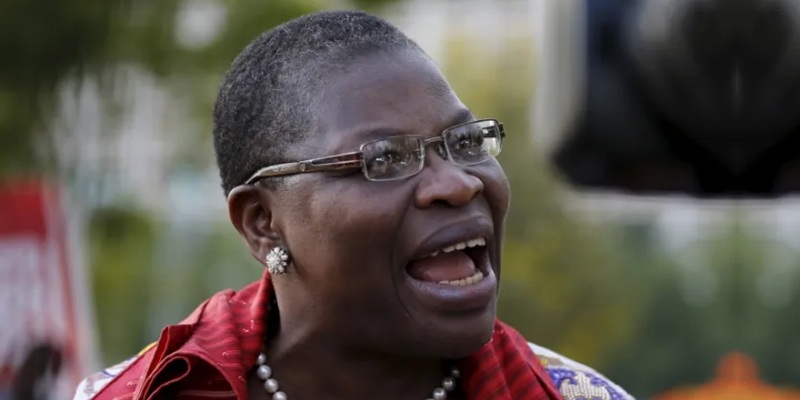

TD ABUJA, FCT — Former Minister of Education, Dr. Oby Ezekwesili, has hit back at supporters of President Bola Ahmed Tinubu over what she described as a deliberate distortion of her recent television interview.
Ezekwesili insisted that she never said the Tinubu administration was “doing wonderfully” on the economy.
Ezekwesili, in a strongly worded statement, said she was “bemused” by what she described as a celebration among officials of the Federal Government, members of the All Progressives Congress (APC) and their allies over a narrative allegedly extracted from her interview with News Central Television.
She specifically accused PM News and the APC spokesperson, Felix Morka, of misrepresenting her remarks.
Morka reportedly made the misrepresentation during an appearance on Channels Television’s Politics Today programme hosted by Seun Okinbaloye.
According to Ezekwesili, Morka was “triumphantly bursting through the screens” while allegedly distorting what she told journalist Kayode Akintemi during the News Central interview.

“I frankly did not realize that so much celebration was going on among the officials of @NigeriaGov @OfficialAPCNg and their allies pushing a narrative that ‘Oby Ezekwesili has agreed that @officialABAT is doing wonderfully on the economy,’” she said.
Ezekwesili said she would release the interview transcript in instalments to ensure that the public had access to her actual words rather than what she described as a manufactured interpretation.
‘Dignity of Life Has Deteriorated’
In the portion of the interview released by Ezekwesili, Akintemi asked her to assess Nigeria’s condition more than three years into President Tinubu’s administration and summarise the state of the nation.
Ezekwesili said the most important indicator should be the “dignity of life”.
She argued that every other measure of national development ultimately depends on people being alive and secure.
She said Nigeria had witnessed a deterioration in that indicator, pointing to killings, mass violence and kidnappings, including the abduction of children.

“What we have seen has been a degradation of that dignity of life quotient,” Ezekwesili said.
She argued that the insecurity crisis between 2023 and 2026 provided sufficient evidence to conclude that the country’s already difficult security situation had become worse.
The former minister also cited Nigeria’s position in global terrorism rankings as an indicator of the deterioration in security.
According to her, Nigeria moved from being ranked around the sixth-most terrorised country to the fourth-most terrorised country in the world.
Economy and Poverty
Ezekwesili also took aim at the country’s economic performance, saying Nigeria had deteriorated when assessed through the cost-of-living burden, particularly for poor and vulnerable citizens.
She claimed that about 145 million Nigerians were now trapped in poverty, compared with approximately 133 million under the previous administration.

However, she acknowledged that the Tinubu administration had introduced more market-oriented principles into economic management and that macroeconomic stability was “gradually becoming a thing.”
But, she argued, macroeconomic stability alone was insufficient to address widespread poverty.
“It is insufficient a thing to address the poverty that you see,” she said.
According to Ezekwesili, the critical question is whether improvements in selected macroeconomic indicators are translating into better living conditions for ordinary Nigerians.
She maintained that the answer, based on the indicators she cited, was negative.
‘I am driven by evidence’
Ezekwesili rejected the suggestion that her assessment was based on partisan politics or personal sentiment.
She said she evaluates governments through evidence and measurable indicators rather than political allegiance.
“I am not one that would score, because I’m driven by evidence not by any other thing,” she said.
Her overall assessment was blunt: Nigeria, in her view, had become worse off during the period under review.
“When we look at the indicators your summary is that we’ve been the worse for it than anything anyone can say,” she concluded.
The release of the transcript comes amid an increasingly heated political battle over the Tinubu administration’s economic record ahead of the 2027 general elections.
Ezekwesili’s decision to publish the interview verbatim appears aimed at countering what she regards as attempts to use selected portions of her remarks to portray her as endorsing the administration’s economic policies.
She has indicated that additional portions of the interview will be released in the coming days.
Transcript of the Interview by Ezekwesili
See full transcript of the released portion of the interview below:
Interviewer:
It’s good to have you back here. So on that note, let’s begin with the state of the nation. More than three years into President Bola Ahmed Tinubu’s administration.
How would you assess the state of the nation? It’s gonna be a long thing because we’re discussing the state of the nation but if you were to summarize the state of the nation today in as few words as possible, where would you say we are?
Dr. Ezekwesili:
I think you would basically take the most important indicator that tells you where society is headed, and that is what’s the dignity or the lack of it of life? What’s the state of the dignity of life?
Every other thing hangs on people being alive.
And when people are not alive, then you can’t even talk about, you wouldn’t care about education or health or the economy.
You need people to be alive.
And what we have seen has been a degradation of that dignity of life quotient.
Because when you look at the kind of serial abuse of life whether in terms of the killings, mass killings that have happened in the country between 2023 and 2026 or the amount of kidnaps especially of children, you would see that you have sufficient data on the basis of which to say that the already bad situation got worse over this period of 2023 to date.
You take a typical indicator that is a catch‑all for what I’m saying about the state of insecurity that has declined the quotient of dignity of life.
It would be the Global Terrorism Ranking. So Nigeria was at around 6th sixth most terrorised country.
By the last ranking it had become the 4th fourth most terrorised country. Come on. In the world. That’s such an indicator that tells you where things are.
And so when we then look at all the other aspects that have to do with quality of institutions, Nigeria degenerated.
When you look at the state of the economy especially in terms of the cost of living index, especially for the poor, Nigeria deteriorated.
When you look at what has happened with poverty, it’s about 145 million Nigerians now trapped in poverty, from a number that was about 133 million as of the time that the previous administration which is this government did tell us that they continue, that it is a continuation.
Even if they didn’t tell us we do know that this particular, the actors in this administration were praising the previous administration and lauding the policies of that administration so, and it’s the same party.
So it’s a knock‑on effect of basically t he same kind of people thinking of economic management maybe slightly differently because what you can say about this particular one is that some market principles have entered into the equation.
But the thing to ask is, while you can say macroeconomic stability is gradually becoming a thing, it is insufficient a thing to address the poverty that you see.
And when you start looking at this kind of massive state of poverty, it means that quality of life has degraded especially for the ones who are poor and vulnerable.
So in all, I am not one that would score, because I’m driven by evidence not by any other thing.
So when we look at the indicators your summary is that we’ve been the worse for it than anything anyone can say…/1