



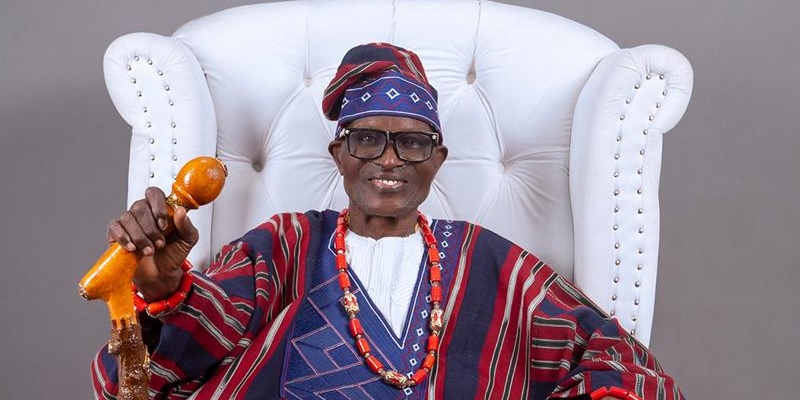

TD Veteran Nigerian actor Kola Olaiya has criticised fellow actor Pete Edochie over the debate surrounding seniority in the country’s entertainment industry.
He argues that earlier theatre practitioners deserve greater recognition for their contributions.
Kola Olaiya made the remarks during an interview with Oyinmomo TV, where he questioned the tendency to discuss acting history without adequately acknowledging performers who established themselves decades before modern Nollywood emerged.
His comments have renewed conversations about professional seniority, the origins of Nigerian acting and the contributions of veteran practitioners whose careers developed through traditional theatre and early filmmaking.
The disagreement has also raised questions about how the industry measures seniority, particularly when actors have different professional backgrounds and entered the entertainment business through different platforms.
Kola Olaiya Questions Edochie’s Position
During the interview, Kola Olaiya expressed dissatisfaction with Edochie’s position on seniority.

He argues that Nigeria’s acting history should not be viewed solely through the achievements of actors associated with contemporary Nollywood.
The veteran Yoruba actor maintained that several theatre practitioners had already established themselves before Edochie began his acting career.
He referenced their contributions to the development of Nigerian entertainment and argued that their achievements should be considered in discussions about who qualifies as a senior practitioner.
Olaiya also questioned whether prominence in one section of the entertainment industry should determine an actor’s position in the broader history of Nigerian acting.
His remarks have added another dimension to the debate, bringing regional theatre traditions and the contributions of earlier generations into the conversation.
However, Olaiya’s statements represent his assessment of the disagreement and should not be interpreted as an established judgment about Edochie’s character or professional standing.

Hubert Ogunde’s Legacy Takes Centre Stage
One of the prominent figures Olaiya referenced was the late Hubert Ogunde, widely regarded as a pioneer of modern Yoruba theatre.
Ogunde began his professional theatrical work in 1944 after leaving the police force.
His productions combined storytelling, music, cultural expression and social commentary, helping establish a theatrical tradition that influenced subsequent generations.
Through his performances, Ogunde brought Yoruba stories and cultural experiences to wider audiences.
His influence extended beyond the stage into filmmaking, making him an important figure in Nigeria’s entertainment history.
Kola Olaiya argued that Ogunde’s contributions deserve recognition whenever the history and seniority of Nigerian actors are discussed.

He also referenced other influential practitioners, including Oyin Adejobi, Duro Ladipo and Kola Ogunmola.
These performers helped develop Yoruba-language theatre through dramatic productions inspired by history, mythology, traditional beliefs and contemporary social experiences.
Their work contributed to the development of Nigerian performance traditions long before Nollywood became an internationally recognised film industry.
Olaiya’s argument is that recognising these pioneers would provide a more complete understanding of the country’s acting history.

Pete Edochie’s Acting Journey
Edochie has previously discussed his early acting experiences during an appearance on Curiosity Made Me Ask, an online programme hosted by Nigerian comedian Isbae U.
During the interview, the veteran actor said he began acting in 1962, when he was 15 years old. He referenced his participation in a production of William Shakespeare’s The Merchant of Venice.
Edochie subsequently built a distinguished career in television and film.
He became widely recognised for portraying Okonkwo in the 1985 television adaptation of Chinua Achebe’s celebrated novel, Things Fall Apart.
The production introduced his performances to a broader audience and helped establish his reputation as one of Nigeria’s most recognisable actors.
His subsequent roles in Nollywood strengthened his popularity, particularly through portrayals of traditional leaders, fathers and authoritative figures.
Nevertheless, the current disagreement highlights the distinction between beginning an acting career, gaining national recognition and becoming established within a particular section of the entertainment industry.
These milestones do not always occur at the same time, making comparisons between performers from different generations complicated.
Lere Paimo’s Comments Add Historical Context
Yoruba theatre veteran Lere Paimo has also contributed to discussions about seniority in Nigerian acting.
In an interview with filmmaker Kunle Afod in September 2026, Paimo said he began acting in 1958.
He also discussed his relationship with Hubert Ogunde, whom he regarded as a senior figure in the theatrical profession.
Paimo’s account has drawn attention to the long history of Nigerian acting before the emergence of modern Nollywood.
His experience illustrates how performers developed their careers through stage productions and traditional theatre before the contemporary film industry became a major commercial platform.
The contributions of practitioners such as Paimo, Ogunde, Adejobi, Ladipo and Ogunmola remain important to understanding the evolution of Nigerian entertainment.
Their work helped develop performance styles, nurture acting talent and bring local stories to audiences across generations.
The renewed debate has therefore created an opportunity to revisit the history of Nigerian theatre and acknowledge performers whose influence may not always receive the same attention as contemporary film stars.
What Determines Seniority in Nollywood?
The disagreement between Kola Olaiya and Peter Edochie has raised a fundamental question: how should seniority be determined in Nigeria’s entertainment industry?
Some may consider the year an actor first performed on stage. Others may focus on the beginning of a professional career, years of experience, major productions or contributions to the industry’s development.
Each approach presents a different perspective.
An actor may have started performing on stage before another practitioner but entered television or film later.
Similarly, someone may have gained national recognition after colleagues who had already spent decades working in theatre.
Nigeria’s entertainment industry developed through several traditions, including Yoruba travelling theatre, Igbo-language productions, English-language television dramas and early cinema.
These different pathways make it difficult to establish a single measure of seniority that adequately represents every performer.
The discussion also demonstrates why the industry’s history should not be limited to the period when Nollywood became commercially prominent in the early 1990s.
Recognising the different stages of development would allow audiences to appreciate both contemporary stars and the pioneers whose work helped create opportunities for them.
Kola Olaiya Makes Comments that Call for Greater Recognition of Theatre Pioneers
Olaiya’s comments have renewed calls for greater recognition of the performers who helped establish Nigerian theatre and filmmaking.
Preserving their contributions through interviews, historical records, documentaries and archived productions could help younger entertainers understand the foundations of the industry.
Industry organisations and cultural institutions could also contribute by documenting the careers of veteran performers and making their stories more accessible.
Such efforts would help preserve Nigeria’s entertainment heritage while providing a clearer account of how its different regional traditions influenced contemporary productions.
At the same time, acknowledging earlier pioneers does not diminish the achievements of modern actors.
Edochie’s long career and cultural influence remain significant parts of Nigerian film history, just as Ogunde and other theatre practitioners occupy important places in the development of Nigerian performance.
A balanced understanding of the industry requires recognition of these contributions without turning historical differences into unnecessary personal rivalries.
Debate Continues Over Nigerian Acting History
As of October 17, 2026, Olaiya’s remarks have brought renewed attention to seniority and historical recognition in Nigerian entertainment.
His criticism centres on the need to acknowledge performers who helped establish the country’s theatrical traditions before modern Nollywood emerged.
Edochie’s account of beginning acting in 1962, Paimo’s reported starting year of 1958 and the earlier contributions of theatre pioneers illustrate the different timelines involved in understanding Nigerian acting history.
Whether the disagreement will produce further responses from the actors involved remains to be seen.
For now, the conversation has highlighted an important issue: how can Nollywood celebrate its contemporary stars while ensuring that the pioneers who helped build the industry receive appropriate recognition?