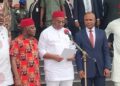




TD A close reading of my note yesterday will reveal that my position aligns with the position taken by Mr Peter Obi yesterday at the NBA Conference in Port Harcourt.
The difference is that I took the argument further by stating what we need to do to address the current cost-of-living crisis Nigerians are going through.
Yes, the removal of fuel subsidy has increased suffering in Nigeria, largely because the right measures were not deployed optimally to mitigate the transition from subsidy to zero subsidy.
While the debate is rightly ongoing, with political calculations and the 2027 election increasingly obscuring the facts, it is important to clearly highlight the consequences of reintroducing subsidy so that Nigerians can make informed decisions.
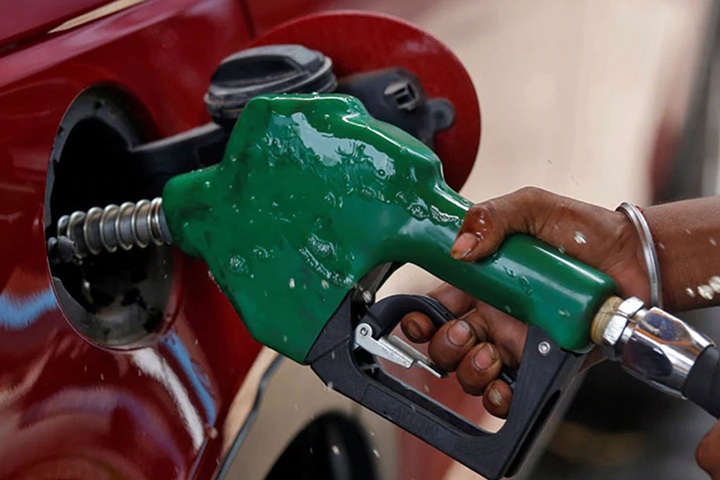
Quote me on this: Nigeria’s biggest mistake would be to return to the old, unlimited and opaque petrol subsidy regime.
The immediate effect of reintroducing subsidy would probably be popular because pump prices could fall or become more stable.

Economically, however, the consequences would be mixed—and potentially very serious if the subsidy is large enough, possibly as much as ₦19 trillion, open-ended and poorly targeted.
Some of the consequences include:
1. Government finances would deteriorate.
The biggest problem is the fiscal cost. There would be less money available for roads and rail construction, electricity, healthcare, education, security, social protection and even debt servicing.
2. It could increase the budget deficit and borrowing.
If government revenue is insufficient to finance the subsidy and government fails to reduce other expenditures or raise adequate revenue, it will have to borrow.
If we return to the era of borrowing to fund subsidy, as happened before, debt-service costs will rise and future governments will inherit the liability, as happened between the Buhari and Tinubu administrations.
3. It could put additional pressure on the Naira.
If subsidised petrol is partially or substantially imported, Nigeria will need foreign exchange to pay for those imports.

Dangote Refinery alone cannot currently meet all our domestic consumption needs, while the remaining refineries are yet to operate at the level required to close the gap.
If subsidy is restored, we could therefore return to massive fuel importation, with the old subsidy beneficiaries and middlemen returning to celebrate a new windfall, while the common man gets very little from it.
Whenever international crude oil prices rise, the subsidy per litre also becomes more expensive. This becomes even more problematic when the naira is under pressure.
4. Lower petrol prices could initially reduce inflation, but the underlying fiscal problem would return.
It would therefore be misleading to conclude that reintroducing subsidy automatically makes the economy healthier.
Subsidy could provide temporary relief from the immediate cost-of-living crisis while creating a much bigger fiscal problem that eventually produces another economic shock—the very problem its proponents claim subsidy will solve.
5. Subsidy could crowd out productive investment.
This could ultimately be more damaging than the immediate fiscal cost.

Every naira committed indefinitely to subsidising petrol is a naira that could otherwise be invested in electricity, transportation, agriculture, education, healthcare and infrastructure that permanently reduce the cost of living and doing business.
6. Fuel smuggling would become attractive again.
If petrol is significantly cheaper in Nigeria than in neighbouring countries, the price differential creates an incentive for smugglers to move subsidised fuel across our borders for profit.
In effect, Nigerian taxpayers could once again be subsidising fuel consumption outside Nigeria.
7. It could discourage investment in refining.
If government artificially keeps petrol prices low through subsidy, private investors may question whether refining in Nigeria is commercially viable.
Dangote and other potential investors could eventually find it more profitable to export refined products rather than compete in a distorted domestic market.
Is that what we want?
It is therefore gratifying that Mazi Peter Obi stood his ground against Alhaji Atiku Abubakar (represented by former Buhari DG, Rotimi Amaechi) and made it clear that he would not return the country to the subsidy era if elected.
Surely, he understands the issues highlighted above and must have been properly advised by experts and history.
What he and President Tinubu ought to be debating is how to manage the transition costs of subsidy removal.
The debate should therefore focus on how not to subsidise everybody’s petrol indefinitely, but instead subsidise transportation and protect vulnerable households while Nigeria fixes the structural problems.
We can do this through:
- Transparent and targeted transport subsidies;
- Massive investment in mass transit;
- Temporary and targeted cash transfers;
- Support for low-income earners;
- Free and compulsory education up to first degree, which would remove a massive burden from parents and increase household disposable income;
- Structured investment in domestic refining to encourage the proliferation of privately owned and efficiently operated refineries;
- Massive investment in agriculture to increase food production and reduce dependence on food-producing states.
In my view, removing fuel subsidy is the way to go, but the consequences must be managed much better than we have seen so far.
The Federal Government, as constitutionally required, trusted the states to use the additional resources available to them to fight poverty and mitigate the adverse consequences of subsidy removal.
The real problem is that many governors appear to have treated the additional resources as a windfall for their governments rather than as an opportunity to protect their citizens.
Apart from paying a meagre new minimum wage and clearing salary and pension arrears denominated in the ancient value of the naira, we are yet to see most state governments taking sufficiently decisive action to mitigate the effects of subsidy removal in their domains.
Even when money was made available by the Federal Government to procure mass-transit vehicles, some states reportedly kept the funds in interest-yielding accounts for years before eventually using them, three years later, to purchase relatively small buses that could hardly make a dent in the transportation challenge.
States need large-capacity buses and functional rail systems to move people efficiently from Point A to Point B—not token purchases of 30-seater buses, as though these governors never travel abroad to see what modern mass transportation looks like.
Similarly, many states without serious security challenges failed to make deliberate investments in agricultural production to compensate for food-production shortfalls from states such as Benue, Plateau and Niger.
If more states had invested aggressively in agricultural production, perhaps we would not be experiencing the level of food-price inflation we have today.
In conclusion
My position is clear: fuel subsidy should not be reinstated because the long-term consequences would be enormous.
The gap between the poor and the rich could widen further, while Nigeria would be pushed deeper into the economic danger zone.
In any case, I strongly suspect that some of those making the case for subsidy reinstatement do not actually intend to implement it if elected.
They are merely using it to seduce voters, just as politicians did in 2015 with promises of $1 to ₦1 and petrol at ₦20 per litre, only to turn around and preside over policies that contributed to the economic deterioration Nigerians experienced between 2015 and 2023.
They know that they have lived their best years and may not be around long enough to suffer the full consequences of another expensive subsidy regime.
They want power now.
And if promising an economic Eldorado will get them there, they will make the promise and leave Nigerians to deal with the consequences after the election.
Didn’t Buhari also promise to remove subsidy and make one dollar equal one naira after insisting that it was his last chance to contest for president?
Can anyone remind me of those who anchored that seductive campaign for Buhari in 2015?
Those same people are the ones we are watching on television today pontificating about subsidy reinstatement as though it were a silver bullet that will end hunger in Nigeria.
In my view, they are deceiving Nigerians again.
Flee from them or regret it later!
Chief John Okiyi Kalu