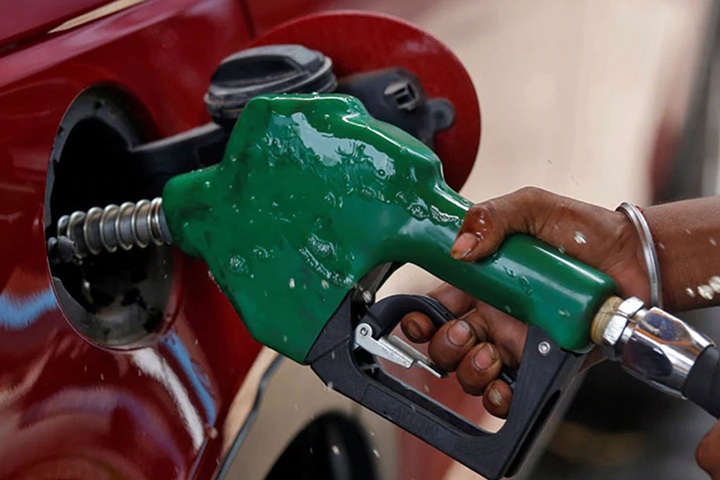

Nigeria’s downstream fuel market has been jolted once again as Dangote Refinery announced a fresh increase in its ex-depot price of Premium Motor Spirit (PMS), raising the benchmark from ₦1,275 to ₦1,350 per litre.
The ₦75 adjustment, confirmed by market sources and industry trackers, marks the second such hike within a week.
The hike underscores the refinery’s growing influence on domestic fuel pricing.
Rapid Adjustments in Domestic Market
According to reports, Dangote Refinery suspended its Proforma Invoice on Tuesday, signaling the rollout of the new pricing template across loading channels.
Marketers have already begun recalibrating their depot and retail positions in anticipation of higher landing and replacement costs.
Industry operators warn that the increase will feed directly into pump prices in the coming days.
This is expected to cut across high-consumption centres such as Lagos, Abuja, and Port Harcourt.
Within the past month, the refinery has adjusted petrol prices multiple times.
The refinery cited crude sourcing costs, foreign exchange pressures, and distribution dynamics.
Global Oil Market Pressures
The latest hike comes against the backdrop of sustained volatility in global oil markets.
The volatility iis driven largely by the ongoing conflict in the Middle East and uncertainty over the Strait of Hormuz.
Oil prices fell sharply this week, with West Texas Intermediate (WTI) briefly dipping below $100 per barrel.
The new price was hung on renewed hopes that the U.S.-Iran confrontation might ease and the strait could reopen.
The Strait of Hormuz, through which nearly 20% of global oil supplies pass daily, has been virtually shut since February, when U.S. and Israeli forces launched strikes against Iran.
The blockade has disrupted shipping routes, driven up insurance costs, and triggered a global energy crisis.
Dangote’s pricing decision reflects these international pressures, as crude import costs remain unpredictable and supply-side risks continue to ripple through Nigeria’s domestic market.
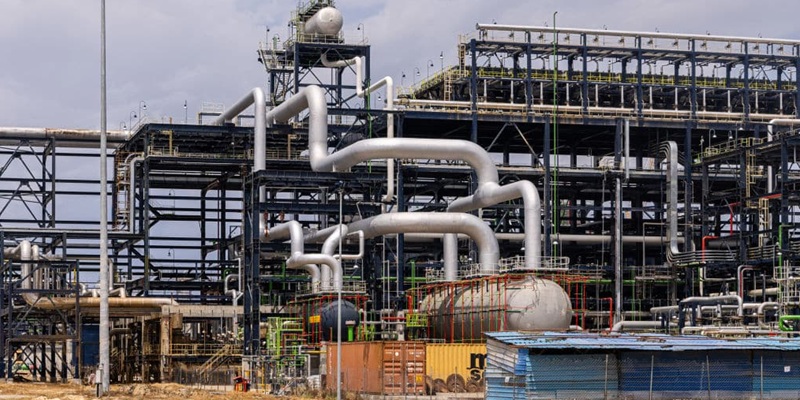
Connection to the Strait of Hormuz Imbroglio
The refinery’s adjustment is not occurring in isolation.
Analysts note that Nigeria’s fuel market is increasingly sensitive to geopolitical shocks, particularly those emanating from the Gulf.
The imbroglio in the Strait of Hormuz has created a chain reaction:
- disrupted tanker movements,
- fluctuating crude prices, and,
- heightened uncertainty for refiners worldwide.
For Nigeria, which relies heavily on imported crude and refined products despite the Dangote Refinery’s operations, the instability translates directly into higher ex-depot prices.
The refinery’s repeated hikes mirror the volatility of global benchmarks.
It underscores how deeply Nigeria’s energy security is tied to developments thousands of miles away.
Domestic Impact
The immediate consequence of the price increase will be felt by consumers, with pump prices expected to rise in the coming days.
Transport operators, small businesses, and households are bracing for another round of inflationary pressure, as fuel costs feed into logistics, food prices, and general living expenses.
Economists warn that the rapid pace of adjustments could erode public confidence in the refinery’s stabilising role.
In the meantime, Dangote insists that its pricing reflects global realities rather than arbitrary decisions.
Future Outlook
The Dangote Refinery’s latest hike to ₦1,350 per litre highlights the fragile intersection between Nigeria’s domestic fuel market and global geopolitical tensions.
Granted, the refinery has emerged as a dominant player in local pricing.
However, its decisions remain tethered to the turbulence in the Middle East, particularly the unresolved crisis in the Strait of Hormuz.
As long as the strait remains contested and oil markets volatile, Nigerians should expect continued adjustments at the pump.
It serves as reminders that the country’s economic fortunes are inseparably linked to the shifting tides of global energy politics.
The development shows how Abuja’s fuel pricing is now hostage to Hormuz’s geopolitics.
It serves as note of warning that Nigeria’s energy future cannot be insulated from global conflict.