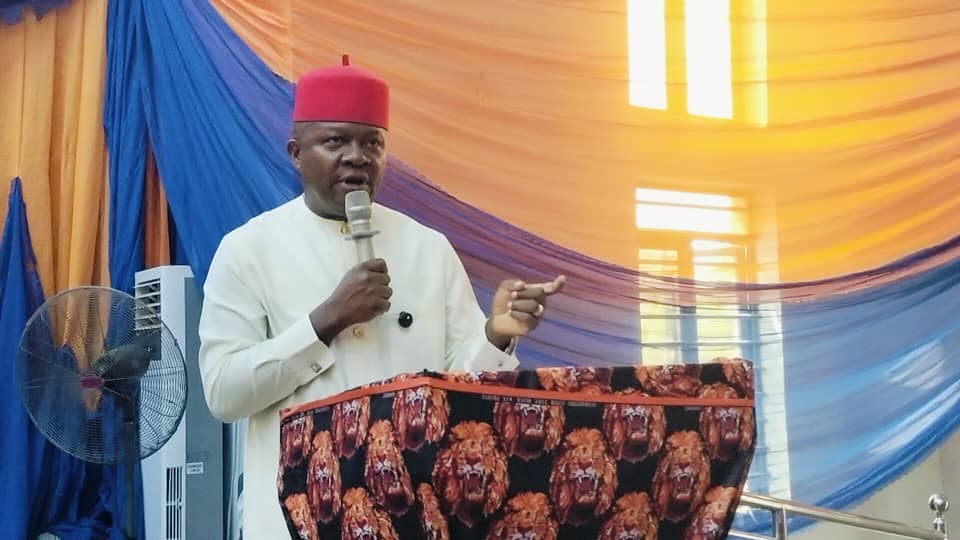
TDFormer President and Group CEO of Transcorp Plc, Valentine Chineto Ozigbo, has called on Nigerians, especially the Igbo people, to embrace discipline, institutional thinking, and purposeful leadership as pathways to collective transformation and national renewal.
Ozigbo made the call on Thursday while delivering a keynote address titled “From Calendar to Civilisation: Reclaiming Time, Leadership, and Destiny” at the 2026 Igu Aro Festival hosted by the Directorate of Igbo Village and Institute of African Heritage Studies (IVIAHS), Nnamdi Azikiwe University.
Speaking before scholars, traditional rulers, students, and dignitaries, Ozigbo described the Igu Aro festival as more than a cultural celebration, saying it represents “a declaration of continuity” and a reaffirmation of Igbo identity and civilisation.
According to him, the traditional Igbo calendar reflects a deeper understanding of order, purpose, and alignment with natural and divine timing.
“Igu Aro is not just a calendar. It is a system of meaning, a way of ordering life, and a reminder that a people who understand time are already on the path to understanding themselves,” he stated.
Ozigbo Criticises “African Time”
Ozigbo criticised what he described as the growing culture of indiscipline and lateness in society, arguing that the misuse of the concept popularly referred to as “African time” has contributed to declining standards and inefficiency.

He said delay, poor coordination, and lack of structure have become normalised in many institutions and communities.
“This is not culture. It is indiscipline. And what we excuse repeatedly, we eventually become,” he said.
The former banker and political figure urged Nigerians to return to the values of consistency, structure, and disciplined execution, stressing that civilisation cannot be built on intentions alone.
“The Igbo Paradox”
In a major highlight of the speech, Ozigbo spoke about what he termed “the Igbo paradox,” describing the Igbo people as highly enterprising individually but insufficiently coordinated collectively.
He noted that while Igbo men and women have excelled across Nigeria and the global diaspora, the community has struggled to translate personal success into enduring institutions and organised influence.
“Enterprise must mature into institution. Wealth must mature into legacy. Influence must mature into organised power,” he said.

According to him, the challenge facing the Igbo nation is not a lack of talent or capacity but a deficit in collective structure and leadership.
Ozigbo Calls for Responsible Eldership
Ozigbo also delivered a strong message on leadership and eldership, insisting that true eldership is not merely about age but about discernment, courage, and moral responsibility.
Drawing from Igbo proverbs and biblical references, he warned against silence in the face of societal decline and injustice.
“Not every old man is an elder, and not every young man is a child,” he declared.
He further stated that societies decline when those who should guide become silent or compromise truth for convenience.
Lessons from Samuel
Referencing the biblical figure Samuel, Ozigbo said discernment must be accompanied by courage and action.

He noted that Samuel’s willingness to anoint David despite the risks involved demonstrated the kind of moral clarity and conviction needed in leadership today.
“A people do not rise because they lack knowledge. They rise when those who know are willing to act,” he said.
Institutions Must Preserve Identity
The former presidential hopeful emphasised the importance of institutions such as UNIZIK and IVIAHS in preserving and advancing Igbo heritage.
He called for the Igbo calendar and indigenous knowledge systems to be studied, documented, and integrated into global intellectual discourse.
“Anyone who does not define themselves will eventually be defined by others,” he warned.
Ozigbo Sends Message to Youths
Addressing young people at the event, Ozigbo urged them to move beyond “hustle culture” and focus on building competence, structure, and long-term impact.
He encouraged youths to study and refine their heritage rather than merely celebrating it.
“The future will be shaped by those who think deeply, organise wisely, and design intentionally,” he said.
Ozigbo concluded by urging the audience to see Igu Aro not merely as the unveiling of dates but as a call to restore order, clarity, discipline, and collective destiny among the Igbo people and Nigerians at large.