


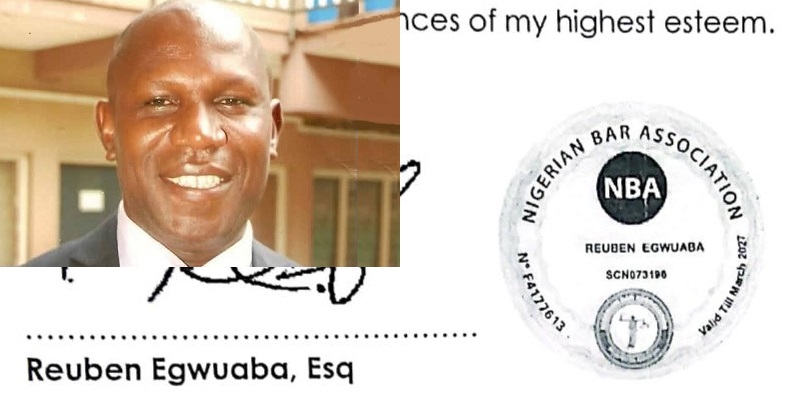
TDA fresh controversy has emerged over the resignation letter of Reuben Egwuaba, who was listed as National Legal Adviser of both the Allied Peoples Movement (APM) and the Nigeria Democratic Congress (NDC).
Lere Olayinka, an aide to FCT Minister Nyesom Wike, alleged that the resignation letter Egwuaba purportedly submitted to APM in December 2025 was fake.
The Allegation
Olayinka, writing on X (formerly Twitter), claimed that:
- The letter was dated December 4, 2025.
- However, the NBA seal affixed to the document was issued for 2026, valid only from March 2026 to March 2027.
- He argued that this discrepancy undermines the authenticity of the resignation letter, which only surfaced publicly yesterday.


Political Context
Egwuaba’s resignation from APM was presented as evidence that he had formally left the party before assuming his role in NDC.
The controversy now raises questions about:

- Whether Egwuaba simultaneously held positions in both parties.
- The credibility of documents used to support his political transition.
- Potential legal implications under Nigeria’s Electoral Act, which prohibits dual party membership.
Public Reactions
The allegation has sparked heated debate online:
- Some commentators accused Olayinka of political distraction, arguing that the seal’s validity period does not necessarily invalidate the letter.
- Others insisted the discrepancy points to forgery and demanded clarification from both Egwuaba and the NDC.
- Supporters of opposition figures suggested the controversy was part of broader attempts to weaken the NDC’s credibility.

Implications
- For NDC: The party may face pressure to prove Egwuaba’s resignation from APM was legitimate.
- For APM: The controversy could reignite internal disputes over leadership and membership records.
- For INEC: The electoral body may be called upon to clarify official party records and resolve discrepancies.
Conclusion
The dispute over Egwuaba’s resignation letter underscores the high stakes of Nigeria’s shifting political alignments.
As accusations of forgery and dual membership swirl, the matter highlights the importance of transparency and proper documentation in party politics.
Whether the letter is ultimately deemed authentic or fraudulent, the controversy has already added fuel to Nigeria’s charged political atmosphere ahead of the 2027 elections.