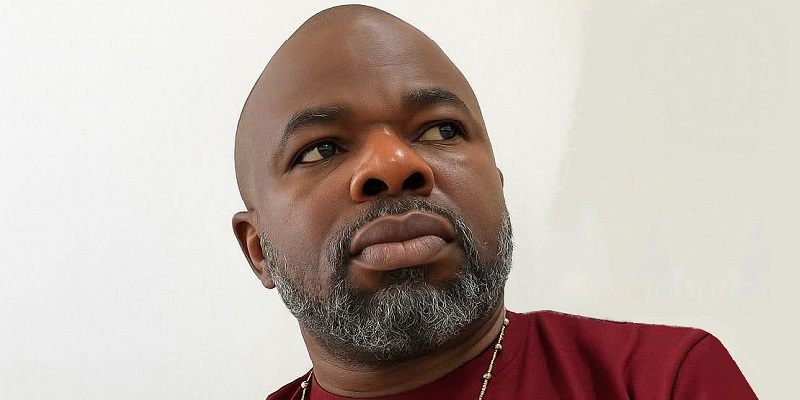
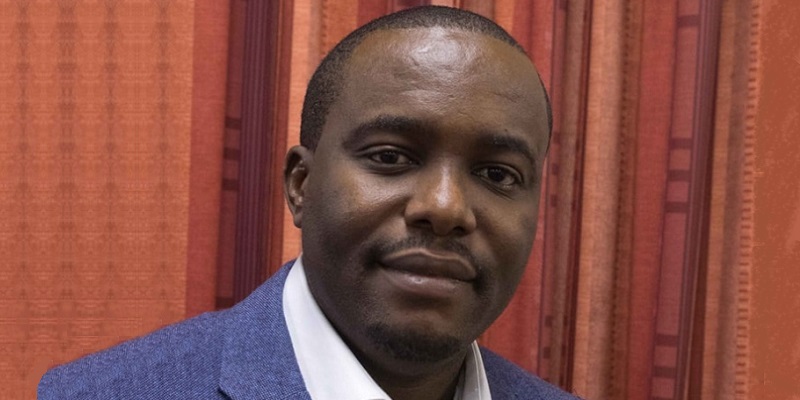
A Dirge to Thankgod Onukwube Ofoelue
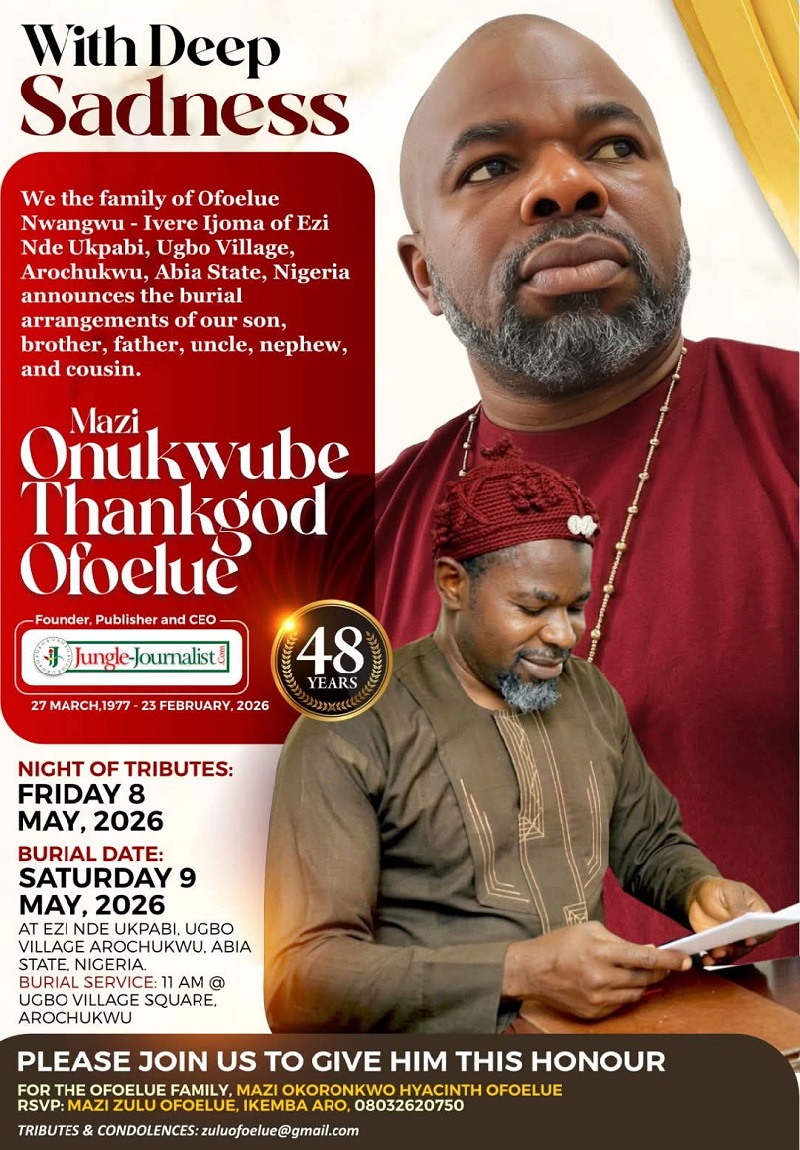
TDThe earthworm finds its path through the soil by obeying the laws of nature. You obeyed every law that mattered — the law of friendship, the law of courage, the law of truth. The earth receives you as its own.
Ilo na asi na egwu ani, ofo na ogu enwelu nkpochi — when the enemy sets his traps and lays his snarls across the earth, it is uprightness, clear conscience, and the invincible armour of justice that stand as shield, rampart, and fortress for the righteous man.
And yet — o bu ofo ka idide ji awa ani — even the earthworm, humble and unhurried, finds its passage through the darkest soil by obeying the ancient laws of nature and its eternal ordinance.
You, my brother, lived by that law.
You honoured it. You embodied it.
And now they lower you into it.
That you are being lowered today is too strange. Too bizarre. Too soon.
Nwanne m — my brother — oburo nu ka anyi si kpa. This was not the plan.
This was not the arrangement we made
when we were young men full of fire and future,
standing on the threshold of the world
and daring it to give us its worst.

I understand, in the mind that reasons,
that death is a journey that every mortal must embark upon —
a road that was paved before we were born,
stretching from the first breath to the last.
But you, my brother — i hapukazi osiso,
You left too early, when the dew was still on the grass
and the day had barely begun to speak.
I find myself asking the air: why were you in such a haste?
What appointment called you away so suddenly,
so completely, without warning or farewell?
And then I remember — onwueyiagba.
Death does not send notice.
Death does not book appointments.
Death arrives as death always arrives —
uninvited, unannounced, and utterly indifferent
to the grief it leaves behind.
We crossed paths at the Great University of Benin —
that crucible of minds, that forge of destinies.
The point of convergence was no accident.
It was ideology. It was philosophy.
It was thresh restless, brilliant minds
recognising each other across a crowded room
the way kindred spirits always do —
instantly, instinctively, irrevocably.

You were at the Department of English,
where language was your laboratory
and words were the instruments of your intellect.
While the Great Chameleon — Oluchukwu Egbonwachi Jacobs and myself —
were in the Department of Religion,
wrestling with the eternal questions
that only the brave dare to ask.
Together, the three of us formed a triumvirate —
a brotherhood so strong, so forged in conviction and camaraderie,
that we delivered Chukwuemeka Agbugba
as the President of the Faculty of Arts of the University of Benin; against all odds.
We were young. We were fearless.
We believed we could rearrange the world —
and for a season, we did.
You were an embodiment of courage.
Not the performative courage of men who shout,
but the quiet, deep, unshakeable courage
of a man who has looked at the world clearly
and decided to tell the truth about what he sees.
You were resilient — resilient in the way that great trees are resilient —
not by refusing to bend,
but by bending without breaking,
by returning upright every time the storm had passed.

You were a scholar of repute —
a man for whom the life of the mind was not a career
but a calling, a consecration,
a daily act of devotion to knowledge and to truth.
And at the Sun Newspaper, you proved it, as a young staff.
You took my modest achievement —
my invitation by the United Nations to its conference
at the magnificent Szent István University, Gödöllő, Hungary,
where my paper was given a place among the voices of the world —
and you adorned the prominent pages of that newspaper with it.
You wrote of it as only a man of letters can —
with grace, with pride, with the generosity
of a brother who celebrates another man’s honour
as though it were his own.
That day, I did not just see my name in print.
I saw your love made visible.
Today, as you lie lifeless before us —
anyi no na akwa. Alili egbugo anyi.
We are weeping. Grief has consumed us.
The kind of grief that sits in the chest like a stone
and does not move, does not dissolve,
does not respond to reason or comfort.
And yet — even in this grief, even in this bewildering pain —
I will not surrender to the arrogance of death.
Because while death, in its ancient foolishness,
imagines that it has triumphed today —
unknown to it, all it has done
is procure your passport to eternity.
It has not ended you.
It has translated you.
We refuse to plead with death.
Onwubiko — Death, I beg of you — these words will not leave our lips.
We refuse to bow before it.
Onwubuemeli — Death is unsurmountable —
it has met its match in every life fully lived.
We will not succumb before it.
Onwukaike — Death is impregnable —
but so is the memory of a man who lived without apology.
And yet — Onwudinjo —
it is painful.
Chai, aro oke igbo no n’akwa.
The birth place of the great and the brave groans in the rain.
Ndi oyigi no na ariri.
Friends weep in the corners.
The earth itself is heavy today
with the weight of a man, it has received
too soon, and too permanently.
But it is in enduring pain —
in looking grief in the face and refusing to be destroyed by it —
that I urge you now, my brother,
to find your path in that luminous region of the spirits,
where all mortals ransomed from the tyranny of time
are transposed, transfigured, and transformed
into something the living can no longer see
but can always, always feel.
Go well, nwanne m.
Go with the full weight of our love behind you.
Go knowing that you were known —
truly, deeply, joyfully known —
by those of us you leave behind.
The triumvirate is diminished in number.
But never in spirit.
Never in spirit.
Ka emesia.
Okoro Chinedum Benedict
(Okpuluisi Dioka)
dolphite@gmail.com