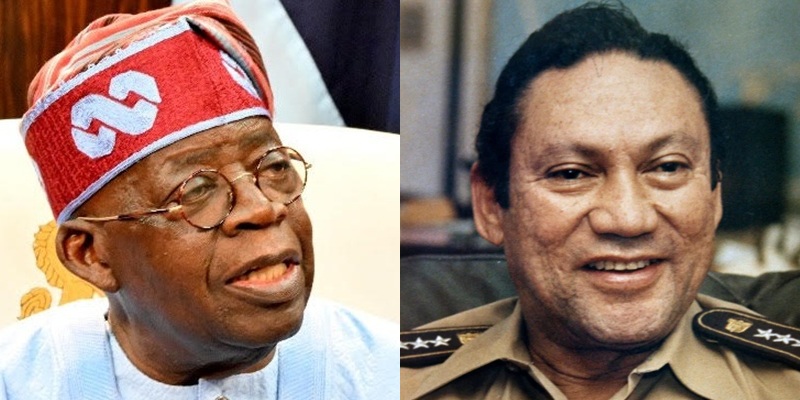
TD On the third of January 1990, General Manuel Antonio Noriega walked out of the Vatican embassy in Panama City and into the hands of American federal agents.

The most powerful man in Panama — commander of its armed forces, master of its politics, courted for years by Washington itself — boarded an American aircraft in handcuffs.
He had been indicted in Miami on drug trafficking charges while still a sitting head of government. He was tried in an American courtroom, convicted in 1992, and sentenced to forty years.
He spent the rest of his life as a prisoner — in Miami, in Paris, in Panama — and he died in custody’s shadow in 2017.
Remember that Washington had once found Noriega useful. Remember that Noriega believed his office protected him. Remember how that ended.
Now consider the file marked Chicago, 1993.
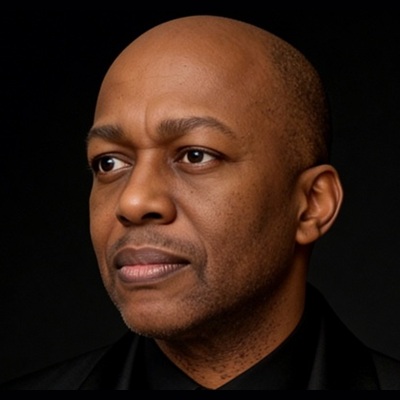
On October 4, 1993, the U.S. District Court for the Northern District of Illinois ordered the forfeiture of $460,000 held in an account in Bola Tinubu’s name, with the court order stating that the funds constituted proceeds of narcotics trafficking or were involved in financial transactions prohibited under U.S. federal law.
The sworn affidavit of IRS Special Agent Kevin Moss stated there was probable cause to believe that funds in bank accounts controlled by Tinubu represented proceeds of drug trafficking, and tied him to a white heroin ring operating in the Chicago area.
The investigation linked over $2 million across Tinubu’s accounts to the heroin trafficking of Adegboyega Mueez Akande and Abiodun Agbele, Chicago drug kingpins.
His defenders will tell you — correctly — that he was never charged, never convicted, that the action was against the money and not the man.
Very well. Then let the man explain why, thirty-three years later, he is fighting in an American courtroom to keep the rest of the file closed.
This month President Tinubu formally joined the U.S. Department of Justice in seeking to delay the release of the records — an innocent man, petitioning a foreign court to keep his own innocence hidden.
Judge Beryl Howell has ordered the FBI and DEA to release the non-exempt records after sharply criticising the agencies for missing a string of court deadlines, and the FBI has now asked to explain itself in secret, arguing that release of certain withheld records could endanger life.
Ask yourself what kind of file, three decades old, still endangers lives. Veterans of narcotics work know the answer: informant files.
Cooperation files. Files about who told what to whom.
And here is what should keep Aso Rock awake at night.
The United States has a long memory and a longer reach, and it has shown — again and again — what it does with leaders it once linked to the drug trade, the moment their power lapses.
Noriega: indicted in office, seized, imprisoned for life.
Juan Orlando Hernández of Honduras: shook hands with American presidents as a sitting head of state, was arrested at Washington’s request within weeks of leaving office, and now sits in an American federal prison sentenced to forty-five years.
Genaro García Luna, Mexico’s own top drug-warrior: convicted in Brooklyn. The pattern is not subtle. The presidency is not a pardon. It is a postponement.
Sitting heads of state enjoy immunity. Former ones do not. In 2027, or 2031 at the very latest, Bola Tinubu becomes a former one — a private citizen whose name sits in the indexes of the FBI, the DEA and the IRS, attached to a case Judge Howell has already pried half open.
Noriega believed the canal made him untouchable.
Hernández believed the handshakes made him a partner.
Both learned that Washington’s files outlive Washington’s friendships.
The records are coming out.
The clock at Aso Rock is running.
And history, on this precise question, has never once ruled the other way.