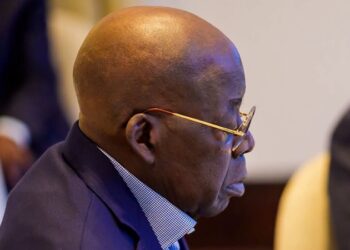



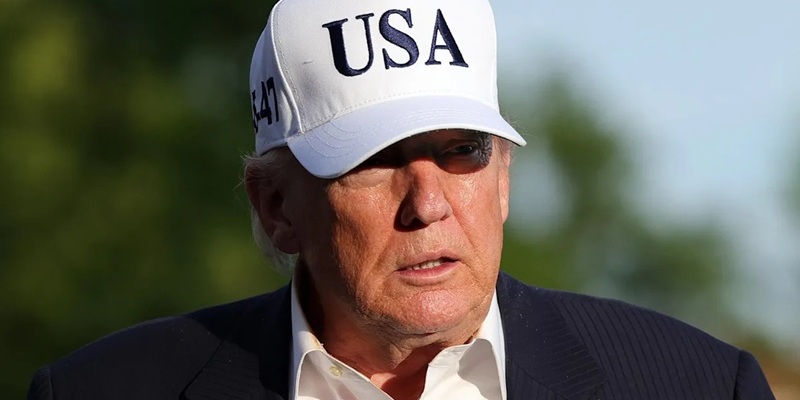

TD Washington/Abuja — Nigerian-American writer and public affairs analyst Kio Amachree has published a searing open letter to U.S. President Donald J. Trump, demanding that his administration stop blocking a federal court order and direct the FBI and DEA to release investigative files concerning Nigerian President Bola Ahmed Tinubu.
The letter, shared on Amachree’s X account, references a June 1, 2026, deadline set by Judge Beryl A. Howell of the U.S. District Court for the District of Columbia.
The judge required the agencies to complete disclosure of records tied to Tinubu’s past.
Amachree noted that the deadline passed without compliance, despite the judge describing prior secrecy as “neither logical nor plausible.”
Background of the Case
Public records already show that in 1993, a federal judge in Chicago ordered $460,000 forfeited from a First Heritage Bank account linked to Tinubu, in a civil case tied to a narcotics money-laundering investigation.
Tinubu was never criminally convicted, and the matter was closed without admission of guilt.

Amachree argued that Nigerians and Americans alike deserve transparency:
“Continuing to shield it does not protect Mr. Tinubu’s reputation. It destroys yours, and it destroys the credibility of the agencies withholding it,” he wrote.
The case has long been a flashpoint in Nigerian politics, resurfacing during Tinubu’s 2023 election campaign and continuing to fuel opposition claims of compromised integrity.
Double Standards Alleged
Amachree’s letter drew sharp contrasts between Tinubu’s case and U.S. actions against Venezuelan leader Nicolás Maduro.
Maduro was arraigned in New York on narco-terrorism charges despite never setting foot in the United States.
“Whatever one thinks of Maduro, the contrast is impossible to miss,” Amachree wrote.

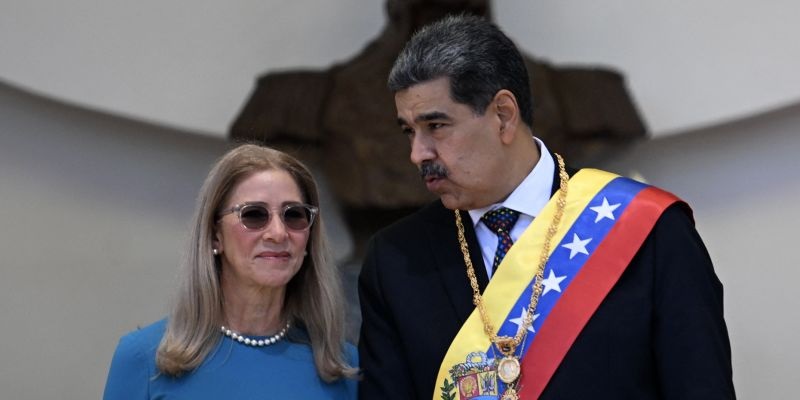
He questioned why a foreign head of state investigated inside the U.S. is shielded, while another who never entered the country was prosecuted.
He also raised concerns about Trump’s Africa advisor Massad Boulos, citing his deep business ties in Nigeria as a potential conflict of interest influencing U.S. policy.
According to Amachree, Nigerians did not elect Boulos, and his commercial interests should not dictate Washington’s stance toward Nigeria’s leadership.
Wider Nigerian Context
Amachree linked the issue to Nigeria’s ongoing governance and security crises.
He referenced active litigation over Tinubu’s academic records at Chicago State University.
Petitioners therein allege discrepancies between certificates submitted to Nigeria’s electoral commission and registrar records.

He also highlighted Nigeria’s estimated $9 billion annual losses from illegal mining in the north, often tied to banditry and terrorism.
Much of this illicit economy, he argued, thrives because politically connected figures allow it to, undermining Nigeria’s stability and fueling violence.
By shielding Tinubu from scrutiny, Amachree warned, Washington risks enabling corruption and weakening Nigeria’s fight against insecurity.
Appeal to Trump
Amachree concluded by urging Trump to uphold the rule of law and direct federal agencies to comply with Judge Howell’s ruling:
“I do not ask you to convict a man in the press. I ask you to stop blocking a federal court order.
“Direct the FBI and DEA to comply in full with Judge Howell’s ruling, release the files, and let Nigerians and Americans alike see what their own governments have long known.”
He invoked Trump’s own background at the Wharton School of the University of Pennsylvania, stressing that due diligence should apply equally to foreign leaders under investigation.

Reactions and Implications
The open letter has sparked debate online, with Nigerians amplifying calls for transparency and questioning Washington’s role in shielding or exposing foreign leaders with controversial pasts.
Civil society groups argue that the release of Tinubu’s files would strengthen accountability and send a message that no leader is above scrutiny.
In the U.S., congressional testimony has already flagged Nigeria’s governance challenges, including illicit mining and corruption, as threats to regional stability.
Amachree’s intervention adds pressure on American institutions to reconcile their stated commitment to rule of law with their handling of Tinubu’s case.
Conclusion
The controversy underscores the intersection of Nigerian politics and U.S. foreign policy.
For many Nigerians, the withheld files represent more than a legal technicality — they symbolize the struggle for transparency in governance.
For American institutions, the case is a test of credibility: whether they will uphold judicial orders or allow political considerations to override the rule of law.
As Nigeria battles insecurity and prepares for the 2027 elections, Amachree’s letter has reignited calls for accountability, both at home and abroad.