
In late March 2026, at the African Land Forces Summit in Rome, U.S. Army Gen. Christopher Donahue, commander of U.S. Army Europe and Africa, made a pointed declaration: Morocco has positioned itself as “the continent’s most technically sophisticated defense partner,” and Washington is formalizing that role with concrete action.
The centerpiece? Africa’s first dedicated regional drone training center, to be hosted in Morocco and launched via a pilot program during the African Lion 2026 exercises in April–May.
The initiative, which will begin with training roughly 16 African operators in small UAS, loitering munitions, counter-drone systems, and electronic warfare, is explicitly framed as building “a sustainable, enduring capability.”
Once proven, Donahue said, it can scale to other parts of Africa.
“No other African partner combines the required stability, infrastructure, and demonstrated operational maturity,” he added.
This announcement caps years of rapid Moroccan defense industrialization.
In November 2025, Israel’s BlueBird Aero Systems opened a factory in Benslimane for SpyX loitering munitions—the first such facility in North Africa outside Israel.
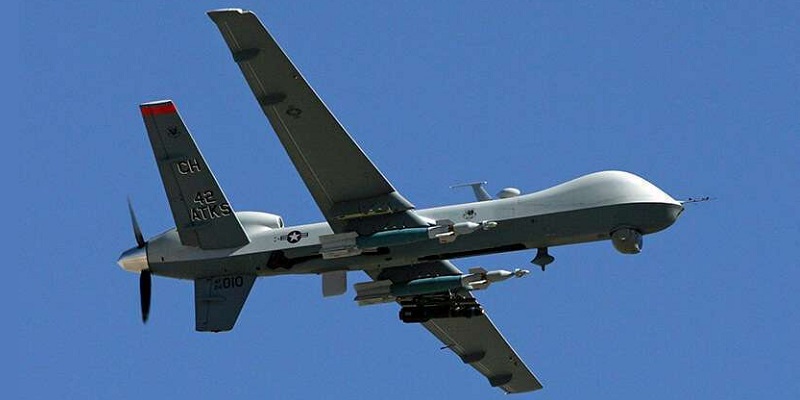
Morocco is also assembling Turkish Baykar TB2 and Akinci drones locally and has integrated advanced Israeli systems including Barak MX air defense and Elbit artillery rockets.
The result: Rabat now operates a hybrid fleet blending Western, Israeli, and Turkish technology, giving it supplier redundancy and export potential across the continent.
Why Morocco? And Why Now?
U.S. officials describe the move as pragmatic.
After years of direct engagement in the Sahel yielded mixed results and political blowback—coupled with the 2023–2024 wave of coups that expelled French and American forces from Mali, Burkina Faso, and Niger—Washington is pivoting toward “perimeter” partners.
Morocco, a long-standing Major Non-NATO Ally with stable governance and modern infrastructure, offers a secure launchpad for training, intelligence sharing, and counterterrorism logistics without the headaches of operating inside fragile states.
The timing aligns with broader U.S. efforts to counter Russian and Chinese influence through technology transfer rather than large troop footprints. African Lion 2026, involving multiple nations, will serve as the proving ground.
Implications for the Sahel: Opportunity, Suspicion, or Both?
The Sahel—particularly the Alliance of Sahel States (AES) formed by military-led governments in Mali, Burkina Faso, and Niger—stands at the crossroads of these developments.
The three countries severed military ties with France and the U.S. after coups, pivoted heavily to Russian support (including Africa Corps/Wagner elements), and launched their own joint military force, investment bank, and media outlet to assert sovereignty.
Jihadist insurgencies continue to ravage the region, driving record civilian displacement.
Potential Upsides
Morocco has cultivated economic and diplomatic bridges with the AES despite their anti-Western posture.
In 2025, the Sahel foreign ministers endorsed King Mohammed VI’s Atlantic Initiative, which offers landlocked AES states access to global trade via Moroccan Atlantic ports.
Multiple high-level meetings have framed Morocco as a “brother” providing practical solutions rather than ideological pressure.
If the new Moroccan drone center opens its doors to Sahelian officers—as the “continent-wide” language suggests—it could provide desperately needed modern counterterrorism tools.
They include better surveillance of vast desert borders, precision strikes against jihadist camps, and training in electronic warfare to neutralize insurgent drones (already proliferating in the Sahel).
Shared Turkish drone platforms (Baykar supplies both Morocco and some Sahel states) could even create technical interoperability.
Enhanced Moroccan capabilities might also help contain spillover threats—jihadist groups operating near Algerian and Mauritanian borders already affect regional stability.
Risks and Geopolitical Headwinds
Skeptics, echoing voices like Nigerian commentator Abimbola Kumapayi, worry that Morocco’s deepening U.S.-Israeli-Turkish alignment turns Rabat into a Western proxy.
They fear the drone hub could facilitate indirect pressure on AES governments or enable intelligence operations that undermine Sahelian sovereignty.
Algeria, Morocco’s regional rival and occasional AES interlocutor, adds another layer of tension; any Moroccan military edge risks fueling an arms race or diplomatic friction.
Yet current evidence points more toward competition than imminent conflict. The AES has built its own defense architecture and shows little appetite for re-engaging Western trainers.
Russia remains their primary security partner.
Meanwhile, Morocco’s focus appears economic and influence-oriented—positioning itself as an African defense exporter rather than an aggressor.
Broader Continental Stakes
Morocco’s emergence underscores a larger trend: African states seeking technological sovereignty amid great-power rivalry.
Successful local drone production and training could inspire similar models elsewhere (Turkey, for instance, already sells to multiple Sahel governments).
But it also risks deepening divides—between stable North African partners aligned with the West and Sahelian states betting on Russia and self-reliance.
For the Sahel, the real test will be whether AES leaders view Morocco’s hub as a threat to be resisted or a pragmatic partner to engage selectively.
Early signals from 2025 economic cooperation suggest the latter is possible.
If the drone center delivers genuine capability-building without political strings, it could quietly strengthen counterterrorism cooperation across the Sahara.
If perceptions of proxy warfare dominate, it may simply harden existing fault lines.
Either way, the Benslimane factories and the upcoming training center mark a quiet but profound shift: Africa’s defense future is increasingly being shaped on Moroccan soil.
This has implications that will echo far beyond the Atlas Mountains into the Sahel’s battlefields.