TDU.S. authorities are investigating the deaths and disappearances of 11 scientists linked to sensitive nuclear and aerospace research programs, raising alarms about possible national security risks.

While officials caution against drawing premature conclusions, the pattern has sparked widespread concern across intelligence and defense circles.
Background of the Cases
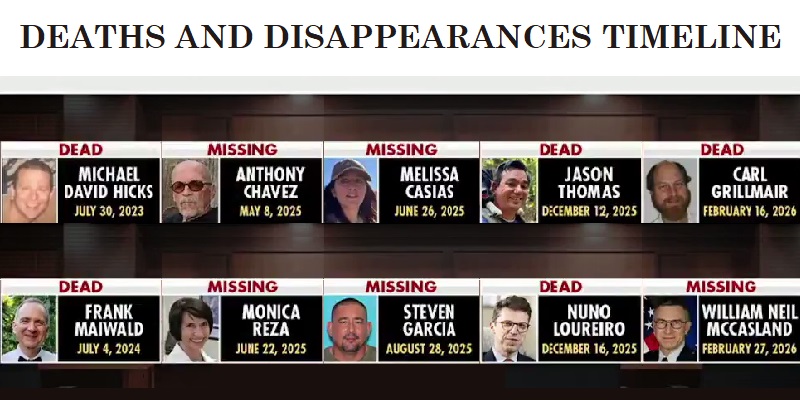
- Timeline: Over the past three years, at least 11 scientists and government researchers have either died under unusual circumstances or gone missing.
- Fields of Expertise: Most were tied to classified nuclear, aerospace, and advanced technology projects, including work at Los Alamos and other high-security laboratories.
- Notable Case: Amy Eskridge, a Huntsville-based aerospace researcher who died in 2022 at age 34, has now been retroactively added to the list, bringing the total to 11.
Government Response
- White House: President Trump acknowledged the seriousness of the situation.
Trump stated that he had been briefed and that “some of them were very important people.”
He emphasized investigations are ongoing but urged caution, suggesting the incidents could be coincidental.
- Congressional Action: Rep. Eric Burlison (R-Mo.) has called for an FBI-led probe into the deaths and disappearances, citing potential threats to national security.
- Intelligence Circles: Analysts warn that if foul play is involved, adversarial states or non-state actors could be targeting U.S. scientific talent to disrupt or steal sensitive research.
Public Reaction
- Social Media: Online platforms have been flooded with speculation, conspiracy theories, and fears of espionage.
Some users suggest coordinated attacks, while others believe the incidents may be unrelated tragedies.
- Scientific Community: Colleagues of the missing and deceased scientists express unease, noting the unusual clustering of cases among individuals working on high-stakes projects.
National Security Implications
- Potential Threats:
- Loss of expertise in nuclear weapons development and space technology could weaken U.S. strategic capabilities.
- If adversaries are involved, the incidents may represent attempts to sabotage or infiltrate critical research programs.
- Risk Assessment: Intelligence officials stress that even if the cases are coincidental, the perception of vulnerability could embolden foreign rivals.
Key Questions Moving Forward
- Are the cases connected? Investigators have yet to establish direct links between the deaths and disappearances.
- Is espionage involved? The FBI and intelligence agencies are probing whether foreign actors may be targeting U.S. 9scientists.
- How will the U.S. respond? Calls for heightened security at research facilities and better protection for personnel are growing louder.
Conclusion
The emergence of an 11th scientist’s death in this troubling pattern has intensified scrutiny of America’s most sensitive research programs.
While officials urge restraint in drawing conclusions, the clustering of cases has already been labeled by some lawmakers and analysts as a potential national security threat.
The coming weeks will be critical as federal investigators determine whether the incidents are tragic coincidences—or evidence of a deeper, coordinated campaign against U.S. scientific expertise.