


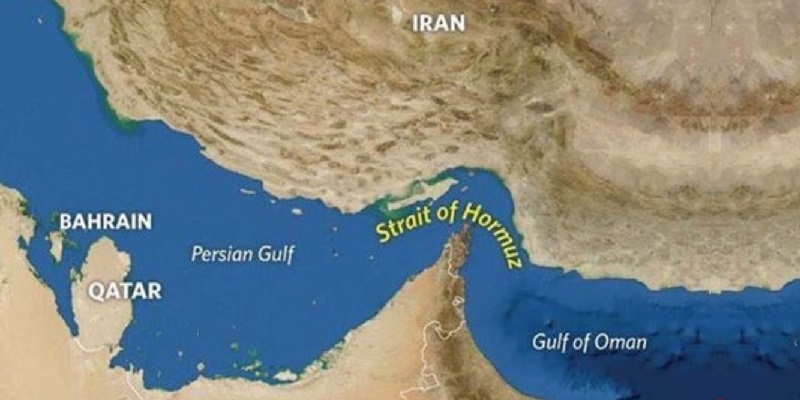

TDOil markets tumbled on Friday after Iran’s Foreign Minister Abbas Araghchi announced that the Strait of Hormuz “is declared completely open”.
This development signals a dramatic shift in the conflict that has gripped the Persian Gulf for nearly two months.
Brent crude futures fell back toward $90 a barrel in London, erasing gains from earlier in the week, while West Texas Intermediate dropped near $85.
According to Bloomberg News, European benchmark gas prices also slumped in response.
The announcement coincided with news that Israel and Lebanon had agreed to a 10‑day ceasefire, raising hopes of easing regional tensions.
Israel has been locked in fierce battles with Hezbollah, a close ally of Tehran, and Iran had previously tied progress in Lebanon to conditions for talks with Washington.

Market Reaction
The reopening of Hormuz, a vital artery for global energy trade, immediately reverberated across commodity markets.
Analysts said traders are now pricing in the likelihood of full traffic resumption before the end of April.
“Trump is sending consistent signals that things are moving in the right direction, and the market is implicitly now pricing a full opening of the Strait of Hormuz before the end of April.
“The date when it actually reopens will make a huge difference on the oil price,” said Bjarne Schieldrop, chief commodities analyst at SEB AB in Oslo.
Polymarket data showed traders overwhelmingly betting that crude prices would remain below $90 through April, reflecting confidence that supply disruptions are easing.
Diplomatic Developments
The oil slump deepened after Axios reported that the United States is considering releasing $20 billion in frozen Iranian funds in exchange for Tehran’s stockpiles of enriched uranium. Negotiators from both sides are expected to meet this weekend for another round of talks. President Donald Trump has claimed that concessions by Iran could pave the way for a broader peace deal to end the war, which began in late February after U.S. and Israeli strikes on Iranian targets.

Trump has often unsettled investors with contradictory statements about the timeline for the conflict and the prospects for resolution. On Thursday, he said he did not expect to extend the current two‑week ceasefire but would do so if necessary, predicting a resolution “fairly soon.” He also suggested he might travel to Pakistan, which hosted the first round of talks, if a deal is clinched.
At a rally in Nevada later that day, Trump sought to reassure voters about rising energy costs, declaring the war was “going along swimmingly” and should end soon.
Energy Outlook
Despite the reopening of Hormuz, experts caution that the damage to infrastructure across the Persian Gulf will take years to repair. International Energy Agency Executive Director Fatih Birol warned that restoring a significant share of disrupted oil and gas production could take up to two years. “Any recovery will be gradual,” Birol said on Bloomberg TV’s Wall Street Week.
The war had delivered an unprecedented supply shock, with Tehran halting most traffic through Hormuz and disrupting a fifth of global oil flows. The U.S. later imposed its own naval blockade, further constraining shipments. Although volatility has cooled in recent days, Brent crude remains confined to a $10 trading band this week compared with a record $38 swing in mid‑March.
Regional Impact
The Israel‑Lebanon ceasefire is seen as a potential stabilizing factor. Trump said he hopes Hezbollah “acts nicely,” while European and Gulf leaders urged both sides to extend the truce for at least six months to allow peace negotiations to progress. French President Emmanuel Macron and UK Prime Minister Keir Starmer convened a meeting of leaders on Friday to discuss long‑term arrangements for Hormuz, including Iran’s plan to charge ships for transit even after hostilities end.
Control over the strait remains contentious, with dual blockades keeping traffic at a near standstill until now. Analysts say the reopening marks a turning point, but uncertainty about future agreements will continue to drive volatility.

“The dominant theme now is not escalation, but stabilization,” said Priyanka Sachdeva, senior market analyst at brokerage Phillip Nova. “Oil markets are sending a clear message: fear drove the rally, diplomacy is driving the correction, and uncertainty will drive volatility ahead.”