TDThere is a story—now widely circulated—of a video in which members of the judiciary were alleged to have sung, “On your mandate we stand.”

If that moment does not alarm us, then nothing will. Because when those entrusted to interpret the law begin to sound like political loyalists, the foundation of justice itself begins to crack.
This is not happening in isolation.
We saw in January 2019 how a sitting Chief Justice was removed under controversial circumstances, only to be replaced by someone who aligned with the executive.
We are now confronted with allegations—still unanswered—that the current INEC Chairman may have partisan affiliations.
Meanwhile, the main opposition party, PDP, has been reduced to a shadow of itself, its fragments absorbed into a new political vehicle, the ADC.
 Yet even this emerging opposition appears to be meeting the same invisible wall.
The judiciary, already under suspicion, is again seen as anything but neutral. INEC inspires little public confidence.
From the presidency, there is no unmistakable signal that political competition will be allowed to breathe.
So let us ask the uncomfortable question: Are we deliberately walking back into history?
I was not physically present during the Abacha years. But what is unfolding today feels like a dangerous fusion of two defining moments—1993 and 1998.
One destroyed electoral credibility. The other buried dissent under the weight of power.
Today, both shadows seem to be rising at once.
But here is what makes this moment even more volatile: the opposition is not weak. It is composed of some of the most experienced political actors in Nigeria—men and women who understand power, who have exercised it, and who will not easily submit to a process they no longer trust.
That is where the real danger lies. Because when powerful actors lose faith in institutions, they do not retreat—they improvise.
We are already seeing signs of that shift. When ADC proceeded with its convention in defiance of both a court ruling and INEC, it was not merely an act of political boldness—it was a warning.
A signal that the rules of the game are no longer universally accepted.
If this trajectory continues, Nigeria could face something even more destabilizing than the crises of 1993 or 1998.
Not just a disputed election, but competing declarations of victory—multiple mandates claimed at the same moment, with no single institution trusted enough to resolve the conflict.
At that point, the question will no longer be, “Who won?” It will be: “Who is believed?”
The international community will respond based on perceived credibility.
But within Nigeria, legitimacy will be decided by the people—by who they accept, who they rally behind, and ultimately, who they believe can improve their lives.
That is where the real battlefield will be.
Nigeria is no longer approaching an election. It is approaching a stress test of its very idea of democracy—one whose failure could carry consequences that are immediate, real, and difficult to contain.
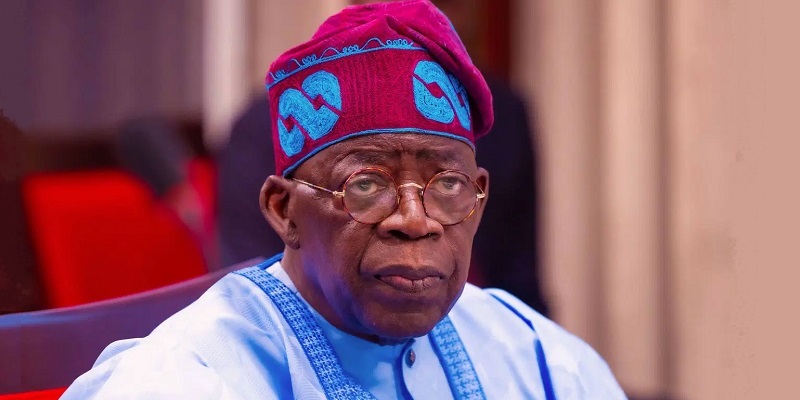
This is why someone—anyone—must whisper this to Tinubu: Power can shape institutions. It can influence outcomes. But it cannot indefinitely command belief.
Once belief is lost, control becomes an illusion. The warning signs are already here.
The only question left is whether we will act in time—or walk, with open eyes, into a crisis we already understand too well.