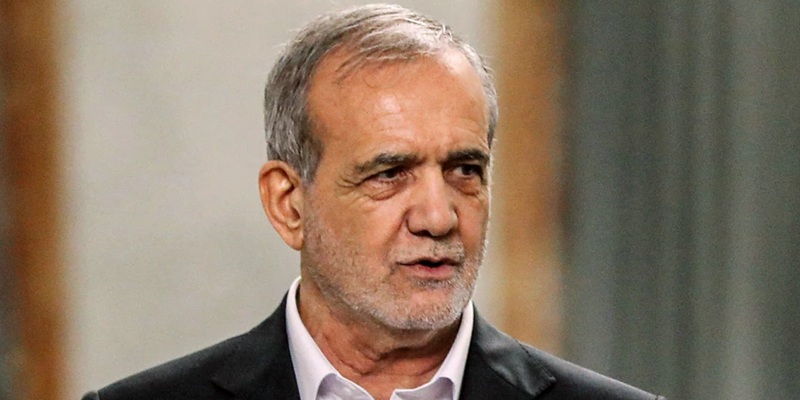
TDIranian President Masoud Pezeshkian has publicly denounced the Islamic Revolutionary Guard Corps (IRGC) after discovering through news broadcasts that Iranian forces had launched missile and drone strikes against the United Arab Emirates (UAE).
The president, visibly furious, described the attacks as “completely irresponsible” and “madness,” warning that the consequences could be “irreversible.”
Strikes Without Civilian Oversight
Reports indicate that the IRGC carried out the strikes without informing the president, the foreign minister, or any civilian authority within the government.
This unilateral action underscores a widening rift between Iran’s elected leadership and its powerful military establishment.
Analysts say the incident is the clearest evidence yet that the IRGC operates independently of the civilian government.
They say IRGC pursues its own strategic agenda regardless of presidential oversight.

Two Foreign Policies in Play
The fallout from the strikes has highlighted Iran’s increasingly fractured foreign policy:
- Diplomatic Track: Deputy Foreign Minister Abbas Araghchi is currently in Pakistan, negotiating a diplomatic off-ramp to ease tensions in the Gulf.
- Military Escalation: Meanwhile, the IRGC has been seizing ships in the Strait of Hormuz and threatening to sink U.S. vessels.
Such actions risk dragging Iran into direct confrontation with regional and global powers.
This dual-track approach has left allies and adversaries alike questioning who truly speaks for Iran on the international stage.
Pezeshkian’s Rebuke
President Pezeshkian’s remarks went beyond tactical criticism.
He condemned the IRGC’s entire strategic posture, labeling it “madness”.
He warned that such reckless actions could lead to catastrophic consequences for Iran’s security and regional stability.

Pezeshkian reportedly said: “This is not a coordination failure.
“It is proof that the IRGC answers to nobody in the elected government.”
Observers describe the development as an unprecedented public admission of his limited control over the military.
Regional Implications
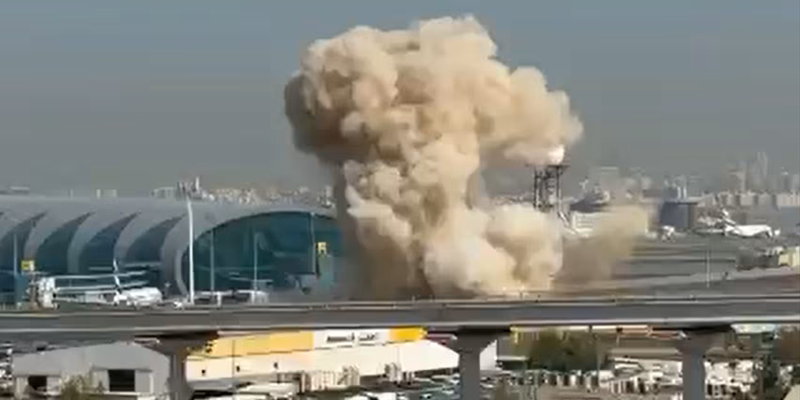
The strikes on the UAE have sent shockwaves across the Gulf:
- UAE Reaction: Officials in Abu Dhabi have yet to issue a formal response.
Regional analysts, however, warn the attack could escalate tensions across the Gulf Cooperation Council (GCC).
- Gulf Neighbors: Pezeshkian has repeatedly referred to Gulf states as “brothers,” seeking rapprochement.
The IRGC’s actions, meanwhile, directly undermine those overtures.

- Global Powers: The United States and its allies are closely monitoring the situation, wary of further escalation in the Strait of Hormuz, a critical artery for global oil shipments.
Analysts’ View
Experts argue that the incident represents the most explicit confirmation yet of Iran’s dual power centers:
- The civilian government, led by Pezeshkian, which seeks diplomacy and regional cooperation.
- The IRGC, which pursues aggressive military tactics and operates with autonomy from elected officials.
This division, analysts warn, could destabilize Iran’s foreign policy and complicate efforts to de-escalate tensions in the Gulf.
International Outlook
President Pezeshkian’s public condemnation of the IRGC marks a rare and dramatic acknowledgment of the limits of civilian authority in Iran.
Iran’s missiles are striking Gulf neighbors while its diplomats are simultaneously negotiating peace.
Iran now appears to be running two foreign policies at once—a dangerous contradiction that threatens regional stability.
As Pezeshkian himself admitted, the consequences of this “madness” could be irreversible, leaving Iran’s future direction more uncertain than ever.
Iran Targets Gulf Oil Bypass Pipelines
Iran’s recent strike on the ADCOP pipeline in Fujairah, UAE has drawn global attention.
This is not because it hit a military base, but because it struck a critical piece of energy infrastructure.
Built in 2012, the 406-kilometer pipeline was designed to allow Abu Dhabi to export 1.5 million barrels of oil per day without relying on the Strait of Hormuz.
By targeting this “insurance policy,” Iran has effectively undermined the UAE’s ability to bypass the chokepoint.
This attack follows the April 8 strike on Saudi Arabia’s East-West pipeline, which reduced throughput by 700,000 barrels per day.
Together, the two incidents reveal a deliberate strategy: Iran is not closing Hormuz outright.
It is eliminating alternative routes so that every barrel of Gulf oil must pass through the strait.
Analysts warn that this tactic gives Iran leverage over global energy flows.
It is holding the “key” to Hormuz while forcing neighbors to rely solely on the vulnerable passage.
The bypass pipelines were meant to safeguard exports against disruption.
However, by disabling them, Iran has canceled that insurance, heightening regional instability and global energy insecurity.