

 ABUJA, Nigeria — Nigeria’s index patient for the country’s first imported Ebola virus disease case in more than a decade has been evacuated to Switzerland aboard a medical evacuation aircraft, following an improvement in her clinical condition.
The evacuation took place early Monday through the private jet section of the Nnamdi Azikiwe International Airport in Abuja.
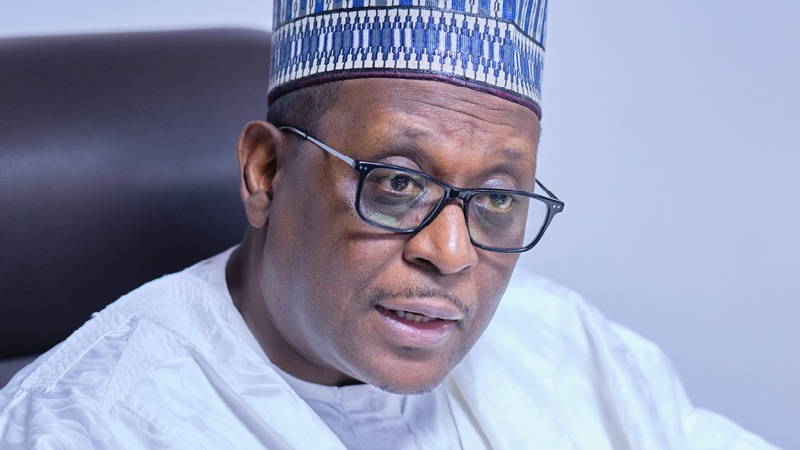
It was confirmed by the Coordinating Minister of Health and Social Welfare, Professor Muhammad Ali Pate.
The patient is a 42-year-old Ugandan-born woman and wife of a Swiss diplomat based in Nigeria.
She reportedly departed Abuja at about 6 a.m. accompanied by her husband, who has remained asymptomatic.
In a statement posted on his official X account, Pate said the evacuation was carried out with his approval and in accordance with strict public-health protocols.

“I confirm that, with my approval, earlier this morning, the index case for Nigeria’s first imported Ebola virus disease departed Abuja for Switzerland,” the minister said.
He added that the patient was clinically much improved, stable, conscious and communicating, with her laboratory results approaching baseline levels.
However, the minister cautioned that the improvement did not mean the patient was no longer infectious.
Ambulance Convoy Arrives at Abuja Airport
Before the government’s confirmation, a convoy of ambulances and diplomatic vehicles arrived at the private aviation section of the airport.
Airport officials cordoned off the area as arrangements for the medical evacuation proceeded.
It subsequently obtained video footage showing the medical evacuation aircraft and its crew.

The movement of the convoy and the restricted airport operation prompted speculation that the passenger was Nigeria’s confirmed Ebola patient.
The minister’s subsequent announcement established that the index patient had indeed been evacuated from Abuja.
The government’s confirmation also clarified the destination as Switzerland.
Why the Ebola Patient Was Evacuated
The evacuation followed the patient’s clinical improvement after treatment in Nigeria.
The World Health Organization’s Regional Director for Africa, Mohamed Janabi, said the patient had stabilise d after receiving care from Nigerian health workers.
Switzerland would assume responsibility for her continued medical management and for monitoring her husband, who was identified as the 53rd contact linked to the case.

The evacuation therefore does not indicate that Nigeria’s Ebola response has ended.
Rather, it transfers the patient’s continued treatment and her husband’s monitoring to Switzerland while Nigerian authorities maintain surveillance over the remaining contacts.
Nigeria Confirms Bundibugyo Ebola Strain
Nigeria confirmed its imported Ebola case on October 20, 2026, after laboratory testing detected the Bundibugyo species of the Ebola virus in the woman.
The Nigeria Centre for Disease Control and Prevention (NCDC) said the patient returned from Uganda through Addis Ababa on October 3.
She developed symptoms on October 7 and sought medical attention at health facilities in Abuja before the infection was confirmed.
The symptoms recorded included fever, diarrhoea, generalised body aches and a sore throat. The NCDC said bleeding was not reported.
In its October 24 situation report, the agency recorded 53 contacts linked to the confirmed case.
These included healthcare workers, domestic staff and the patient’s spouse.
The agency also reported two suspected cases at that time, one in the Federal Capital Territory and another in Rivers State.
The Rivers State case subsequently tested negative for Ebola, according to the report.
Contact Tracing and Containment Continue
Health authorities have continued monitoring people who may have been exposed to the patient as part of efforts to prevent further transmission.
The NCDC has said the national incident-management system was activated to coordinate the response, with infection-prevention measures and surveillance in place.
The patient’s evacuation does not eliminate the need for continued monitoring.
As the health minister emphasised, clinical improvement alone does not establish that an Ebola patient is no longer infectious.
Authorities have urged Nigerians to remain vigilant and rely on official public-health updates rather than unverified reports.
What Happens Next?
With the patient evacuated to Switzerland, the immediate priorities include continued clinical management, monitoring of her husband and sustained contact tracing in Nigeria.
Investigations are also continuing into how the woman contracted the Bundibugyo strain.
Her recent travel history included Uganda, but the precise source of infection has not been conclusively established in the information available at publication.
The Nigerian government has maintained that public-health measures remain in force to contain the imported case and prevent further transmission.
The evacuation marks a significant development in Nigeria’s response.
However, the effectiveness of the containment effort will depend on continued surveillance, timely identification of any further infections and strict adherence to public-health protocols.