

 Abuja, Nigeria — Concerns have been raised over the integrity of Nigeria’s Independent National Electoral Commission (INEC) preliminary voters’ register ahead of the 2027 general elections following an allegation that an artificial intelligence-generated image appears to have been used for multiple voter records.
The allegation, circulating online, claims that the INEC may have fictitious names, images and identification numbers in its register.
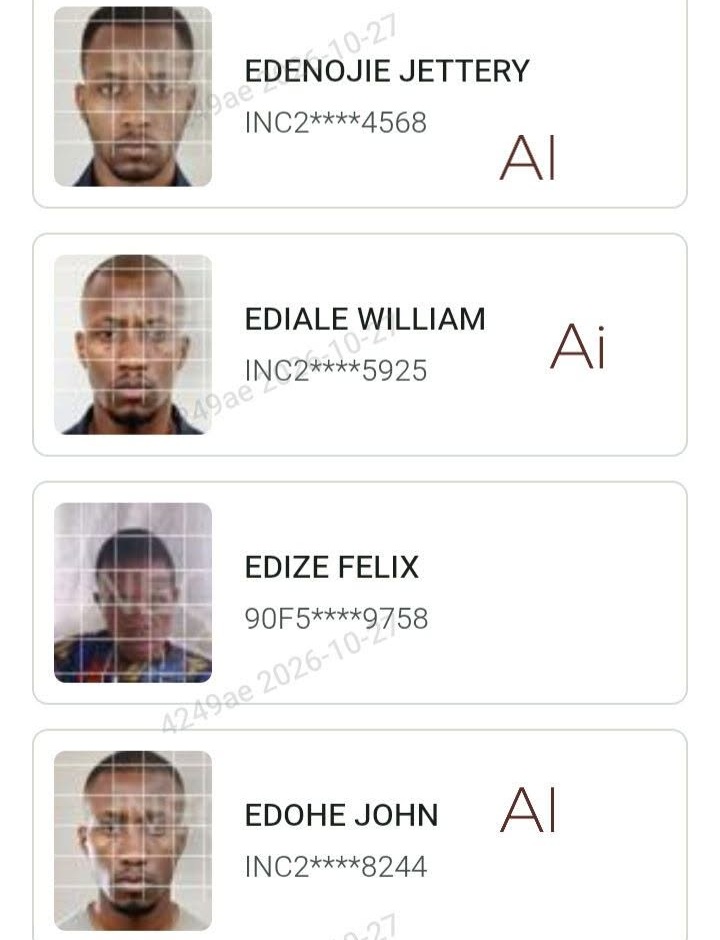
According to a screenshot observed by This Dawn News, a single AI-generated image was reused across multiple accounts.
This raises questions about the reliability of the information associated with the records.
However, the allegation that INEC deliberately used AI to generate fictitious voter identities has yet to be established by authorities.
The available evidence, as presented in the referenced post, requires further technical verification and an explanation from the electoral commission.

The issue is nevertheless significant because the credibility of voters’ register is fundamental to public confidence in Nigeria’s electoral process.
Alleged Reuse of an Image Raises Questions
The Facebook post points to what its author describes as an AI-generated image used for multiple accounts in the register.
If the same photograph has been attached to different voter records, the circumstances would require investigation.
This will determine whether the duplication resulted from a data-processing error, an image-upload problem, deliberate manipulation or another cause.
A duplicated photograph alone does not establish that the corresponding voter identities are fictitious.
Nor does the appearance of an image that looks artificial conclusively prove that it was generated by AI.

Such conclusions require examination of the underlying records and appropriate technical evidence.
INEC should therefore clarify:
- whether the image appears in multiple records,
- how the affected records were created, and,
- what procedures are used to identify and resolve duplicate or suspicious entries.
INEC Publishes Preliminary Register Online
The controversy comes as INEC has made the preliminary voters’ register for the 2027 general elections available online following public concerns about access to the document.
In an update published on October 26, 2026, the commission said the register had been physically displayed at registration areas nationwide from October 9 to 15.
The move was to allow registered voters to inspect their details and submit claims or objections.
INEC subsequently announced that the same preliminary register would be accessible online through its official platform to facilitate wider public scrutiny.

The commission said it was continuing to process claims and objections ahead of the certification and publication of the final register, scheduled for December 15, 2026.
The online publication offers citizens and other stakeholders an opportunity to scrutinise the register and report suspected errors or irregularities.
Questions INEC Must Answer
Given the importance of an accurate voters’ register, INEC should address the specific concerns raised by the alleged duplicate image.
Among the questions requiring clarification are:
- Image verification: What procedures does INEC use to verify photographs submitted or associated with voter records?
- Duplicate detection: Does the commission have automated checks to flag the same photograph appearing under different voter identities?
- Identity verification: How are names, voter identification details and biometric information cross-checked to detect duplicate or potentially fictitious registrations?
- Investigation: Has INEC examined the records identified in the circulating post, and what were the findings?
- Public accountability: What process can citizens use to report suspected fraudulent entries and obtain a response?
The commission should publish verifiable findings where appropriate.
Meanwhile, it should protect voters’ personal information, ensuring that genuine voters are not wrongly accused or disenfranchised.
Real-Time Results Transmission and Biometric Accreditation
Critics also argues that real-time transmission of election results, backed by individual voters’ fingerprints, is necessary to prevent possible manipulation involving multiple images and reference numbers.
The concern highlights two important safeguards, but they serve different purposes.
Biometric accreditation is intended to help verify a voter’s identity and eligibility at the polling unit.
Electronic transmission of polling-unit results is intended to improve the transparency and timely availability of results recorded after voting.
These processes are related to electoral integrity, but they are not interchangeable.
Fingerprint authentication does not, by itself, establish that a photograph in the voters’ register is genuine, and real-time results transmission does not independently verify the identities of everyone listed on the register.
A credible electoral system therefore requires complementary safeguards, including:
- accurate registration records,
- biometric checks,
- effective duplicate detection,
- transparent result management,
- independent oversight, and,
- accessible procedures for challenging irregularities.
AI Concerns Grow Ahead of 2027 Elections
The allegation emerges amid broader concerns about the potential misuse of artificial intelligence during the 2027 election cycle.
INEC has publicly acknowledged the threat posed by AI-generated misinformation and manipulated digital content.
In October, the commission also announced measures involving AI to help detect anomalies and counter disinformation.
The European Union has similarly warned that manipulated images, videos and audio recordings could undermine public confidence during the elections.
At the same time, INEC has discussed using AI-assisted tools to identify discrepancies in election-result data.
These developments make it especially important to distinguish between the responsible use of AI to detect errors and the alleged misuse of the technology to fabricate electoral records.
The existence of AI-generated content in circulation does not, on its own, establish that the electoral commission created or authorised it.
Democracy Requires Evidence, Transparency and Accountability
The integrity of Nigeria’s 2027 general elections depends in part on whether citizens can trust that the voters’ register accurately reflects eligible voters.
If the alleged duplicate image is confirmed, INEC should investigate the affected records.
It must then explain how the duplication occurred and disclose the corrective action taken.
If the allegation is inaccurate or the image has been misinterpreted, the commission should provide evidence-based clarification.
Citizens and political stakeholders should also be able to scrutinise the preliminary register and submit documented objections without fear of intimidation or arbitrary dismissal.
The central issue is not simply whether an image looks artificial.
It is whether the records are authentic, whether the verification system works and whether credible evidence can resolve legitimate public concerns.
Until the specific records are independently examined and INEC responds, the claim that the commission used AI to generate fictitious voter identities remains.