



TD ABUJA, NIGERIA — The composition of the Federal Government’s newly inaugurated Presidential Working Group on State Policing has sparked controversy.
Critics allege that the membership lacks regional balance, particularly excluding representatives from Nigeria’s North-West and North-East geopolitical zones.
The concerns were raised in a statement circulating on social media under the title, “State Police – Sinister Motive in the Open”.
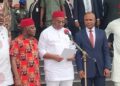
The statement questioned the regional composition of the 13-member committee inaugurated at the Presidential Villa, Abuja.
According to the statement, none of the committee members is from either the North-West or the North-East.
The author described the development as troubling given the two regions’ prolonged experience with insecurity, including terrorism, banditry and kidnapping.

The statement further claimed that nine members of the committee are of Yoruba origin, two are Igbo, while two are from Plateau State.
The writer argued that the composition raises concerns about inclusiveness in discussions surrounding one of Nigeria’s most sensitive constitutional and security reforms.
Among those listed as members are:
- Attorney General and Commissioner for Justice of Ondo State, Dr. Olukayode Ajulo (SAN);
- Director-General of the National Institute of Police Studies, Prof. Olu Ogunsakin;
- Senior Special Assistant to the President on Administration and Operations, Mrs. Oyinade Nathan-Marsh;
- President of the Nigerian Bar Association, Afam Osigwe (SAN);
- Ogun State Governor Dapo Abiodun;
- Chief of Staff to the President, Femi Gbajabiamila;
- Attorney General of the Federation, Lateef Fagbemi (SAN);
- Lagos State Attorney General, Lawal Pedro (SAN); and others.
The statement alleged that the committee’s composition reflects a lack of regional diversity.
It urged Northern Nigerians to pay closer attention to the ongoing debate over the establishment of state police.
The creation of state police has remained one of the most debated constitutional reform proposals in Nigeria.

Supporters argue that decentralising policing would improve local security and strengthen community-based law enforcement.
Opponents, however, have warned that state police could be abused by state governments for political purposes,
They have consistently called for robust constitutional safeguards.
As of the time of filing this report, the Presidency has not responded to the allegations regarding the committee’s regional composition.
There is also no official indication that appointments were made based on ethnic considerations rather than institutional roles or offices held by the members.
The debate comes as the Federal Government continues consultations on possible constitutional and legal frameworks for the establishment of state police.

The proposal is aimed at addressing Nigeria’s growing security challenges.
Observers say questions surrounding representation and inclusiveness are likely to remain central as discussions on the future of state policing continue.
Editor’s Note: The claims regarding the ethnic composition and motives behind the committee originate from a public statement and have not been independently ascertained.
No evidence has been presented that the appointments were made on the basis of ethnicity.