



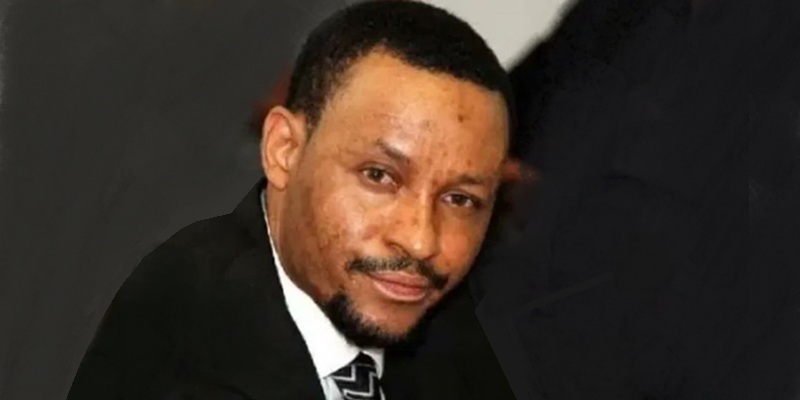

TD The Economic and Financial Crimes Commission (EFCC) has arraigned Judge Danladi Yakubu Umar, former Chairman of the Code of Conduct Tribunal (CCT), before Justice U. P. Kekemeke of the Federal Capital Territory High Court, Maitama, Abuja.
Judge Yakubu Umar was arraigned over allegations of fraud amounting to ₦15.5 million.
Umar, who also served as Chairman of the Tribunal’s Tenders Board, was arraigned on a four-count charge bordering on nepotism and conferment of corrupt advantage to himself.
The charges allege that he diverted public funds through contracts awarded under the Tribunal.
He reportedly channeled payments to his wife through companies linked to Tribunal projects.
The Charges
- Count One: Umar allegedly caused ₦5.5 million to be paid to his wife, Zulaihatu Danladi Umar, via her Keystone Bank account.
The money was paid by Kurchmives International Limited, a subcontractor under a Tribunal contract for painting the headquarters. - Count Two: He allegedly directed ₦6 million to her Zenith Bank account through Portal Realities Limited.
The firm is a sister company of JTF Global Links Limited, which had been awarded the contract for digitalizing Tribunal records. - Other Counts: Additional charges detail similar acts of self-enrichment and abuse of office.
EFCC noted that all the actions are contrary to Section 19 of the Corrupt Practices and Other Related Offences Act, 2000.

Court Proceedings
Umar pleaded “not guilty” to all charges.

Prosecution counsel, Christopher Mshelia, pressed for a trial date and requested that the defendant be remanded in custody pending trial.
Defence counsel, S. Edward, countered with an application for bail.
Justice Kekemeke adjourned the matter to July 15, 2026, for hearing on the bail application.
Kekemeke, meanwhile, ordered that Umar be remand at Kuje Correctional Centre, Abuja.
Symbolism of the Case
This case carries heavy symbolism in Nigeria’s anti-corruption fight.
Umar, once the head of the Code of Conduct Tribunal is now standing trial for alleged abuse of office.

CCT is the very institution mandated to uphold ethical standards among public officials—
The irony has not been lost on observers.
The man who once presided over cases against politicians and civil servants accused of misconduct now finds himself in the dock, accused of betraying the very principles he was meant to enforce.
Analysts say the case underscores the EFCC’s determination to pursue corruption cases regardless of status or past office.
It also highlights the growing demand for accountability in Nigeria’s judiciary and oversight institutions.
Public Reaction and Next Steps
The arraignment has sparked widespread debate.

Civil society groups have described it as a “watershed moment” in Nigeria’s anti-corruption campaign.
Others, meanwhile, caution that the case must be pursued diligently to avoid perceptions of selective justice.
Social media has been abuzz with the phrase “Hunter is Hunted”, reflecting the dramatic reversal of fortunes for Umar.
Many Nigerians see the case as proof that no one is above the law, while others remain skeptical, citing past high-profile trials that fizzled out without convictions.
With Umar remanded in Kuje prison, attention now shifts to the July 15 bail hearing.
Legal experts predict a fierce contest between the prosecution and defence, with the outcome likely to set the tone for the trial.
If convicted, Umar could face significant penalties under the Corrupt Practices and Other Related Offences Act, including imprisonment and forfeiture of assets.
For now, the case stands as a stark reminder of the fragility of Nigeria’s institutions and the importance of integrity in public office.