TD Nigerian states reportedly spent a combined ₦92.09 billion on travel and transportation between January and June 2026, according to an analysis attributed to Statisense, with Plateau State recording the highest expenditure during the period.

Tactic
The figures have drawn fresh attention to the cost of governance in Nigeria.
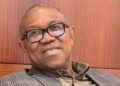
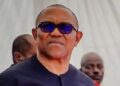
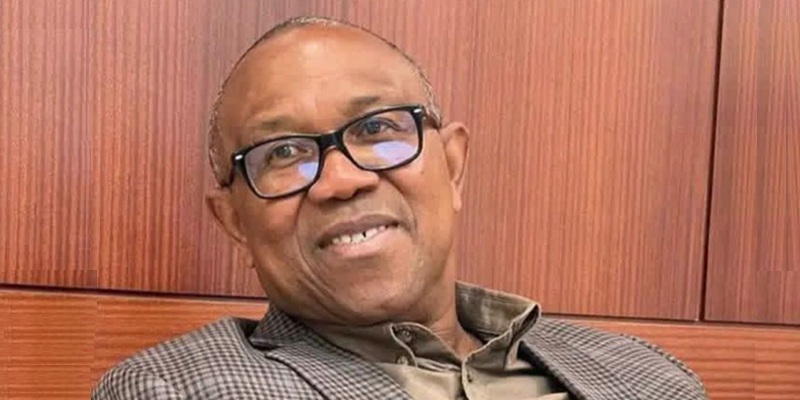
It comes as former Anambra State governor and 2027 presidential candidate of the Nigeria Democratic Congress (NDC), Peter Obi, recounted measures he said he adopted to reduce government expenditure while serving as governor.
Obi made the remarks on Monday while speaking in Washington, D.C., United States.
There, he discussed his approach to managing public resources and limiting what he described as unnecessary expenditure.
₦92.09bn Spent on Travel and Transport
The Statisense infographic cited in the analysis puts the combined travel and transport expenditure of Nigeria’s states at ₦92.09 billion for January to June 2026.
The amount translates, according to the infographic, to approximately:
- ₦508.7 million every day
- ₦21.1 million every hour
Plateau State ranked first among the states listed, with reported expenditure of ₦10.11 billion, followed by Lagos State with ₦8.23 billion.
Other states among the top reported spenders were:
| State | Reported expenditure | Region |
|---|---|---|
| Plateau | ₦10.11bn | North Central |
| Lagos | ₦8.23bn | South West |
| Taraba | ₦5.16bn | North East |
| Niger | ₦4.45bn | North Central |
| Ekiti | ₦4.41bn | South West |
| Bauchi | ₦3.75bn | North East |
| Yobe | ₦3.68bn | North East |
Plateau’s reported expenditure was about ₦1.88 billion higher than Lagos’, while the seven states listed above account for a substantial portion of the reported national total.
The infographic also indicates that Plateau’s figure represented roughly 11 per cent of the nationwide expenditure during the six-month period.
What the Figures Mean
The reported figures should, however, be understood as state travel and transportation expenditure, rather than money personally spent by governors.
Such budget categories can cover official transportation, domestic and international trips, government delegations, transportation services and other related activities across government institutions.
The Statisense figures therefore should not automatically be interpreted as the amount each governor personally spent on foreign travel or entourages.
Obi Recalls ₦298m Office Budget, Says He Spent ₦48m
Against the backdrop of the reported spending, Obi used his experience as Anambra governor to illustrate how he said public officials could reduce the cost of governance.
He said ₦298 million had been budgeted for refurbishing his office but that the work was eventually completed for ₦48 million.
He also said ₦486 million had been budgeted for refurbishing his residence, but that he completed the project for ₦81 million.
“When I was governor, the budget for refurbishing my office was ₦298 million, but I did everything with ₦48 million.
“There was also a budget of ₦486 million to refurbish my house, but I completed everything with ₦81 million,” Obi said.
The figures amount to reported reductions of about 84 per cent for the office refurbishment and 83 per cent for the residence refurbishment, based on the amounts he cited.
‘I Didn’t Use 16 Percent of My Travel Allowance’
Obi also focused on official travel, saying he deliberately avoided travelling with a large entourage when the people accompanying him were not required for the engagements.
According to him, governors could ordinarily travel with about 30 people, but he said he travelled alone when he was the only person invited to an event.
“As a governor, you are supposed to travel with 30 people to several places.
“Over the years I was governor, I didn’t use 16 percent of my travel allowance because I wasn’t travelling with anybody.
“I was the only person invited; nobody invited them.”
Obi’s broader argument was that money saved through tighter management of government expenditure could instead be directed towards sectors such as education and healthcare.
He has continued to advocate a reduction in the cost of governance and a shift in public spending towards productive investment.
A Wider Debate Over the Cost of Governance
The juxtaposition between the reported ₦92.09 billion in state travel and transport expenditure and Obi’s account of limiting his own official travel costs is likely to fuel renewed debate over government expenditure.
However, the two figures are not directly comparable:
The Statisense figure covers travel and transport spending across Nigerian states and government operations, while Obi was describing his personal approach to official travel during his tenure as Anambra governor.
The comparison nevertheless raises a broader policy question:
“How much of government travel expenditure is essential to delivering public services, and how much could potentially be reduced without affecting governance?
For a country facing significant pressures on public finances, the question of whether scarce government resources are being deployed efficiently remains an important part of the national conversation.
Obi has argued that reducing wasteful expenditure would allow more resources to be directed towards areas capable of improving citizens’ lives.
His latest comments come as political activities intensify ahead of the 2027 general elections.