
 Two and a half months from a general election, political surrogates have become Nigeria’s hommes du jour. These are people trusted to represent or advocate the positions and platforms of principals running for office. They inhabit many spaces and perform in many theatres.
Political surrogates are not supposed to be found presiding over courts of law as judges. Nigeria’s constitution prohibits that.
It requires in section 36(1) that courts should be “constituted in such manner as to secure their independence and impartiality.”
A court presided over by a political surrogate would surely be devoid of the constitutive standards of independence and impartiality.
Put differently, a judge who acts as a surrogate for a political party or politician is unlawful.
There was a time when it was a common law crime to even dare to suggest that a judge could be a party-political surrogate. This arose in an interesting case decided by the High Court of Australia on 7 June 1911.

Two months earlier, on 7 April 1911, a newspaper, The Mercury, in Hobart, Tasmania, published an article under the title “A Modest Judge”. It took aim at Mr Justice Higgins, a senior judge of the High Court of Australia who was also the first President of the Commonwealth Court of Conciliation and Arbitration.
According to the records, in a case presided over by Justice Higgins in the Court of Conciliation and Arbitration, a lawyer, Mr Starke, accused a labour union of impunity, alleging that “they are encouraged…. by the government of this country.”
On hearing this, Justice Higgins prohibited the lawyer from uttering such words. When counsel protested his right to vigorously advance the case of his client, the judge retorted “(Y)ou are not entitled to speak disrespectfully of those above us.”
In response, The Mercury wrote of Justice Higgins that he was “we believe, what is called a political Judge, that is, he was appointed because he had well served a political party.
He, moreover, seems to know his position, and does not mean to allow any reflections on those to whom he may be said to be indebted for his judgeship.”
The Attorney-General of Australia charged the newspaper with the common law crime of “scandalizing the judiciary.” Dismissing the charge, Samuel Walker Griffith, Australia’s inaugural Chief Justice, decided:

“I am not prepared to accede to the proposition that an imputation of want of impartiality to a Judge is necessarily a contempt of Court.
“On the contrary, I think that, if any judge of this Court or of any other Court were to make a public utterance of such character as to be likely to impair the confidence of the public, or of suitors or any class of suitors in the impartiality of the Court in any matter likely to be brought before it, any public comment on such an utterance, if it were a fair comment, would, so far from being a contempt of Court, be for the public benefit, and would be entitled to similar protection to that which comment upon matters of public interest is entitled under the law of libel.”
Nigeria’s judiciary began as wholly-owned surrogates of the Royal Niger Company in the last quarter of the 19th century.
Frederick Lugard, who served the Imperial British East African Company (IBEAC) in colonial Uganda before joining the staff of the Royal Niger Company, liked things that way and said clearly enough in his Amalgamation report in 1919 that he preferred his judges beholden to the executive.
After independence, the early politicians desired to continue this trend.
Ladoke Akintola, then regional premier, suffered disappointment in his expectation that, Samuel Okhai Quashie-Idun, Chief Justice at the onset of the political crisis in the old Western Region in 1961, should have been his judicial surrogate.
In the 1980s, the military regime of Ibrahim Babangida recalibrated judicial appointments to advance judicial surrogates for military rule. By 1989, then Chief Judge of Lagos State, Ligali Ayorinde, ruled that the soldiers had become constitutional Kabiyesi.
It could, nevertheless, be said then that most judges under military rule in Nigeria appeared largely inclined to do right most of the time. Those who wanted to turn themselves into surrogates for the ruling soldiers were the exception, not the rule.

Today, the reverse seems to be the case, especially in the High Courts, including at the state level, the High Court of the Federal Capital Territory, and the Federal High Court.
In many of these courts, the preservation of judicial integrity has been replaced with the pursuit of judicial impunity, and it can safely be said today that there are many judges in Nigeria who do “not mean to allow any reflections on those to whom [they] may be said to be indebted for [their] judgeship.”
In many court systems, some parties can now pick and choose their own judge.
The charges in the trial of senior lawyer, Joseph Nwobike, leading to his conviction in the High Court in 2018 were that he specialised in “inducing court registrars to ensure that his cases were assigned to his preferred judges so he could obtain favourable judgments.”
Nwobike, the charges read, also offered bribes to Mohammed Yinusa (now late) and Hyeladzira Nganjiwa, both judges of the Federal High Court. The Supreme Court set aside his conviction on a technicality but did not overrule these findings of fact.
The Federal High Court and the FCT High Court have become notorious as two forums where judicial careers get waylaid into political surrogacy.
In the Federal High Court system, for instance, the assignment of political cases now follows a predictable pattern. Political cases routinely end up before a settled slate of judges.
With astonishing insouciance, two young judges from the class of October 2023 appointments to the Federal High Court, for instance, have now established themselves as ambitious members of this gang of judicial surrogates of known political interests.
One is in Lagos. Another is in Abuja. The political cases go to them thick and fast. Their decisions almost routinely read like judicial scandals on Steroids.
Obviously, the only reason these cases keep being assigned in this way is because the Chief Judge who does the case assignment is himself unperturbed that his conduct makes him a judicial surrogate of known political interests.
There was an example of this in a case in the High Court of Anambra State in the past year. The judge was relatively young on the bench. The case was primed by political paymasters. It concerned a high-profile statutory office, a matter over which the National Industrial Court of Nigeria has exclusive jurisdiction.
This was a matter in which the State High Court lacked subject-matter jurisdiction, and the plaintiff manifestly lacked standing. The judge surely knew this. It was instituted on 15 September 2025.
The judge handed down his judgment exactly 10 days later, granting mutually contradictory orders that he had no power to. It is one of those judgments that give you the vibe of having been drafted anywhere but in the judge’s chambers or study.
These are the kinds of things that destroy judicial careers even before they begin. Stanley Nnaji, the now late judge of the High Court of Enugu State, was an early judicial surrogate of politicians in the Peoples’ Democratic Party when the party was in power. It cost him.
The archetype among this species was Wilson Egbo-Egbo, the former judge of the Federal High Court, who, in a unique season of judicial rampage 23 years ago, single-handedly and “ex parte installed a Senate President, impeached a Governor, replaced this Governor with his deputy, and [carried] on with the air of a judicial untouchable.”
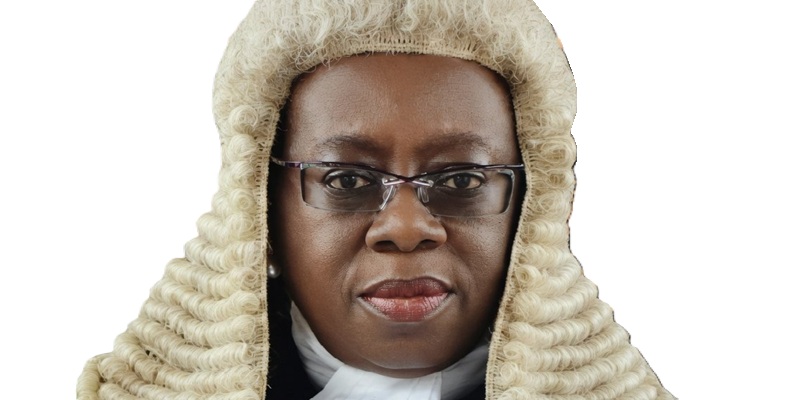
At the beginning of the new judicial year last month, Chief Justice Kudirat Kekere-Ekun pleaded for judges to be spared from “personal attacks, ridicule, threats and harassment.”
That comes with the responsibility on the part of the National Judicial Council (NJC) that she heads to take strong and urgent measures, especially in this political season, to stop this growing rabble of wholly-owned judicial surrogates of known politicians.
They must not sit on election petition tribunals. If the NJC proves unwilling or unable to accomplish this, then the only avenue left to citizens is to treat them as political hustlers or unlawful judges.
A lawyer and a teacher, Odinkalu can be reached at chidi.odinkalu@tufts.edu