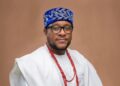



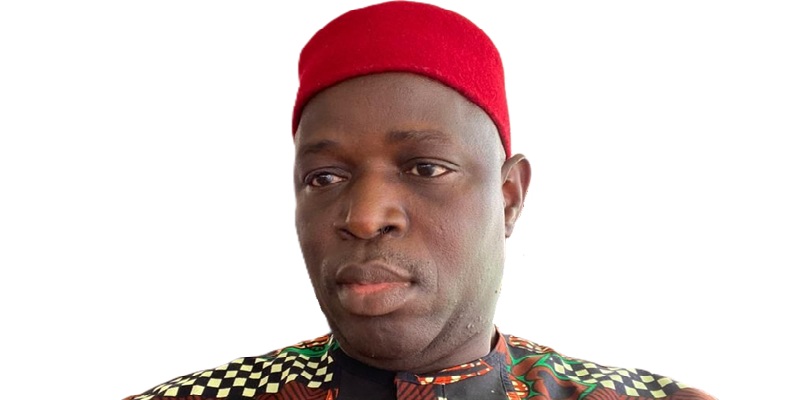

TDA member of the Nigeria Democratic Congress (NDC) Diaspora chapter, Dr. Peter Okey, has publicly challenged the party’s explanation of its recently concluded primary elections.
Dr. Okey called on the leadership to provide evidence of the processes used in disputed contests and ensure aggrieved aspirants are given a fair hearing.
In a detailed response to the NDC’s June 5, 2026 press statement on the primaries, Dr. Okey accepted that the party leadership had attempted to explain how candidates emerged across the country.
He, however, argued that the statement failed to address critical concerns raised by aspirants and party members, particularly in Ebonyi State.
According to him, the issue is not the involvement of stakeholders, caucus leaders, or influential party figures in the affairs of the party.
Rather, it is whether such individuals acted within the provisions of the party’s constitution and electoral guidelines.

“Democracy must be seen to be practised, not merely preached,” Okey stated.
He emphasizing that consultation, consensus-building, and leadership structures cannot replace constitutional procedures.
He noted that the NDC constitution provides clear mechanisms for the emergence of candidates, including consensus arrangements where agreement exists and primary elections where consensus fails.
“The question is straightforward: where consensus was not achieved, were transparent primaries conducted in accordance with party guidelines?” he asked.
Okey maintained that if primaries were properly conducted, the party should have no difficulty providing evidence. However, he argued that if such processes did not occur, the leadership should acknowledge shortcomings and take corrective measures.
The diaspora member also warned against what he described as the risk of institutionalising political godfatherism within the party.

He said many Nigerians were attracted to the NDC because it promised a departure from traditional political structures where powerful individuals determine outcomes without accountability.
“No political party can claim to be promoting internal democracy while simultaneously insulating powerful political actors from scrutiny,” he said.
Addressing the party’s grievance-resolution mechanisms, Okey expressed concern that aspirants with complaints were being directed to seek redress through the same caucus structures whose actions they were challenging.
He argued that principles of natural justice require aggrieved members to have access to an independent and impartial process for hearing complaints.
“Leadership involves listening. It involves investigation. It involves hearing all sides before reaching conclusions,” he stated.
Focusing specifically on Ebonyi State, Okey questioned the party’s assertion that aspirants had the opportunity to test their popularity through grassroots democratic processes.

According to him, aspirants in the state were informed that primaries would be conducted if consensus could not be reached. He claimed consensus efforts failed and that not all aspirants were invited to meetings held to resolve the issue.
He further alleged that despite the absence of consensus, many party members and aspirants maintain that no properly organised primaries were conducted.
To address the controversy, Okey called on the NDC leadership to publish documentation relating to the alleged primaries, including official notices, venue details, timing of the exercise, lists of accredited delegates, names of electoral officials, and result sheets.
“These are not unreasonable requests. They are the minimum standards expected in any democratic process,” he said.
Okey argued that transparency would strengthen the party’s credibility and public confidence, whether by validating properly conducted processes or by identifying and correcting procedural shortcomings.
He further urged the party to remain faithful to its founding principles of fairness, accountability, inclusion, transparency, and democratic participation.
“The true test of internal democracy is not how a party treats its friends. It is how a party treats those who disagree with decisions and seek explanations,” he said.
Calling for an urgent review of disputed primaries, Okey acknowledged the party’s constitutional right to determine its candidates but insisted that such authority must be exercised in accordance with the party’s constitution, guidelines, and principles of natural justice.
He warned that any process perceived as bypassing constitutional procedures or ignoring legitimate grievances could damage the party’s credibility and undermine public confidence.
The NDC leadership is yet to respond to the concerns raised by the diaspora member.
However, the intervention adds to growing calls from some party stakeholders and aspirants for greater transparency and accountability in the aftermath of the party’s nationwide primaries.
This Dawn News reports that the debate over the conduct of the NDC primaries is expected to remain a key issue as the party moves toward preparations for future elections and internal reconciliation efforts.