


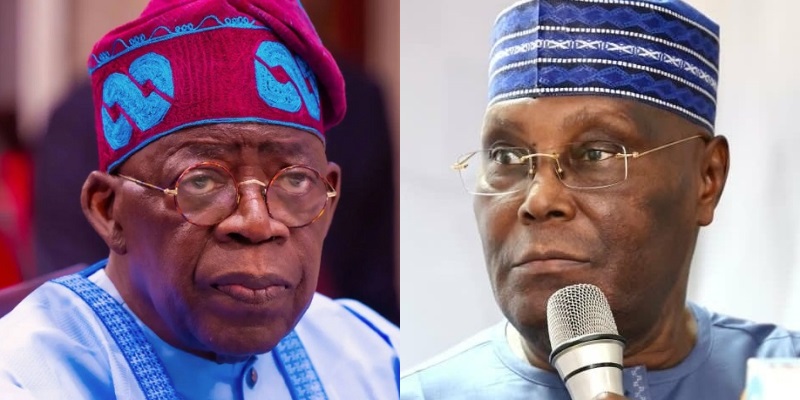

TD Abuja, Nigeria — The political rivalry between President Bola Tinubu and former Vice President Atiku Abubakar has reignited after Atiku’s media office released a strongly worded statement accusing the Presidency of attempting to “whitewash” a decades-old U.S. civil forfeiture case.
The press release, signed by Atiku’s adviser Paul Ibe, challenged the Nigerian government’s defense of Tinubu’s past legal troubles in the United States.
It referenced court records from 1993 in which Tinubu surrendered $460,000 to U.S. authorities following an investigation into heroin trafficking proceeds linked to a Chicago drug ring.
While Tinubu was never criminally convicted, the forfeiture settlement has remained a point of contention in Nigerian politics.
Key Points from Atiku’s Statement
- Whitewashing Allegations: The media office accused Tinubu’s team of issuing “reckless and shameful” statements to bury records of the narcotics case.
- Electoral Mandate vs. Justice: Atiku’s camp criticized the Presidency’s argument that Tinubu’s electoral victories rendered the matter moot, insisting that criminal justice issues “are never completely thrown out.”
- FOIA and Lobbying Efforts: Atiku’s allies have reportedly pursued Freedom of Information Act (FOIA) requests and lobbying in Washington to access FBI and DOJ files related to the forfeiture case, citing changes in U.S. leadership as an opportunity for renewed scrutiny.
- Reputational Damage: The statement warned that having “an alleged ex-trafficker” as Nigeria’s president inflicts serious reputational harm on the country internationally.
- Challenge to Tinubu: Atiku’s office demanded that Tinubu submit himself to any revisitation of the case rather than “frustrating disclosures through frivolous court appeals” or relying on lengthy essays from aides.
Political Context
The dispute underscores the lingering bitterness from the 2023 presidential election, where Tinubu defeated Atiku.
Since then, opposition figures have continued to highlight the forfeiture case as evidence of alleged misconduct, questioning Tinubu’s suitability for office.

Atiku’s statement also invoked a Yoruba proverb — “an aged bowl of pounded yam can still steam” — to argue that past cases can resurface under new circumstances.
The release suggested that U.S. law enforcement agencies could revisit the matter between 2023 and 2027, given the change in American leadership.
Presidency’s Position
Tinubu’s media team, led by Bayo Onanuga, has previously dismissed the forfeiture case as settled and irrelevant.
It emphasized that Nigerians resolved the issue at the ballot box and through the Supreme Court.
The Presidency maintains that Atiku’s lobbying abroad undermines Nigeria’s sovereignty and amounts to political theatrics rather than substantive opposition.
Implications
The renewed focus on Tinubu’s U.S. forfeiture case highlights the intersection of Nigerian domestic politics with international reputational risks.

While no criminal conviction was ever recorded, the controversy continues to serve as a potent weapon for opposition figures seeking to weaken Tinubu’s legitimacy.
As Nigeria grapples with economic and security challenges, the persistence of this decades-old case in political discourse reflects both the depth of partisan rivalry and the enduring power of unresolved legal shadows.
Note: This report is based on official press releases and publicly available records.
Readers are encouraged to consult multiple trusted sources for balanced perspectives on Nigeria’s political developments.