

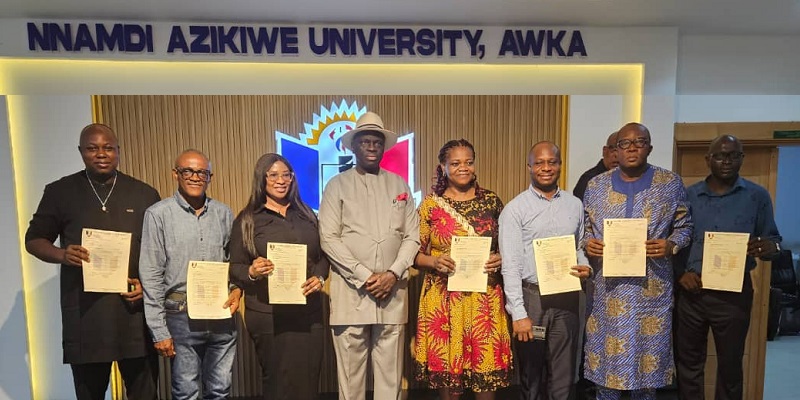
The International Society for Civil Liberties and Rule of Law (Intersociety) has lauded the appointment of renowned grassroots rights activist, Aloysius Emeka Attah, as the new Director of Information and Public Relations at Nnamdi Azikiwe University (UNIZIK).
Intersociety described the development as a milestone for human rights advocacy and public communication in academia.
This was contained in a detailed statement issued following the university’s Governing Council ratification on April 17, 2026.
The group said Attah’s emergence reflects a recognition of decades of dedication to grassroots activism, public enlightenment, and intellectual development.
It noted that Attah, who began his writing career from a modest background in Onitsha, rose through the ranks of Nigeria’s human rights community.
He would later become a respected voice in civil liberties discourse.
The Humble Beginning of Aloysius Attah
The organisation traced Attah’s activism to his early association with Civil Liberties Organization under the leadership of Emeka Umeagbalasi.
It highlighted their shared history as trader-turned-activists who combined enterprise with advocacy and education.
According to Intersociety, both figures leveraged opportunities in continuing education to earn advanced degrees in fields such as Political Science, Criminology, and Conflict Resolution.
It, thereby, debunked stereotypes about the intellectual capacity of members of the business community.
The group further emphasised that Attah is a multiple award-winning journalist and activist whose contributions have significantly shaped rights advocacy in Anambra State and beyond.
It expressed confidence that his appointment at UNIZIK would strengthen institutional communication and promote transparency.
It urged him to remain a worthy ambassador of what it described as the “Anambra School of Human Rights Activism.”
Automatic Employment for 37 First-Class Graduates of COOU
Beyond Attah’s appointment, Intersociety also commended Charles Chukwuma Soludo for approving automatic employment for 37 first-class graduates of Chukwuemeka Odumegwu-Ojukwu University (COOU).
The group described the gesture as commendable and capable of motivating academic excellence among students.
However, it cautioned that such employment must be institutionalised in line with Anambra State Civil Service Rules.
This, it stated, will prevent it from becoming a temporary or politically motivated initiative tied to the administration.
Intersociety stressed that the beneficiaries must be fully integrated into the civil service structure with guaranteed career progression, remuneration, and job security.
It warned that anything short of this could undermine the credibility of the initiative and discourage future academic commitment.
Beyond Attah, Strong Indignation for Appointment of Matthew Hassan Kukah as COOU Chancellor
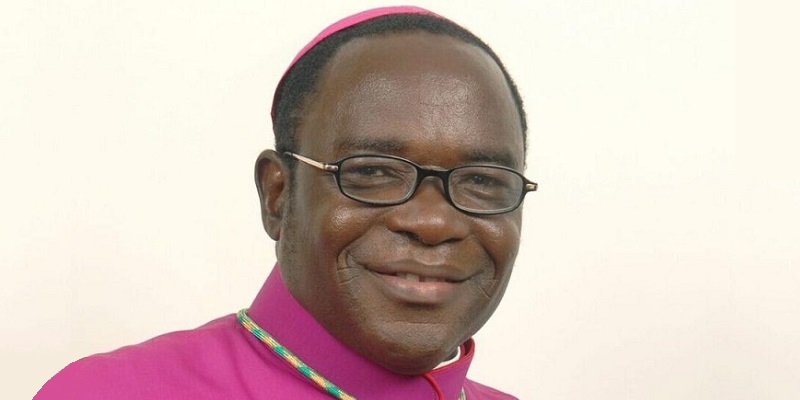
The organisation, however, expressed strong opposition to recent developments at COOU, particularly the appointment of Matthew Hassan Kukah as Chancellor of the university.
While acknowledging Kukah’s standing as a cleric, Intersociety cited concerns raised by critics regarding his perceived silence or insufficient advocacy on issues of violence against Christians in Nigeria.
It argued that such a high-profile appointment should reflect sensitivity to prevailing socio-religious concerns.
It added that Kukah’s simultaneous roles in other federal institutions raise questions about equity and representation.
Renaming of Uli Campus
Similarly, the group rejected the decision to rename the Uli campus of COOU after former governor Chinwoke Mbadinuju.
It maintained that the university, already named after the revered Igbo leader Chukwuemeka Odumegwu Ojukwu, should retain its identity across all campuses without further alterations.
According to Intersociety, renaming any campus undermines the symbolic and historical significance of the institution’s current name.
The group further criticised the legacy of the Mbadinuju administration, particularly in relation to governance, human rights, and security challenges recorded during his tenure between 1999 and 2003.
The statement also referenced unresolved cases of violence during that era, calling for greater historical accountability rather than symbolic honours.
In conclusion, Intersociety reiterated its support for merit-based recognition and institutional integrity.
It urged stakeholders in Anambra’s education sector to prioritise decisions that reflect fairness, historical consciousness, and long-term public interest.
It expressed optimism that Attah’s appointment would mark a new chapter in university communications and inspire a new generation of scholar-activists.