TDThe structural coherence of the Nigerian state has long been sustained by a fragile consensus that is increasingly compromised by existential internal contradictions.
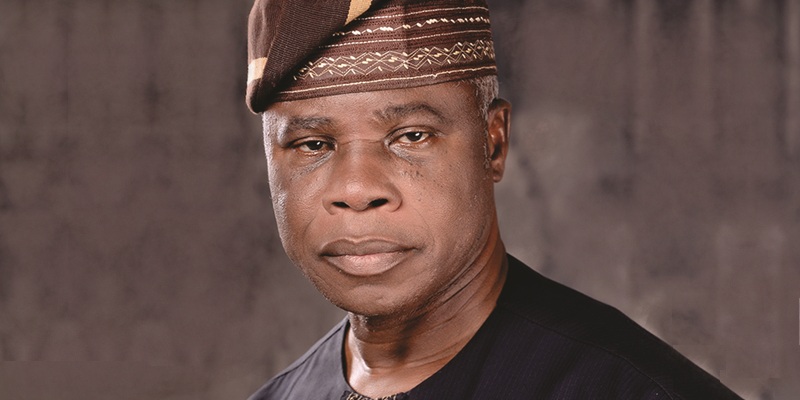
A definitive manifestation of this systemic vulnerability emerged through the public declarations of Afenifere chieftain Akin Fapounda, who explicitly threatened Ndigbo with ethnic cleansing should an Igbo win the 2027 presidential election.
This rhetoric cannot be dismissed as marginal political commentary. It represents a functional articulation of deep-seated structural hostilities within the ruling establishment; and its timing operates as a calculated psychological assault on Ndigbo.
It was intentionally delivered just days before the solemn global commemoration of the 1966 anti-Igbo pogroms and the subsequent genocidal civil war.
By invoking frameworks of mass annihilation precisely when millions of Ndigbo mourn over three million lives lost to State sponsored violence, the threat actively weaponizes historical trauma to enforce political subjugation.
The most critical diagnostic indicator of Nigeria’s state failure is the absolute, complicit silence emanating from Aso Rock Villa.


President Bola Ahmed Tinubu’s refusal to arrest, investigate, or publicly denounce this overt threat of ethnic cleansing signals executive validation.
Under international jurisprudence, when a sovereign state fails to penalize direct incitement to eliminate a protected group, it transitions from a passive observer to an active accomplice.
This calculated silence converts democratic participation into an existential hazard for Ndigbo, proving that the contemporary state architecture remains indifferent to the targeted destruction of its Igbo citizens.
This dynamic entirely validates the persistent alarms raised by Mazi Nnamdi Kanu regarding the systematic vulnerability and targeted endangerment of Ndigbo within Nigeria.
The precise threats he foretold are now openly declared by political elites. This systemic vindication amplifies the legal and moral necessity for his immediate and unconditional release.
The ongoing crisis reinforces the core position of the Eastern Nigeria Development Association (ENDA).

The structural architecture of Nigeria has been fundamentally broken since the catastrophic pogroms of 1966, failing to provide basic security, equity, and judicial neutrality to Eastern Nigerians and Ndigbo in particular.
Under Article III of the 1948 UN Genocide Convention, direct and public incitement to commit genocide is a distinct international crime.
Furthermore, Article 1 of both the International Covenant on Civil and Political Rights (ICCPR) and the International Covenant on Economic, Social and Cultural Rights (ICESCR) explicitly protects the right of all peoples to self-determination.
This is supported by Article 20 of the African Charter on Human and Peoples’ Rights, which Nigeria has fully ratified, guaranteeing oppressed peoples the right to free themselves from oppression.
When peaceful democratic alignment is met with threats of physical liquidation, the forced amalgamation of Nigeria ceases to be a viable political option and becomes an active security threat.
ENDA makes an urgent, formal appeal to the United Nations Security Council and African Union to intervene immediately to protect the lives of Ndigbo in Nigeria.

The international community must move beyond diplomatic deference and recognize Mazi Nnamdi Kanu’s call for a peaceful referendum as the only rational, non-violent mechanism to avert a humanitarian catastrophe and secure the self-determination and preservation of the peoples of Eastern Nigeria/Biafra.
Charles Obinna Chukwunaru, PhD.
President, Eastern Nigeria Development Association (ENDA)