TDIn the wisdom of our fathers, the earth is not just sand and stone. It is a living mother that breathes.
The ancestors understood that if you treat the earth with respect, it will feed you until your barns overflow.
They knew that a man who spits into the air should expect the spittle to fall back on his own face.
This was the foundation of waste management in the old days.
Nothing was truly called waste because everything had a destination. The peelings from the yam and the sweepings from the hearth were the food of the soil.
Our people did not just throw things away. They returned them to the womb of the land to be reborn as tomorrow’s harvest.


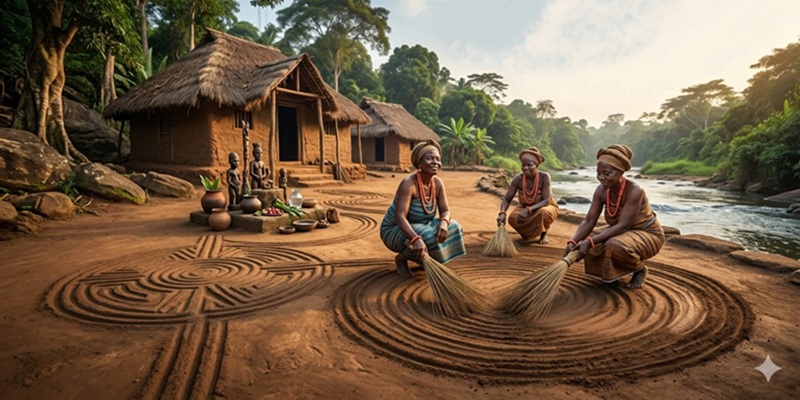
Ancient Igbo compounds were kept as clean as a mirror. The morning sun always met the footprints of the diligent sweeper.
To Ndi Gboo, a dirty environment was a sign of a lazy spirit. There is a proverb that says a man who brings home ant-infested faggots should not complain when lizards start visiting him.
Our people knew that filth brings sickness, and sickness brings poverty. They organized themselves through the age-grade system.
Young men and women cleared the village squares and the market paths. They did this without waiting for a government decree.
They did it because the beauty of the village was the pride of every son of the soil.
The stream was the blood of the community. No one dared to dump filth near the water’s head. It was a sacred law.

They believed that the water goddess would depart if her home became a refuse dump.
Today, we have forgotten that any river that forgets its source will surely dry up.
We throw plastics into our gutters and expect the rain to carry them to another man’s land. But the rain is a messenger that delivers exactly what we give it.
When the gutters are choked, the floods visit our parlours. We must remember that when one finger touches oil, it eventually spreads to the others. Our individual neglect is now a collective burden.
We can learn much from the way our ancestors managed their resources. They practised a circular life where nothing was lost.
Today, our cities are gasping for breath under the weight of nylon and bottles. We must return to the old path where every hand was on deck.

Every household should be the first manager of its own refuse. We need to separate the things that can rot from the things that will last forever.
Organic waste should go back to the gardens to make our yams fat. Plastics must be gathered and sent away for new uses. If we do not change, the land will become a desert under our feet.
The eagle should perch, and the egret should perch. Let the land thrive so that we may also thrive. A clean environment is the greatest legacy we can leave for those coming behind us.
We must teach our children that the ground they walk upon is the same ground that will hold them when they are gone.
Let us treat our streets with the same love our fathers gave to their sacred groves. If we sweep our own doorsteps, the whole village will be clean.
Let the ancient wisdom of Ndigbo guide our modern hands toward a greener and healthier future.
#IgboAmaka