





TD Nigeria’s porous borders are increasingly exposing the country to a wider regional jihadist threat, with Islamic State West Africa Province (ISWAP) in the Lake Chad Basin and Islamic State Sahel Province (ISSP) in the Liptako-Gourma region demonstrating the ability to operate across a vast geographical space.
The assessment was highlighted by Defense News Nigeria, which condemned weak border controls.
It argued that they allow militants to move personnel and resources across national boundaries, potentially undermining Nigerian military gains against insurgent groups.
The concern is supported by recent security assessments showing that ISSP has expanded its activities southward from the Sahel toward Nigeria’s northwestern states of Sokoto and Kebbi.
ACLED reported that ISSP expanded its operations along the Niger-Nigeria border, particularly around Niger’s Dosso region and northwestern Nigeria.
ISWAP and ISSP Operating More Than 1,000 Kilometres Apart
ISWAP has traditionally operated around the Lake Chad Basin, spanning northeastern Nigeria and parts of Niger, Chad and Cameroon.

ISSP, meanwhile, has its main strongholds in the wider Liptako-Gourma area encompassing parts of Mali, Burkina Faso and Niger.
Despite the geographical distance separating their principal operating areas, recent reporting indicates that the two Islamic State affiliates have developed channels for cross-regional cooperation.
The Institute for Security Studies reported in July 2026 that ISWAP had resolved to send 100 fighters to ISSP.
The aim was to reinforce ISSP in Ménaka, near Mali’s border with Niger, according to defectors communicating with current fighters.
The development illustrates how the Islamic State’s African affiliates can potentially move personnel between theatres rather than remaining confined to individual national battlefields.
ISWAP and ISSP Are Part of a Wider Regional Network
The reported relationship between ISWAP and ISSP is significant because both groups are part of the broader Islamic State network.

The Soufan Center reported in June 2026 that Islamic State strategy since 2022 has included efforts to consolidate its West Africa and Sahel provinces.
Meanwhile, recent U.S.-Nigerian counter-terrorism operations are targeting Islamic State-linked elements in Nigeria.
The Institute for Security Studies similarly warned that existing counter-insurgency structures in the Lake Chad and Sahel regions were not designed to match the affiliates’ cross-regional mobility.
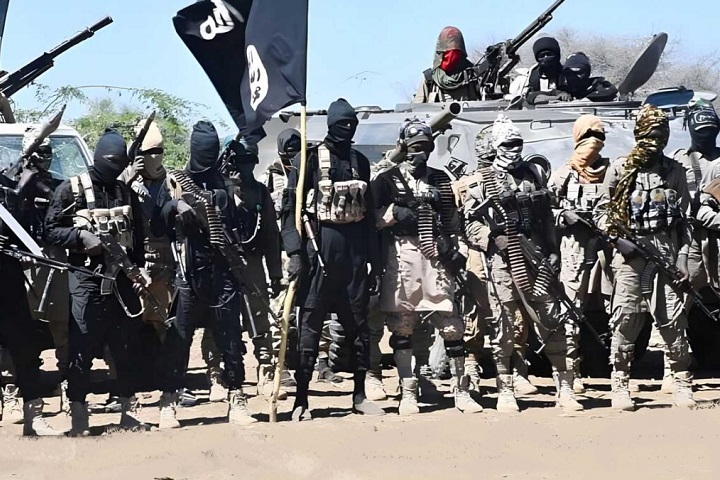
ISSP Expands into Sokoto and Kebbi
The ISSP and ISWAP threat has become particularly pronounced in northwestern Nigeria.
ACLED reported that ISSP expanded southward along the Niger-Nigeria border and into Sokoto and Kebbi states.
In 2026, the group claimed responsibility for attacks in the two states.

These include:
- An attack near Giro Masa in Kebbi State on March 24, which killed Nigerian security personnel, and,
- Another near Rumji Dan Tudu in Sokoto State on May 16, in which seven soldiers were killed, according to ACLED.
U.S. and Nigerian counter-terrorism operations have also focused on Islamic State-linked militants in northwestern Nigeria.
The emergence of this threat represents an important geographical shift from Nigeria’s traditional concentration on jihadist violence in the Lake Chad region.
A Cross-Border Corridor into Northwestern Nigeria
Security analysts have increasingly identified the Niger-Nigeria border as an important corridor for ISSP activity.
The 2026 Global Terrorism Index said ISSP developed logistical and recruitment networks along the Niger-Nigeria border, particularly around Niger’s Dosso region and Nigeria’s Sokoto and Kebbi states.
The report said porous borders allow the group to move fighters, evade security pressure and exploit gaps between national jurisdictions.
ACLED has similarly described an ISSP support zone and supply corridor extending from southwestern Niger toward Sokoto and Kebbi.
ISWAP Militants Can Replenish Losses Across Borders
Defense News Nigeria argues that the most serious consequence for Nigeria is the ability of militant groups to replenish their ranks after suffering battlefield losses.
Under such circumstances, military operations can inflict substantial casualties on insurgents without necessarily eliminating their operational capacity.
That is possible if replacement fighters can subsequently cross into Nigeria from neighbouring countries.
This creates what the security analysis describes as an attrition cycle.
An attrition cycle is a situation whereby Nigerian forces repeatedly degrade militant formations, but porous borders allow new personnel to enter the country.
The result is that tactical victories may fail to produce lasting strategic gains.
Recent ISWAP Attacks Demonstrate the Growing Threat
The ISWAP expansion is not merely theoretical.
The Associated Press reported that an attack in Kebbi State on March 24, 2026, killed nine soldiers, a police officer and a civilian, while several other soldiers were wounded.
The attack occurred in the Shanga area after security forces responded to warnings of an impending militant attack.
ACLED subsequently reported that ISSP claimed attacks in both Kebbi and Sokoto during 2026.
The Islamic State’s public confirmation of operations in northwestern Nigeria marked a significant development.
Critical Threats reported that the group’s al-Naba newsletter in May claimed two ISSP attacks in the region.
It described the group’s presence as an expansion of Islamic State activity into northwestern Nigeria.
The Lakurawa Connection
The emergence of Islamic State-linked militants in the region has also drawn attention to Lakurawa, an armed group operating around parts of Kebbi and Sokoto.
The European Union Agency for Asylum reported that Lakurawa fighters have operated in northwestern Nigeria and are suspected of links to ISSP.
Meanwhile, it noted their cross-border origins and activities in Nigeria and Niger.
However, analysts caution against automatically treating every Lakurawa-related incident as an ISSP operation.
A July 2026 study by Good Governance Africa found that Lakurawa, ISWAP and ISSP are distinct organisations, despite public discussion frequently conflating the two.
The study documented ISSP’s growing organisational presence in Sokoto and Kebbi based on field research and interviews with residents and community leaders.
Political Fractures Complicate Regional Cooperation
The security challenge is further complicated by political instability and deteriorating regional cooperation.
The Sahel has experienced major political changes, including military governments in Mali, Burkina Faso and Niger and the weakening or restructuring of regional security arrangements.
These developments have made intelligence-sharing and coordinated military operations more difficult.
The Institute for Security Studies warned that fragmented security arrangements leave gaps that Islamic State affiliates can exploit as they move between the Lake Chad Basin and Sahel theatres.
Nigeria Faces a Wider Regional Security Problem
The growing presence of ISSP-linked militants in Sokoto and Kebbi means Nigeria’s jihadist threat can no longer be viewed exclusively through the lens of the Lake Chad insurgency.
The country now faces pressure from multiple directions:
- ISWAP and other jihadist groups around the Lake Chad Basin in the northeast,
- ISSP-linked activity along the Niger border in the northwest, and,
- other militant and criminal networks operating across Nigeria’s extensive frontier regions.
The Global Terrorism Index describes the Niger-Nigeria border corridor as part of ISSP’s broader effort to connect the Sahelian jihadist theatre with jihadist networks in Nigeria.
Stronger Border Security Needed
Security analysts increasingly argue that military operations inside Nigeria must be complemented by stronger cross-border intelligence and security cooperation.
That includes:
- better surveillance of remote frontier areas,
- intelligence-sharing with neighbouring countries,
- sustained security presence in vulnerable border communities, and,
- coordinated efforts to prevent militant movement between jurisdictions.
Without such measures, military operations may continue to destroy militant camps and inflict casualties while failing to prevent the movement of replacement fighters across borders.
Battlefield Gains Could Be Undermined
The central concern is therefore not simply the existence of porous borders but the ability of transnational jihadist organisations to exploit them as strategic corridors.
ISSP’s expansion toward Sokoto and Kebbi, together with reported cooperation and personnel movement involving ISWAP is a testimony.
It demonstrates how Nigeria’s security challenge is increasingly interconnected with conflicts across the wider Sahel.
As Defense News Nigeria argues, if Nigeria cannot significantly reduce the flow of militants across its borders, battlefield gains against terrorist groups risk being repeatedly undermined by the arrival of new fighters.
The country’s counter-terrorism challenge is consequently becoming less a question of defeating militants in one location.
It is more a question of controlling a regional network that can move across borders faster than national security forces can respond.