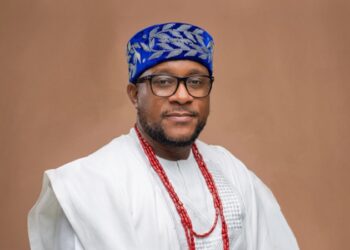

 KADUNA, Nigeria — A viral document purporting to show that ₦2.3 trillion was budgeted and released to organise the All Progressives Congress (APC) presidential campaign flag-off in Kaduna has ignited a political controversy.
The document raises fresh questions about political misinformation, public accountability and the increasingly bitter battle ahead of the 2027 general election.
The purported letter was dated October 18, 2026, and was reportedly signed by Kaduna State Governor Uba Sani.
It claimed that the state had made a massive financial commitment to host President Bola Tinubu’s presidential campaign rally.
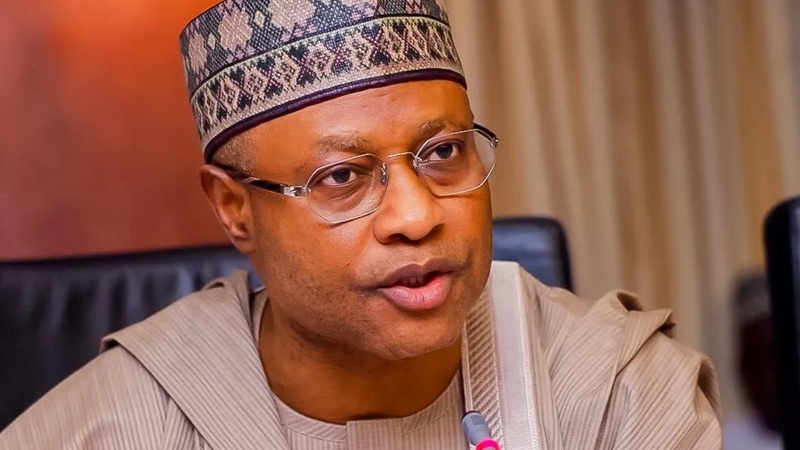
The allegation provoked outrage among critics, including Comrade Shedrack Longs, State Coordinator of the Tinubu Must Go Movement.
Longs described the alleged expenditure as an affront to Nigerians struggling with poverty, insecurity and rising living costs.

However, the Kaduna State Government has categorically denied the claim, describing the document as fabricated.
The APC Presidential Campaign Council has also rejected the letter as fake.
The controversy therefore presents two distinct issues:
- the disturbing implications of the alleged expenditure if it had been genuine, and,
- the equally serious question of who created and circulated a document that the purported author has disowned.
₦2.3 Trillion for a Rally? An Allegation That Demanded Scrutiny
The document circulated online claimed that ₦2.3 trillion had been allocated and released for what it described as the “mother of all rallies” in Northern Nigeria.
The purported letter presented the alleged expenditure as a demonstration of political strength and popular support.
It also presented the alleged expenditure as organisational capacity ahead of the 2027 presidential election.

The claim immediately raised an obvious question:
Why would a state government allegedly commit a sum exceeding twice its entire annual budget to a political campaign event?
That question was particularly significant given Kaduna State’s reported 2026 budget of approximately ₦985.92 billion.
Had the alleged allocation been genuine, it would have demanded extraordinary scrutiny over its legal authority and funding source.
It would also demand extraordinary scrutiny over its approval process and intended beneficiaries.
But outrage cannot substitute for verification, meanwhile, the Kaduna State Government has expressly denied the document.
Kaduna Government: ‘No Such Money Was Approved or Released’
In a statement dated October 24, Kaduna State Commissioner for Information and Culture Ahmed Maiyaki described the purported correspondence as fraudulent and misleading.

According to the government, Governor Uba Sani neither authored nor authorised the letter.
It added that no ₦2.3 trillion was budgeted, approved or released for the APC campaign flag-off.
Maiyaki also pointed to irregularities in the document.
Such irregularities include the misspelling of the governor’s surname as “Uba Sai” and concerns about the apparent unauthorised reproduction of his signature.
The government argued that the alleged expenditure was financially implausible because the claimed amount was more than twice Kaduna State’s entire annual budget.
It further announced that steps were being taken to establish the document’s origin and called for an investigation into possible forgery or impersonation.
The denial fundamentally changes the status of the allegation.
The ₦2.3 trillion figure cannot responsibly be reported as an established expenditure.
Furthermore, there is no verified basis to accuse Governor Sani or the APC of releasing that sum for the rally.
APC Also Denounces the Document
The APC Presidential Campaign Council has rejected the purported letter and accused former Vice-President Atiku Abubakar and the African Democratic Congress (ADC).
The Presidential Campaign Council claimed that Abubakar and ADC orchestrated an effort to discredit the party’s campaign flag-off.
In a statement, the council’s spokesperson, Dele Alake, described the ₦2.3 trillion allegation as baseless.
Alake argued that the claim was inconsistent with Kaduna State’s finances.
The council also alleged that opposition actors intended to circulate manipulated photographs, fabricated documents and deepfake videos to damage the reputations of President Tinubu, Governor Sani and other APC leaders.
Those allegations against Atiku and the ADC are claims made by the APC campaign council; they should not be treated as proven without independent evidence.
The emergence of the disputed letter has consequently opened another front in the political contest, with both the state government and the ruling party insisting that the public has been misled.
Shedrack Longs’ Indictment of Political Priorities
Before the government’s denial, Shedrack Longs, the State Coordinator of the Tinubu Must Go Movement, condemned the alleged expenditure in a statement accompanying the viral letter.
Longs argued that, if authentic, the purported allocation would represent a shocking misplacement of priorities in a country facing widespread economic hardship and persistent insecurity.
He contrasted the alleged spending with the urgent needs of communities affected by banditry and children requiring access to education.
He also contrasted the spending with farmers struggling to reach their fields and families unable to afford basic necessities.
His central argument was that political mobilisation should not take precedence over citizens’ welfare.
Longs also challenged the government to explain the source of the money and called for an apology to Nigerians if the allegation proved true.
However, because the document has been disowned, the movement’s criticism must be understood as a reaction to an unverified allegation rather than proof that the government spent the money.
The Real Scandal: Can Nigerians Trust Political Documents Circulating Online?
The ₦2.3 trillion controversy exposes a serious problem in Nigeria’s political environment:
“Allegations involving enormous sums of public money can spread rapidly, generate public anger and become political weapons before their authenticity is established.”
A fabricated letter bearing the appearance of official correspondence can damage reputations, inflame partisan hostility and undermine confidence in public institutions.
At the same time, public officials cannot expect citizens to accept denials without scrutiny where credible evidence of financial misconduct exists.
Accountability requires verifiable records, transparent explanations and independent investigation—not merely competing political statements.
In this case, the appropriate questions are straightforward:
- Who created the purported letter, and was any official signature reproduced without authorisation?
- What evidence exists concerning the document’s origin and circulation?
- Can the Kaduna State Government provide the relevant records to substantiate its denial?
- Will investigators establish responsibility and publish their findings?
These questions matter because the public deserves both protection from deliberate misinformation and reliable information about how public resources are managed.
APC’s Rally and the Cost of Political Distrust
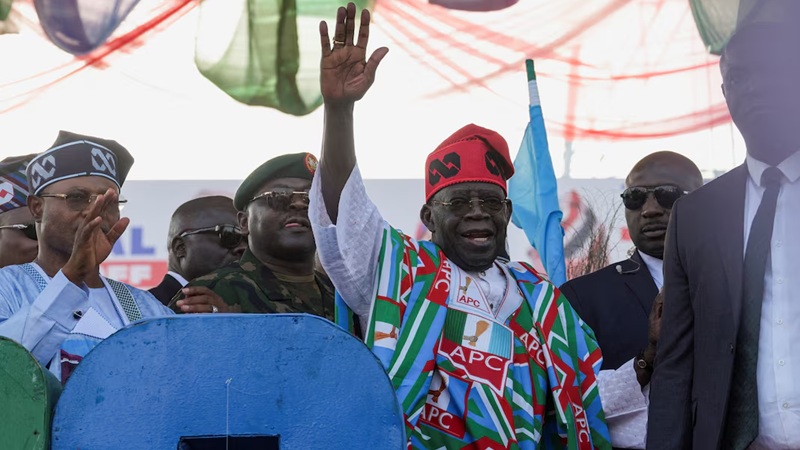
The APC’s presidential campaign flag-off was scheduled for October 24, 2026, at Kaduna Township Stadium.
The event was intended to demonstrate the party’s organisational capacity and mobilise support ahead of the 2027 election.
The disputed letter, however, diverted attention from the campaign’s political message and placed the issue of alleged public spending at the centre of the debate.
Even though the state government and the APC have rejected the ₦2.3 trillion claim, the episode underscores the damage that unverified allegations can inflict on political discourse.
The ruling party and state government have a responsibility to ensure that legitimate public concerns about spending, security and citizens’ welfare receive evidence-based answers.
Political opponents, in turn, must ensure that their criticisms rest on authentic documents and verifiable facts.
Neither political outrage nor official denial should end the matter.
The origin of the letter should be established, and any evidence of wrongdoing should be addressed through lawful procedures.
Conclusion: Investigate the Document, Demand Accountability
The allegation that Kaduna State released ₦2.3 trillion for Tinubu’s campaign rally would have represented an extraordinary public-finance controversy if substantiated.
The state government, however, has denied the expenditure and disowned the document, while the APC campaign council has also described it as fabricated.
Consequently, the most responsible course is to investigate the document rather than present its claims as fact.
Nigeria’s political class must recognise that the public is entitled to honest information, credible financial records and accountability for every verified use of public resources.
A campaign built on claims that cannot withstand scrutiny risks deepening public distrust.
Equally, political attacks based on fabricated documents threaten the credibility of legitimate criticism.
The decisive question is no longer simply whether ₦2.3 trillion was spent on the rally.
It is who produced the disputed document, why it was circulated and what the investigation will establish.
This Dawn News will update the report when further independently verified findings become available.
Find attached the controversial document below: