TDSome things are better left unsaid, especially when they amount to diminishing the worth and political relevance of one’s own people.
Why would prominent Igbo politicians like David Umahi and Orji Uzor Kalu publicly declare, in effect, that the South-East’s votes cannot make anyone president?
Why frame Igbo political ambition as inherently insufficient, as if the region is a permanent junior partner in the Nigerian project?
This is not strategic realism.
It is defeatist rhetoric dressed up as wisdom, and it reeks of incestuous reasoning — the self-referential, self-harming logic that elite insiders recycle among themselves while the wider Igbo nation pays the price in lowered expectations and eroded leverage.
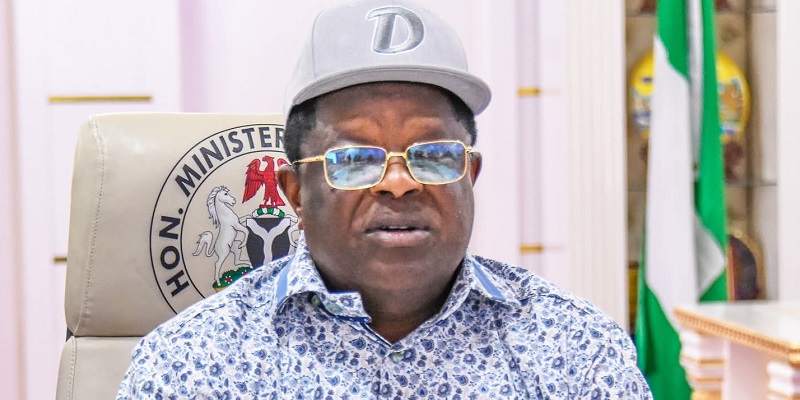
Umahi, the Minister of Works and former Ebonyi governor, has repeatedly echoed and amplified the notion that “Igbo alone cannot make ourselves president.”

He has invoked Charles Soludo’s earlier controversial remarks on the subject, claiming they “have come to pass,” and urged the South-East to tell itself hard truths and align with other zones.
Orji Uzor Kalu, the Abia senator and former governor, has operated in the same orbit — pushing enthusiastic support for the current federal administration while offering little in the way of assertive Igbo presidential advocacy.
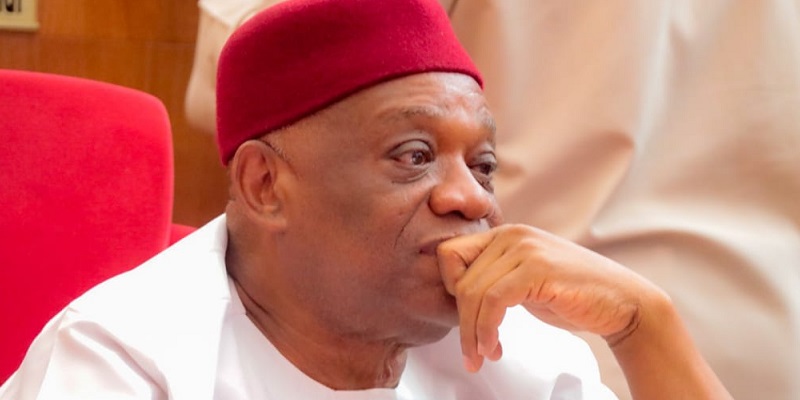
Both men, in their different ways, have signalled that raw South-East votes are not enough; that Igbo people must beg, borrow or buy relevance rather than demand it.
Have you ever heard leaders from the South-West or the South-South speak in such defeatist terms about their own regions?
Yoruba political figures, across parties and generations, have consistently projected their zone as indispensable — kingmakers, economic powerhouse, home of Lagos, fountain of modern Nigerian leadership.
They negotiate hard, extract concessions, and rarely begin conversations by announcing their own insufficiency.

South-South leaders, even in moments of frustration, have leveraged oil, militancy memory and federal character arguments to insist on their slice of power.
They do not lead with “our votes cannot produce a president.” They lead with demands.
The North, for its part, has never needed lectures on its numerical weight; its politicians speak the language of entitlement and bloc discipline.
Only in the South-East do we witness this peculiar spectacle: sons of the soil, men who have benefited from Igbo votes and networks, standing before cameras and telling their people, in polished English, that their collective electoral strength is structurally inadequate.
It is a form of political self-sabotage.
It demoralises the young, hands ammunition to external opponents who already view Igbo presidential ambition as illegitimate, and weakens the region’s bargaining position before negotiations even begin.

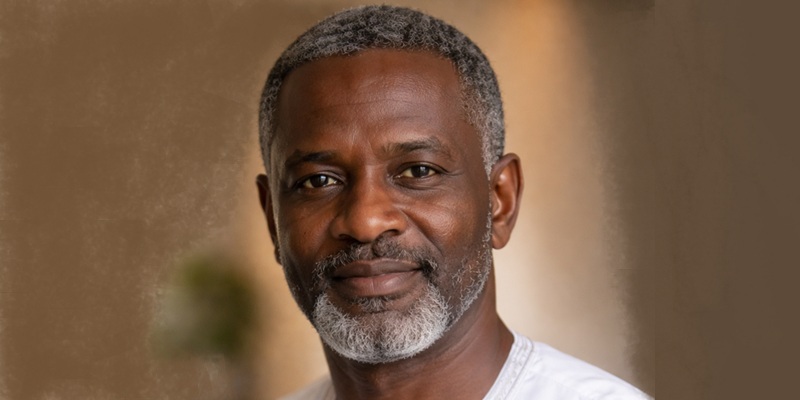
The numbers game is real in Nigerian elections, but it is not the whole story. No single geopolitical zone wins the presidency in isolation.
Every successful candidate has built coalitions.
Peter Obi in 2023 demonstrated that a focused Igbo candidacy could galvanise massive turnout at home and respectable support elsewhere — precisely the kind of momentum that forces concessions and reshapes conversations about zoning and power rotation.
Yet instead of building on that energy, some Igbo leaders rushed to declare the project impossible and the 2023 outcome a “mistake” to be corrected by blanket loyalty elsewhere.
This is the incestuous part: the reasoning loops back on itself to justify personal positioning.
When politicians whose careers have been sustained by Igbo support suddenly discover that Igbo votes are “not enough” on their own, one is entitled to ask whose interests are truly being served.
Is it the long-term interest of Ndigbo in equitable power sharing, or the immediate interest of securing federal appointments, contracts and relevance within the ruling coalition?
The South-East has five states, a large diaspora, formidable commercial networks and a history of producing some of Nigeria’s brightest minds.
To reduce all of that to “our votes cannot make a president” is not candour. It is surrender dressed as sophistication.
True leadership does not begin by lowering the ceiling on its people’s aspirations.
It organises, it builds alliances from a position of asserted strength, it demands rotation and inclusion as a matter of equity and stability, and it refuses to internalise marginalisation as destiny.
When South-West or Northern leaders talk tough about their zones, they are not accused of ethnic jingoism; they are described as astute.
When Igbo leaders do the same, they are labelled divisive. The asymmetry is glaring, and the willingness of some Igbo politicians to accept the diminished frame only reinforces it.
Nigeria’s political architecture rewards those who project power, not those who apologise for its absence.
The South-East’s path to the presidency — or at minimum, to meaningful rotation — will not be smoothed by public declarations of electoral impotence.
It will be advanced by disciplined organisation, strategic coalition-building without self-deprecation, and a refusal to let any son of the soil become the loudest voice arguing that his own people are politically second-class.
Umahi and Kalu may believe they are being pragmatic.
History will more likely record them as men who, at a critical moment, chose to diminish rather than defend the political dignity of their own.
Some things are indeed better left unsaid. This particular line of reasoning should have been one of them.