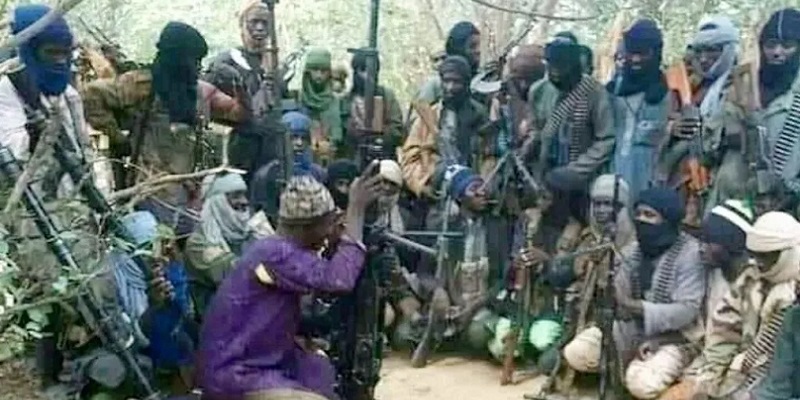
TDThe terrorists conveniently called bandits by the media had a rule. They stated it plainly, in the open, in front of their captives: Fulani people would not be taken. They were brothers.
Christians and certain Muslims majorly non-Fulani were fair game. What happened next depended entirely on which category you fell into.
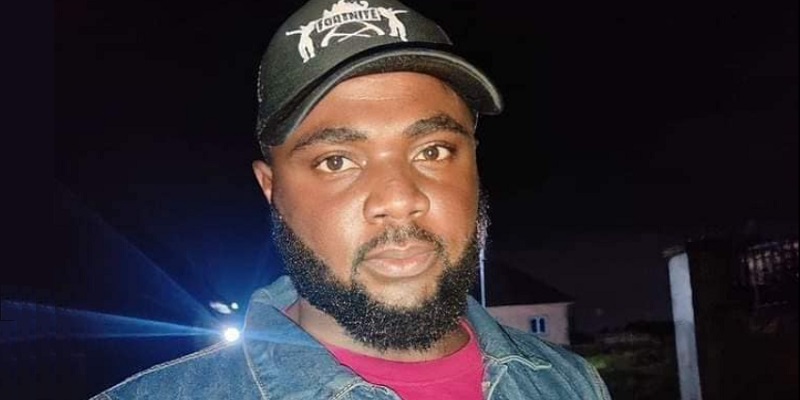
Sunday Cletus was abducted on 28 February 2026, while travelling through Kachia Local Government Area in Kaduna State. What he witnessed and endured over the days that followed was not random cruelty.
It was, according to his account and the findings of extensive field research spanning multiple states and multiple years, a system, deliberate, consistent, and organised around two variables: religion and ethnicity.
The differential treatment of Muslim and Christian abductees by Fulani Ethnic Militias (FEM) in Northern Nigeria is among the most under-documented dimensions of a security crisis that has displaced hundreds of thousands and left communities across Kaduna, Plateau, Kogi, and the wider Middle Belt and northwest regions in a state of sustained terror.
While public attention has focused on the frequency and geography of attacks, which villages were raided, how many were killed, the testimony of survivors reveals that what happens after capture is equally telling, and equally horrifying.

‘They Are Our Brothers’
The classification begins at the point of abduction. Cletus reported that his captors were explicit: Fulani individuals were not to be targeted because of ethnic solidarity.
The instruction was not whispered or implied. It was declared. In that moment of capture, a sorting mechanism was set in motion that would govern every subsequent hour of captivity.
This is not a single camp, a single commander, or a single incident.
Field interviews conducted across multiple states over several years return the same account with remarkable consistency: from the moment of capture, Muslim abductees and Christian abductees enter different realities.
“For a Christian in Southern Kaduna, the danger of being kidnapped is compounded by the near certainty of harsher treatment, higher ransom demands, and a meaningfully greater risk of death, not because of anything they have done, but because of their faith,” said a retired security personnel member who spent 4 months in captivity in Southern Kaduna.
Inside the Two-Tier System
Survivor testimonies describe a captivity environment divided into two parallel experiences. Muslim abductees are, in the words of multiple survivors, treated with a degree of restraint.

They are generally not subjected to the physical and sexual violence that Christian captives endure as a matter of routine. They receive adequate food. They are permitted relative freedom of movement within the camp.
In documented cases, they have been allowed to observe religious obligations.
The logic, as captors have articulated it in the presence of Muslim detainees, is one of communal solidarity, a fellow Muslim, however different in ethnicity or background, is assigned a different moral status.
For Christian captives, the experience is of another order entirely. Men are beaten systematically not as punishment for specific behaviour, but as a baseline condition of captivity.
Women face the additional horror of sexual violence.
Cletus described an environment in which abuse was pervasive, in which captives were entirely at their captors’ mercy, and in which psychological torment was deployed as deliberately as physical violence.

Christian abductees are subjected to prolonged uncertainty, repeated threats of execution, and in documented cases, forced to witness violence against fellow captives as a mechanism of coercion and terror.
There are exceptions. Field research has documented cases in which non-Fulani Muslim abductees were also treated harshly, suggesting that ethnicity intersects with religion in complex ways.
But the pattern holds across the breadth of the data: faith is the dominant variable.
The Price of Faith: Ransom Asymmetry
The differential does not end with conditions in captivity. It extends into the financial machinery of release.
Across field interviews with survivors and families in the north central region and parts of the northwest, a consistent pattern emerges: Muslim abductees are released on comparatively lower ransoms, negotiations are shorter, and in several documented cases, Fulani community intermediaries with informal access to the armed groups have facilitated release with minimal negotiation.
For Christian families, the process is an ordeal of a different kind. Demands are higher. Timelines stretch for weeks.
The threat of lethal consequences for delay or non-compliance is more frequently and more credibly invoked.
Field interviews document cases in which families gathered and paid the full ransom demand, only to receive no release, followed by escalating demands. In some cases, Christian abductees were killed even after their families complied.
The death that Sunday Cletus described witnessing, a teenage boy executed because his family did not initiate negotiations quickly enough, is not an aberration.
It is an example of a broader operational logic in which a Christian life is assigned a lesser and more conditional value, one that can be cancelled at will.
A Religious Hierarchy of Human Worth
What emerges from years of field testimony is not a picture of chaotic, opportunistic violence. It is a picture of a system, one with internal rules, consistent practices, and an embedded hierarchy.
Religion functions as a determinant of fate at every stage of the abduction experience: who gets taken, how they are treated in captivity, on what terms they may be released, and whether they survive.
This pattern is consistent across multiple states, multiple armed groups, and multiple years of survivor testimony.
It is not incidental variation between individual captors. It is, as the evidence compels us to describe it, a religious hierarchy of human worth embedded in the operational logic of Fulani Ethnic Militias.
The implications reach beyond security analysis.
The same sorting mechanism documented in community attacks where Muslim members of mixed villages are spared while their Christian neighbours are killed is replicated and deepened inside the captivity system itself.
Faith does not merely determine who is attacked. It determines what they endure, how much their life is worth in negotiation, and whether they return.
The Reckoning
Sunday Cletus came home. Many do not.
His testimony, set against the accumulated weight of survivor accounts gathered across the region over years, forces a confrontation with a dimension of Northern Nigeria’s security crisis that policy discussions have consistently failed to address with adequate seriousness.
The violence is not indiscriminate. The suffering is not evenly distributed. And the religious character of the crisis does not begin and end with the moment of attack.
It permeates the entire machinery, the raid, the abduction, the camp, the negotiation, the release, or the execution.
Until that reality is named plainly and confronted directly, the communities living under it will continue to bear its weight largely alone.
Steven Kefas is an investigative journalist, Senior Research Analyst at the Observatory for Religious Freedom in Africa, and Publisher of Middle Belt Times. He has documented religious persecution, terrorism and forced displacement in Nigeria’s Middle Belt for over a decade.