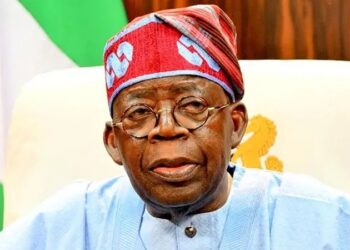
TDFormer Minister of Transportation, Chibuike Rotimi Amaechi, has formally declared his intention to contest the 2027 presidential election under the African Democratic Congress (ADC), marking a bold re-entry into Nigeria’s political frontline.
Amaechi submitted his presidential nomination forms at the ADC Secretariat, describing the move as a mission to “salvage Nigeria.”
In his words:
“The mission is clear, we will fight to restore dignity to Nigerians, make our country great and respected in the comity of nations, and bring unity, peace, prosperity and progress to our people.”
This statement encapsulates his campaign’s central theme — restoration and renewal.
Amaechi — Political Journey
Amaechi, a former Governor of Rivers State and two-term Minister of Transportation, has long been a prominent figure in Nigerian politics.
Known for his role in infrastructure development, particularly rail projects, he was a key player in the Buhari administration.

His decision to run under ADC signals a strategic shift aimed at tapping into Nigeria’s growing appetite for alternatives beyond the traditional political sphere.
Amaechi’s candidacy under ADC could reshape Nigeria’s political dynamics.
The ADC, though smaller, has positioned itself as a reformist party, appealing to voters disillusioned with mainstream politics.
His entry may attract defectors, energize grassroots movements, and force larger parties to recalibrate their strategies.

Candidate Profile: Chibuike Rotimi Amaechi
As former Minister of Transportation and ex-Governor of Rivers State, Chibuike Rotimi Amaechi enters the 2027 presidential race with a mix of strengths and vulnerabilities that will shape his campaign.
While Amaechi’s political pedigree is undeniable, running under ADC presents hurdles.

Such hurdles include:
- limited nationwide structures,
- funding challenges, and,
- the uphill task of convincing Nigerians that a third-force party can win at the national level.
His campaign will need to leverage his reputation, networks, and the symbolism of “salvaging Nigeria” to gain traction.
Strengths
- Governance Experience: Amaechi has held major offices — Speaker of the Rivers State House of Assembly, Governor, and Minister.
His long political career gives him credibility as a seasoned leader.
- Infrastructure Legacy: He is widely associated with Nigeria’s railway modernization projects, which remain one of the Buhari administration’s flagship achievements.
This gives him a tangible record to showcase.
- Political Networks: Amaechi has strong ties across the South-South and national political circles.
He had played a key role in the APC’s 2015 victory.
His ability to mobilize grassroots support is proven.

- Charismatic Orator: Known for his fiery speeches and populist appeal, Amaechi can energize crowds and connect with ordinary Nigerians.
Weaknesses
- Controversies: His tenure has been dogged by allegations of corruption and mismanagement, particularly during his governorship in Rivers State.
Though never convicted, these accusations remain a political liability.
- Party Platform Challenge: Running under ADC, a smaller party, limits his access to nationwide structures and resources compared to APC.
Convincing voters that ADC can win nationally will be difficult.
- Regional Polarization: Amaechi’s strong personality has sometimes alienated rivals, especially in the South-South.
His confrontational style may hinder coalition-building.
- Public Perception: Critics argue that his record in governance is mixed, with successes in infrastructure overshadowed by questions about transparency and inclusivity.
Regional Appeal
- South-South: As a native of Rivers State, Amaechi commands influence here, though rivalries may dilute his support.
- South-East: His ties are weaker, but his ADC platform could appeal to voters seeking alternatives to APC/PDP.
- North: Amaechi’s past alliances with northern political heavyweights may help him secure backing, though competition will be fierce.
- South-West: His appeal is limited, but his infrastructure record could resonate with urban voters.
Conclusion on Amaechi’s declaration
Amaechi’s declaration is more than a personal ambition; it is a test of Nigeria’s readiness to embrace new political alignments.
As the 2027 race gathers momentum, his candidacy under ADC will be closely watched for its potential to disrupt the status quo and redefine Nigeria’s political future.
Amaechi’s candidacy is a test of whether a seasoned politician with a mixed record can leverage a smaller party to challenge Nigeria’s political field.
His strengths in experience and infrastructure achievements are balanced by controversies and structural disadvantages.