TD Abuja, Nigeria — Nigeria has been found missing among the twelve Africa’s and forty world’s fastest-growing economies in 2026, according to projections contained in the International Monetary Fund’s (IMF) April 2026 World Economic Outlook, even as African countries occupy a significant share of the global growth rankings.
The IMF’s April database projects Nigeria’s real gross domestic product (GDP) growth at 4.1 per cent for 2026.
By comparison, Ethiopia is projected to grow by 9.2 per cent, while Guinea grows by 8.7 per cent.
Uganda is projected to grow by 7.5 per cent, Rwanda by 7.2 per cent and Benin by 7.0 per cent respectively.
The figures have renewed debate over Nigeria’s economic performance, particularly given the country’s population, large domestic market and substantial oil and gas resources.
Nigeria’s real GDP growth in 2022 was 3.3%, according to the IMF’s late assessment of the actual 2022 result.

The latest result shows that Nigeria has managed a 0.8% growth since President Bola Ahmed Tinubu took over the government in 2023.
12 African Economies Among Global Growth Leaders — IMF
An analysis of the April 2026 IMF projections shows that 12 African economies feature among the world’s 20 fastest-growing economies based on projected real GDP growth.
The African countries appearing in the global top 20 are:
- Ethiopia — 9.2%
- Guinea — 8.7%
- Uganda — 7.5%
- Rwanda — 7.2%
- Benin — 7.0%
- Libya — 6.7%
- Niger — 6.7%
- Côte d’Ivoire — 6.2%
- Democratic Republic of Congo — 5.9%
- Tanzania — 5.9%
- Mali — 5.5%
- The Gambia — 5.1%
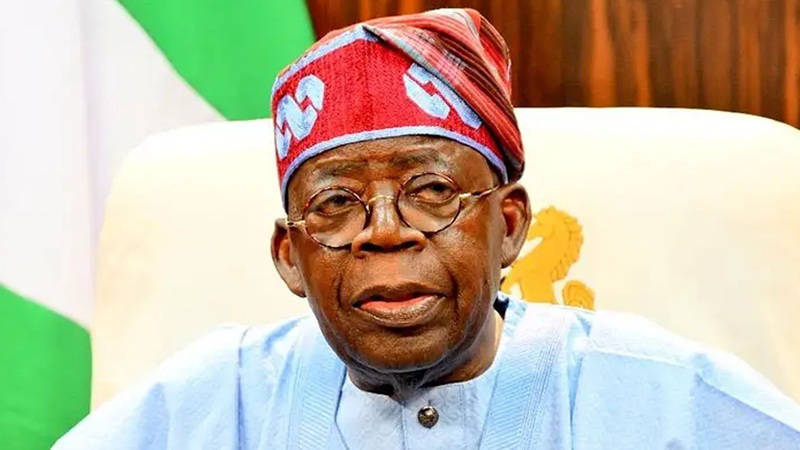
The IMF’s global data show the same projected growth rates for the African economies listed above, while Nigeria is projected at 4.1 per cent.
Globally, Guyana has the highest projected growth rate at about 16.2 per cent, followed by Ethiopia and Guinea.
The IMF figures therefore place Ethiopia among the very top growth performers worldwide.

Ethiopia Leads African Growth
Ethiopia’s projected 9.2 per cent expansion makes it Africa’s strongest performer in the IMF’s April 2026 projections.
The IMF has attributed the broader improvement in several African economies to factors including investment, macroeconomic stabilisation, structural reforms and commodity-related activity.
In its April 2026 Regional Economic Outlook, the IMF said sub-Saharan Africa recorded growth of 4.5 per cent in 2025.
The growth constitutes its strongest pace in more than a decade, while projecting regional growth of 4.3 per cent for 2026.
The IMF also identified Benin, Côte d’Ivoire, Ethiopia, Rwanda and Uganda among economies that had recorded particularly strong growth.
Resource Wealth and Structural Reforms Drive Growth
The economies appearing near the top of the ranking have different economic structures.

Ethiopia’s growth is associated with large-scale investment and economic reforms, while Guinea’s expansion is strongly linked to its mining sector, particularly bauxite.
Other countries are benefiting from infrastructure investment, commodity production, agricultural activity, services and structural reforms.
The diversity of the countries on the list also demonstrates that high growth is not confined to one particular economic model.
The IMF, however, has warned that Africa’s growth outlook remains exposed to external shocks.
These include geopolitical tensions, commodity-price movements, tighter financial conditions and disruptions to trade.
Nigeria’s 4.1% IMF Projection
Nigeria’s 4.1 per cent projected growth places it significantly below the continent’s leading performers.
Although 4.1 per cent represents economic expansion rather than contraction, the figure is considerably below the rates recorded by Ethiopia, Guinea, Uganda, Rwanda and Benin.
It is also below the 4.3 per cent growth projected by the IMF for sub-Saharan Africa as a whole in 2026.
The comparison is particularly significant because Nigeria is Africa’s most populous country and one of the continent’s largest economies.
The IMF nevertheless noted that Nigeria was among the large African economies that benefited from improved domestic policy choices in 2025, alongside Ethiopia.
From Fast-Growth Expectations by IMF to 4.1% Projection
The latest figures have also revived comparisons with Nigeria’s economic performance during the administration of former President Goodluck Jonathan.
A widely circulated 2015 CNN Business projection listed Nigeria among the world’s fastest-growing economies at the time, alongside China, Qatar, Iraq and Bangladesh.
The comparison is being used by critics of the current economic direction to argue that Nigeria has lost ground relative to several smaller African economies.
However, the IMF figures measure real GDP growth, not citizens’ living standards, household incomes or poverty levels.
A high GDP growth rate does not automatically mean that ordinary citizens experience a corresponding improvement in welfare.
Conversely, Nigeria’s 4.1 per cent growth projection alone does not establish that the country’s economy is performing poorly in every respect.
Growth Is Not the Same as Prosperity
The figures highlight a central economic challenge facing African governments.
They ought to maintain rapid GDP expansion.
They must also ensure that growth translates into employment, higher productivity, stronger purchasing power and reduced poverty.
The IMF’s analysis of low-income economies similarly cautions that rapid headline growth must be accompanied by sufficient job creation.
They must also maintain productivity gains to produce meaningful improvements in per-capita incomes.
For Nigeria, therefore, the issue extends beyond whether the economy is growing at 4.1 per cent.
The more consequential question is whether economic growth is strong and broad-based enough to improve living standards in a country facing significant demographic and development pressures.
The 2026 IMF projections nevertheless present a striking continental picture.
Several African economies are expanding at rates substantially above Nigeria’s forecast, with Ethiopia, Guinea, Uganda, Rwanda and Benin leading the African growth table.