TD Abuja, FCT — The Obidient Movement has rejected the Independent National Electoral Commission’s (INEC) planned deployment of Artificial Intelligence (AI) in the verification and collation of results for the 2027 general elections.
This was contained in a statement dated October 7, 2026, and signed by the Media and Communications Directorate of the Obidient Movement.
The Movement described the move as “reckless and unacceptable.”
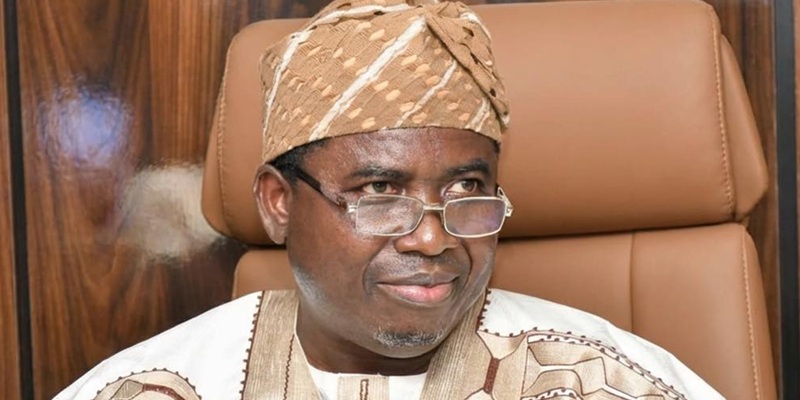
The group’s position followed INEC Chairman, Prof. Joash Amupitan, disclosure that the commission has established a dedicated AI Division.

Amupitan said the Division has begun integrating automated AI auditing tools into its results verification process.
He said the technology would operate under a five-pillar AI governance framework with mandatory human oversight.

Obidient Movement Kicks
The Obidient Movement argued that INEC should not introduce AI into a critical stage of the electoral process while the rules governing its deployment remain unfinished:
“INEC cannot tell Nigerians that it intends to introduce AI into one of the most sensitive stages of the electoral process while simultaneously admitting that the rules governing its use are still being developed.”
The movement said Nigerians should not be subjected to what it described as another untested electoral experiment and demanded that INEC immediately abandon the plan.
Amupitan, meanwhile, had acknowledged that the commission’s formal AI governance policy was still being finalised.
Obidient Movement Raises Concerns Over 2023 Election Technology
The Obidient Movement linked its opposition to unresolved concerns surrounding the 2023 general elections, particularly the controversy over the INEC Results Viewing Portal (IReV).
The group argued that INEC should concentrate on restoring public confidence in the electoral process.
It should refrain from introducing additional technology without first establishing mechanisms that allow citizens and stakeholders to independently audit the system.

INEC’s own 2023 election report states that IReV was developed to allow the public to view uploaded polling-unit results, including scanned copies of completed Form EC8A result sheets.
The Obidient Movement, however, criticised the commission’s handling of the platform during the 2023 election.
It alleged that technological failures were subsequently attributed to glitches.
The group warned against a situation in which technology could become a convenient explanation for discrepancies arising during the 2027 results process.
Obidient Movement Demands Traceable Results
The group said every election result should remain traceable from the polling unit through the various stages of collation to the final declaration.
It called for an electoral system that would allow political parties, candidates, observers, journalists and citizens to independently verify results.

The Obidient Movement specifically demanded that INEC publish Forms EC8A, EC8B, EC8C, EC8D and EC8E on IReV.
It cited what it described as five commitments proposed by Mundx Analytics.
INEC currently describes IReV as its platform for viewing polling-unit results and accessing scanned result sheets.
Calls for Auditable AI Framework
The Obidient Movement also demanded that INEC publish a comprehensive framework explaining how every technology deployed during the 2027 elections will operate.
Among other things, it wants the framework to establish how technological errors will be identified and corrected.
It also demanded to know who will have access to the systems and what safeguards will prevent manipulation.
The group said any AI-assisted electoral process must remain subject to transparent human accountability.
INEC, for its part, says its planned AI deployment will have mandatory human oversight.
The commission has identified human oversight, transparency and accountability, data protection and privacy, cybersecurity and risk management, and public trust among the principles guiding its AI initiative.
Movement Raises Political Allegations
The statement also raised allegations concerning the relationship between INEC, the APC and the administration of President Bola Ahmed Tinubu.
It referred to rumours alleging that the INEC chairman had been in France with Tinubu.
Also allegedly present was FCT Minister Nyesom Wike and other political actors to discuss strategies for the 2027 election.
The allegation has not been independently verified.
Also, the statement did not provide documentary evidence establishing that such a meeting took place.
A report published on the allegation likewise found no independent corroboration of the claimed France meeting.
The Obidient Movement nevertheless argued that such rumours, combined with INEC’s planned use of AI, have heightened concerns about the transparency of the 2027 electoral process.
Warning Against “Manufactured” Results
The Obidient Movement said the introduction of technology must not weaken the ability of Nigerians to establish how votes cast at individual polling units translate into final results.
It argued that technology should serve as a tool for transparency rather than become a mechanism through which electoral outcomes are made difficult to independently verify.
The group therefore demanded that INEC:
- Immediately abandon plans to use AI in election results collation.
- Publish a transparent and independently auditable framework for all electoral technologies.
- Ensure every result remains traceable to the polling unit.
- Publish Forms EC8A, EC8B, EC8C, EC8D and EC8E on IReV.
- Guarantee that the declared winner reflects the verifiable votes cast by Nigerians.
The movement said the fundamental issue was not whether technology was used.
Rather, it is whether Nigerians could independently verify that the technology had accurately reflected the votes cast.
INEC’s Position
INEC’s current position differs significantly from the demands of the Obidient Movement.
The commission says its AI initiative is intended to assist election officials in identifying anomalies and strengthen results verification.
It would also protect electoral systems against cyber threats—not to replace human decision-making, INEC said.
Amupitan said the commission’s AI governance policy is still being finalised, while automated AI auditing tools are already being integrated into results verification.
The dispute therefore centres partly on whether INEC should deploy AI while the formal governance framework is still being completed.
Also controversial is what safeguards should be publicly available before the technology is used during the 2027 elections.
The 2027 election is scheduled for January 2027, putting the debate over INEC’s technological preparations under increasing scrutiny.