TDThere is a particular kind of political machine that looks invincible right up until the moment it falls. It controls the courts. It controls the governors. It controls the electoral commission and rewrites the electoral laws in its own favour.
It floods the student unions with cash and cultists, intimidates the press, and weaponises anti-corruption agencies against anyone who dares to organise against it. From the outside, it looks like permanent power. From the inside, if you listen carefully, it sounds like a structure under terminal strain.
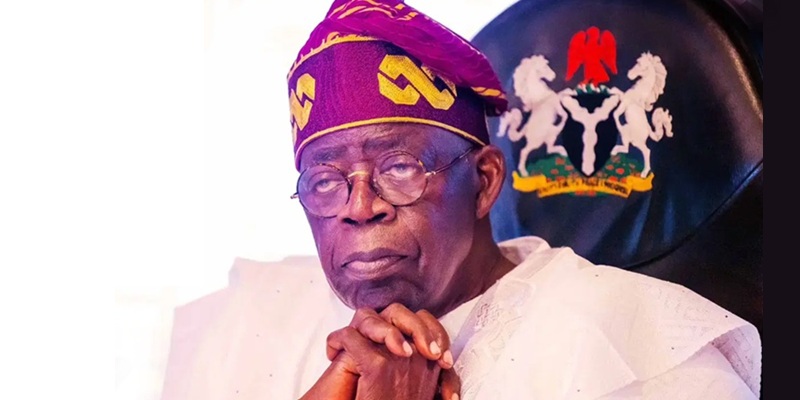
That is Nigeria in the summer of 2026. And that structure belongs to President Bola Ahmed Tinubu.
The raw numbers of consolidation are striking. The All Progressives Congress now controls 32 of Nigeria’s 36 state governorships and commands over ninety per cent of both chambers of the National Assembly.
Since 2023, at least five opposition governors defected to the ruling party in a single six-month stretch, driven not by ideology but by the entirely rational fear of what happens to those who resist: EFCC investigations, DSS harassment, judicial ambushes, the slow strangulation of federal allocations.
The APC celebrated its dominance by posting “31/36” on its official X account in March 2026 as though it were a football scoreline. The opposition parties — the PDP, Labour Party, NNPP, and ADC — have spent more time in courtrooms fighting APC-engineered internal crises than they have on the campaign trail.

INEC, meanwhile, amended the Electoral Act in 2026 to remove any unambiguous legal requirement for real-time electronic transmission of results, handing the ruling party a loophole wide enough to drive a convoy through on election night.
To any student of African political history, this pattern is grimly familiar. The APC playbook — defections, judicial destabilisation, INEC pressure, opposition fragmentation — is being executed with considerable efficiency. And for much of 2025 and early 2026, it appeared to be working.
But machines require consent, or at least the absence of rage. And Nigeria’s rage has become impossible to contain.
THE NUMBERS THAT INDICT
Three years after Bola Tinubu stood on the steps of Eagle Square and declared “fuel subsidy is gone,” Nigerians are living through conditions that have stripped that phrase of whatever economic logic it once carried.
Peak inflation exceeded 34 per cent. The petrol price has risen by 643 per cent. Public debt has ballooned from N87 trillion in 2023 to an estimated N159 trillion in 2026.
The World Bank’s Nigeria Development Update documents poverty rising from 56 per cent in 2023 to 63 per cent in 2025 — roughly 140 million Nigerians below the national poverty line.

The United Nations estimates 35 million more Nigerians could face acute hunger by 2026, particularly in the north, where farms lie abandoned to bandits.
Between Tinubu’s inauguration and mid-2026, conflict data trackers recorded nearly 20,000 deaths and over 12,000 abductions.
In May 2026, gunmen descended on three schools in Oriire Local Government Area in Oyo State, marching pupils and teachers into the bush. A teacher was beheaded on camera. Toddlers were beaten.
Their colleagues filmed themselves begging the President and Oyo Governor Seyi Makinde for help. Three years in, there is still no security plan that works.
This is the foundation on which Tinubu’s 2027 re-election campaign must be built. It is a foundation of ash.
THE FAMILY PROBLEM
Political dynasties survive when they project discipline, dignity, and a minimum of self-awareness.

The Tinubu family has managed none of these things with any consistency — and in an era of mobile phones and viral video, the cost has been severe.
In December 2025, First Lady Senator Oluremi Tinubu walked to the podium at the Ooni of Ife’s tenth coronation anniversary and informed a sitting state governor — Osun Governor Ademola Adeleke — that he had five minutes to conclude his remarks, then threatened to switch off his microphone.
The backlash was immediate and furious.
Her response, posted to Facebook, dismissed critics for choosing to amplify minor missteps — a formulation so contemptuous of public feeling that it went viral in its own right.
Three months later, at the Delta State College of Nursing Sciences in Agbor, student nurses refused to address her as “Our Mama” during a visit. The college issued a disciplinary query to one of the students for recording the moment. That too went viral.
The query was eventually withdrawn after a national uproar — but the image of the administration reaching into a nursing school to punish a student for not singing loudly enough had already burned itself into the public mind.
Then, last week, came the akara moment.
Speaking to State House correspondents after a Renewed Hope Initiative meeting in Abuja, the First Lady advised Nigerians grappling with the worst cost-of-living crisis in a generation to consider selling akara, roasted corn, and kuli-kuli as a path to livelihood.
The reaction was not merely scorn — it was grief. In a whole 2026, one commenter wrote, the Nigerian First Lady is asking citizens to start selling roasted corn, after removing subsidy.
Another called it the Marie Antoinette moment we warned you about. Comparisons flooded social media.
For a country of engineers, doctors, and graduates unable to find employment in their fields, being advised to fry bean cakes by a woman whose family sits atop one of Africa’s most extraordinary concentrations of political wealth was not a minor misstep. It was an indictment.
Seyi Tinubu, the President’s son, has added a more sinister dimension to the family’s public image problem.
Student leaders have alleged, in documented public statements, that loyalists acting in his name violently disrupted the National Association of Nigerian Students convention, deployed DSS operatives against delegates who refused to support his preferred candidate, and orchestrated the abduction and assault of NANS President Comrade Atiku Isah in April 2025.
Seyi has denied involvement, and formal attribution remains contested. But the pattern — an unelected presidential son, widely accused of operating as a political enforcer with access to state security resources, reportedly associated with Chagoury-linked corporate structures — speaks to something Nigerians have begun to name openly: the systematic conversion of a democratic presidency into a family enterprise.
That is not a new phenomenon in Nigerian history. What is new is the speed at which ordinary people are connecting those dots and refusing to be silent about what they see.
THE GOVERNOR PROBLEM
The wave of defections to the APC looks, from one angle, like strength. From another, it reveals exactly how fragile Tinubu’s hold on the political class actually is.
Governors did not defect because they believe in the President’s vision. They defected because they fear the federal government’s capacity to destroy them if they do not. This is coerced loyalty — the most brittle kind.
It performs beautifully in photographs and press releases, and it collapses the moment the coercive capacity falters or the cost of loyalty exceeds the cost of resistance.
The security crisis is beginning to produce exactly that moment. Governors in the Middle Belt and the North are burying their constituents at a rate that no press statement can adequately explain away.
Governors in the South are watching kidnappings surge and small businesses collapse. Even in states where the machinery of defection produced APC alignment, the lived reality for millions of citizens is one of unrelieved hardship.
When the people a governor depends on for legitimacy are angry enough, the calculus of political survival begins to shift — even for those who accepted the APC’s terms.
History suggests that borrowed loyalty, purchased under duress, does not survive the arrival of a credible alternative.
THE MACHINE’S FATAL VULNERABILITY
I will be candid about something.
I have spent most of my adult life operating at the intersection of Nigerian heritage and the global diaspora — commenting, analysing, warning — without becoming fully invested in the mechanics of Nigerian electoral politics.
What is happening now is different.
The exposure of Bola Tinubu’s background — the 1993 United States asset forfeiture, the DEA and FBI FOIA litigation now adjudicated before a federal judge in Washington, the credential fraud allegations, the documented relationship with Gilbert Chagoury and his trail of Swiss money laundering convictions and United States deferred prosecution agreements — has drawn in people who never before thought it necessary to keep a tally.
Diaspora Nigerians who used to scroll past the political news are now sharing court filings. Professionals in Lagos and Abuja who had accommodated ambiguity about where this president came from are no longer accommodating it. The question is no longer confined to activists and journalists. It has become everybody’s business.
In 2023, Tinubu won on information asymmetry as much as anything else. Too many Nigerians did not fully understand what they were voting for. That asymmetry no longer exists. Three years of governance have completed the education that the campaign trail obscured.
Every petrol station queue, every school kidnapping, every akara advisory, every viral video of the First Lady commandeering a sitting governor’s microphone has served as a political tutorial for millions of people who are not forgetful, and who vote.
The opposition’s greatest remaining obstacle is itself.
The collapse of the Ibadan coalition in early 2026, the continued separation of Atiku Abubakar’s ADC candidacy from Peter Obi’s NDC platform, the court-ordered crises engineered within the PDP and Labour Party — these are real failures of leadership and ego that have kept a fractured opposition from translating a 60.7 per cent anti-Tinubu majority in 2023 into a unified electoral force.
The machine’s strategists know this, and they have invested heavily in perpetuating that fragmentation. It remains the single structural advantage the APC genuinely holds.
But even that advantage is not permanent. When the people are hungry enough, angry enough, and sufficiently informed, coalitions form that no machine anticipated.
Nigeria produced one such coalition in 2015, when three opposition parties merged and removed a sitting president for the first time in the country’s history.
The architect of that coalition was Bola Tinubu himself. He knows, better than anyone, what a unified opposition can do.
That knowledge — not the INEC loopholes, not the governorship numbers, not the Electoral Act amendments — is what drives the ferocity with which his administration works to prevent opposition unity.
The machine looks invincible. So did others, before the weight of what it had done to ordinary people finally became too heavy to carry.
Kio Amachree is President of Worldview International, a Stockholm-based diaspora commentary and accountability platform focused on Nigerian governance and pan-African affairs. He writes under The Kio Solution framework and publishes in Vanguard, Sahara Reporters, and Starconnect Media.