



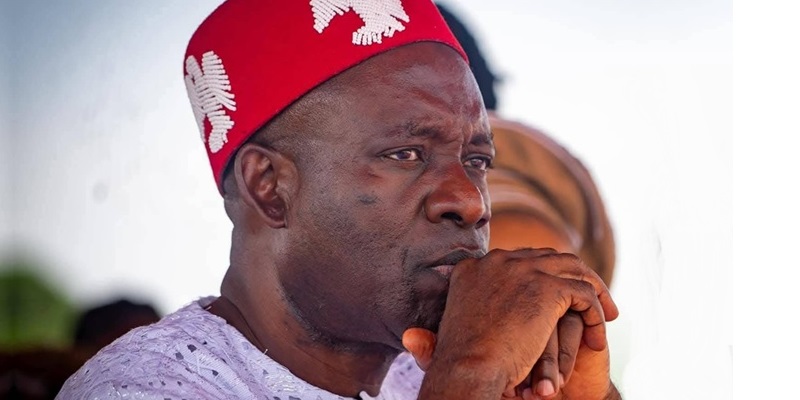

TDIn Nigeria’s ever-vibrant political discourse, few figures have mastered the art of staying relevant quite like Professor Charles Soludo.
A seasoned economist, former central banker, and now a sitting governor, Soludo is no stranger to public attention.
Yet, beyond his policy decisions and governance record, it is his periodic public statements—often provocative, sometimes controversial—that repeatedly draw national focus.
This raises a pertinent question: why do these remarks generate such consistent concern and debate? A closer look suggests a pattern that is neither accidental nor entirely organic.
In the fast-moving ecosystem of modern media—where attention is currency and relevance is fleeting—public figures increasingly operate with an acute awareness of narrative cycles.

Silence, in this context, can be politically costly. For someone like Soludo, whose intellectual brand has long been tied to public engagement, disappearing from the conversation is hardly an option.

It is within this framework that his intermittent commentary, particularly those touching on high-profile figures like Peter Obi, can be understood.
Each statement, whether framed as critique or analysis, serves a dual function: it injects Soludo back into the national conversation while simultaneously tapping into an already polarized audience.
The result is predictable—debate, amplification, and, most importantly, visibility.
Critics argue that such interventions distract from substantive governance, reducing serious political discourse to episodic media skirmishes.
Supporters, however, may view them as part of a broader intellectual engagement, where ideas—however contentious—must be contested in the public arena.
But the mechanics of attention cannot be ignored. In an era shaped by social media algorithms and rapid information cycles, controversy often outperforms nuance.

A carefully worded policy update rarely trends; a pointed remark about a prominent political figure almost certainly will. The incentives, therefore, are clear.
This does not necessarily diminish the legitimacy of Soludo’s views, but it does contextualize their timing and delivery.
The question, then, is less about the content of his statements and more about the ecosystem that rewards them.
Public reaction—whether in outrage, agreement, or curiosity—becomes part of the feedback loop that sustains the cycle.
So, is the concern over his periodic statements justified? Perhaps. But it may also be worth considering whether the reactions themselves are what keep the cycle alive.
In amplifying every provocation, the public and the media alike may be playing an unwitting role in sustaining the very dynamic they question.

In the end, Soludo’s continued presence in the headlines is not solely a function of what he says, but of how it is received. And as long as the reactions remain as predictable as the statements, the cycle shows little sign of slowing down.