

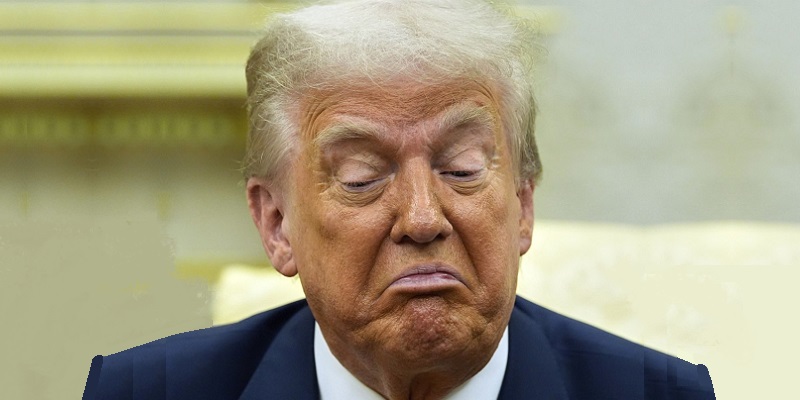
TDPresident Donald Trump on Saturday abruptly called off a planned trip by two of his top advisers to Pakistan for talks aimed at ending the war with Iran.

The decision, announced in a statement to Fox News and later amplified on Truth Social, underscored Trump’s frustration with the pace of negotiations.
“I’ve told my people a little while ago they were getting ready to leave, and I said, ‘Nope, you’re not making an 18‑hour flight to go there. We have all the cards,’” Trump said. “They can call us anytime they want, but you’re not going to be making any more 18‑hour flights to sit around talking about nothing.”
The advisers—special envoy Steve Witkoff and presidential son‑in‑law Jared Kushner—had been scheduled to fly to Islamabad for a new round of talks mediated by Pakistan. White House press secretary Karoline Leavitt had earlier said the Iranians requested the meeting and that Trump was “always willing to give diplomacy a chance.”
Previous Efforts and Stalled Progress
The cancellation followed an earlier round of talks led by Vice President JD Vance in Islamabad on April 11 and 12, which ended without agreement. Leavitt confirmed Friday that Vance would not travel this weekend, leaving the diplomatic track in limbo.
Trump, in his Truth Social post, claimed there was “tremendous infighting and confusion” within Iran’s leadership and suggested “nobody knows who is in charge.”
Iran Proposes Deal to
Reopen the Strait of Hormuz
Even as Washington pulled back, Iranian officials floated a significant proposal. According to two regional officials, Tehran offered to reopen the Strait of Hormuz—a critical waterway through which a fifth of the world’s traded oil and gas passes—in exchange for the U.S. lifting its blockade and ending the war.
The proposal, passed to the Americans via Pakistan, would defer discussions on Iran’s nuclear program to a later phase. Trump has repeatedly cited Iran’s nuclear ambitions as a central reason for the conflict, making it unlikely he would accept a deal that postpones that issue.
The blockade has deprived Iran of crucial oil revenue, while the strait’s closure has driven global energy prices sharply higher. Brent crude was trading at around $108 per barrel on Monday, nearly 50 percent higher than before the war began.
Global and Domestic Pressures
The chokehold on the Strait of Hormuz has reverberated across the global economy, raising the cost of fertilizer, food, and other essentials.
For Trump, the economic fallout poses political risks ahead of midterm elections, as rising gasoline prices weigh heavily on American households.
Gulf allies, reliant on the strait to export oil and gas, have also felt the strain. The fragile ceasefire now in place has offered temporary relief, but the strategic standoff remains unresolved.
Russia’s Role and Regional Dynamics
Iran’s foreign minister visited Moscow over the weekend, underscoring Russia’s longstanding support for Tehran. It remains unclear what assistance, if any, Russia might provide as Iran seeks leverage in negotiations.
Pakistan, meanwhile, continues to play the role of mediator, though Trump’s decision to halt his envoys’ travel raises questions about Washington’s willingness to engage further.
U.S. Military Contingency Planning
While diplomacy falters, the U.S. military is preparing for the possibility that the ceasefire could collapse. Officials are developing plans to target Iran’s defenses around the Strait of Hormuz, focusing on “dynamic targeting” of fast attack boats, minelaying vessels, and other asymmetric assets that have enabled Tehran to shut down the waterway.
Earlier U.S. strikes beginning April 7 targeted Iran’s Navy and facilities deeper inside the country. The new plans call for a concentrated campaign around strategic waterways, reflecting the centrality of the strait in the conflict.
Outlook: Stalemate and Uncertainty
The dual developments—Trump’s withdrawal of negotiators and Iran’s conditional offer—highlight the deep mistrust and unresolved issues at the heart of the war. While Tehran signals willingness to ease global economic pressure by reopening the Strait of Hormuz, Washington insists that nuclear concerns cannot be sidelined.
With oil prices climbing, global markets jittery, and military planners bracing for renewed conflict, the path forward remains uncertain. For now, Trump has made clear that the U.S. will not chase talks across continents. “They can call us anytime they want,” he said, leaving the next move squarely in Tehran’s hands.