TDIn Chinua Achebe’s classic novels, Things Fall Apart and Arrow of God, the titles alone evoke a society straining under its own contradictions—where symbols of power clash with everyday realities, and leadership sometimes feels more ceremonial than substantive.

Last week in Lagos, those literary echoes rang uncomfortably true during the much-hyped commissioning of the Opebi–Mende–Ojota Link Bridge and associated projects.
Security agencies sealed off major routes. Commuters trekked from Mobolaji Bank Anthony Way to Allen or from Customs to Opebi.
The city, already notorious for its gridlock, ground to a halt under the weight of presidential-level security protocols.
The expectation? President Bola Ahmed Tinubu would personally inaugurate the 5-kilometre bridge—a project designed to ease chronic traffic on the Ikeja-Maryland-Ojota corridor.
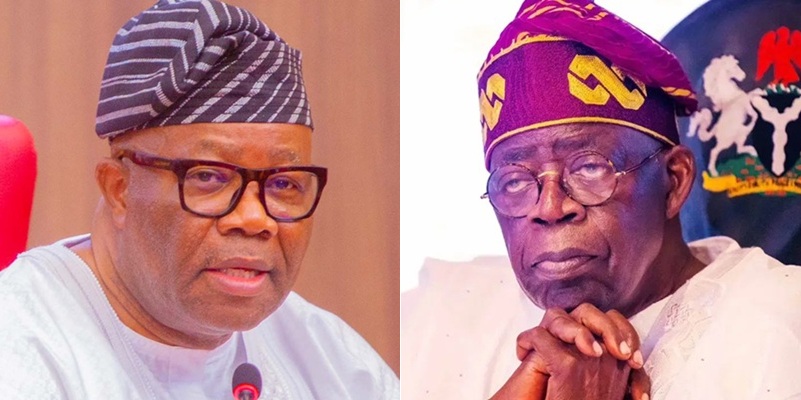
Instead, Senate President Godswill Akpabio arrived from Abuja, cut the ribbon, and declared the projects commissioned “on behalf of President Bola Ahmed Tinubu.”
Tinubu was in Lagos.
Reports confirm he had been in the state since the weekend as part of a two-day working visit that included several infrastructure unveilings executed under Governor Babajide Sanwo-Olu.
Yet for this particular event—flagged in advance with heavy publicity and traffic advisories—he was absent.
The Presidency later cited “urgent state matters and security briefings” as the reason.
The bridge itself is no small feat.
Costing billions and delayed beyond initial targets, the link road promises genuine relief in one of Africa’s most congested megacities.
Akpabio praised it as a bridge to opportunities. Governor Sanwo-Olu’s team highlighted its role in stimulating economic activity.
In normal circumstances, such a delivery would be a straightforward win for the administration. But the optics soured quickly.
Residents who endured the disruptions discovered the bridge would not open to the public immediately.
Lagos State Commissioner for Information and Strategy Gbenga Omotoso explained that while the infrastructure was functionally ready, finishing touches—particularly aesthetics—remained.
Some reports suggested a delay of up to two months before full public access. Independent checks the day after the event found barricades still in place and “road closed” signs visible.
This sequence raises legitimate questions about governance priorities and public communication.
Why impose sweeping security lockdowns and traffic chaos for a presidential appearance that never materialized?
Why announce a commissioning with the expectation of immediate usability when key cosmetic or final works were incomplete?
And why fly the Senate President from Abuja to stand in for a president already physically present in the same city?
Akpabio himself addressed the delegation gracefully, noting the heavy demands on the president’s time.
He even drew parallels to development in his home state of Akwa Ibom. That is diplomatic.
Yet symbolism matters in politics, especially in a democracy where leaders must be seen connecting with the people whose taxes fund these projects.
Critics, including voices from the opposition, were quick to pounce—labeling it another example of detachment.
Supporters argue that no leader can attend every event and that Tinubu’s broader schedule (including national security responsibilities) takes precedence.
Both points have merit, but they do not fully excuse poor coordination.
Advance planning could have minimized disruptions or adjusted the format—perhaps a lower-profile event with the governor or a virtual message from the president—without sacrificing the project’s significance.
The deeper issue transcends this single bridge. Lagos, Nigeria’s commercial heartbeat, routinely suffers infrastructure pain points.
Projects like this one represent tangible progress amid enormous challenges: rapid urbanization, population pressure, and limited resources.
When delivery is marred by avoidable public inconvenience and mixed messaging (“it’s commissioned!” versus “not quite ready”), public trust erodes.
Citizens begin to wonder whether grand events serve the people or the image of those in power.
Nigerian leadership at the highest levels often operates with imperial pomp—motorcades, road closures, and layered security that treat ordinary movement as secondary.
In a country where many still trek or endure hellish commutes daily, such displays feel tone-deaf when the promised relief is postponed.
There is no evidence of malice or grand conspiracy here. The bridge is real. The intent to ease traffic is real.
The partnership between federal and state governments produced something useful.
Yet execution carried the whiff of political theatre: heavy security for a no-show, ribbon-cutting for a road not yet open, and a representative stepping in for a leader who was nearby.
Achebe warned us about the fragility of things when leadership loses touch with the rhythms of ordinary life.
Nigerians are pragmatic; they will judge this administration ultimately by results—more bridges opened and actually used, less pain on the roads, better coordination between announcement and reality.
For now, the Opebi–Ojota episode stands as a small but telling parable. Development is welcome. But when the arrow of governance appears misaligned—causing unnecessary hardship for symbolic effect—things risk falling apart in the public mind.
Leaders would do well to remember: in a democracy, the people are not mere spectators to be managed around. They are the reason the bridges are built in the first place.
True progress will be measured not by how loudly we announce commissions, but by how smoothly citizens can drive across them the next day.