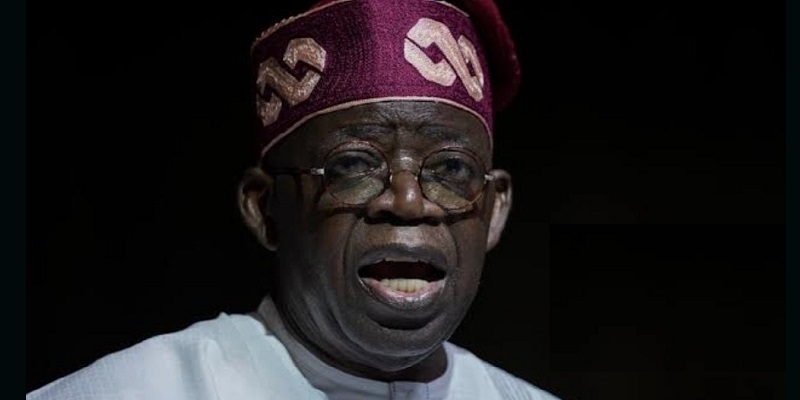
TDA Sweden-based advocacy leader, Kio Amachree, has issued a strongly worded open letter to the United States Federal Bureau of Investigation (FBI) and the Drug Enforcement Administration (DEA), accusing the agencies of protecting Nigerian President Bola Ahmed Tinubu and withholding information relating to historical drug trafficking investigations linked to him.

Amachree, the President of Worldview International, Stockholm, Sweden, alleged that U.S. authorities had spent years resisting the release of records connected to investigations involving Tinubu in the United States during the late 1980s and early 1990s.
In the letter dated June 3, 2026, Amachree claimed that the central question confronting U.S. law enforcement agencies was why other individuals linked to a heroin trafficking network faced prosecution while Tinubu was never criminally convicted.
“The people of Nigeria have reached their own verdict,” Amachree wrote, arguing that U.S. authorities owed Nigerians an explanation regarding the circumstances surrounding Tinubu’s past dealings with American law enforcement.
The letter revisits longstanding controversies surrounding Tinubu’s educational records, identity documents, and the 1993 forfeiture of funds connected to U.S. investigations.
Amachree alleged that the Nigerian president benefited from special treatment by American agencies and suggested that such protection continued through legal efforts to prevent disclosure of investigative records.

He further referenced a recent court ruling by Judge Beryl Howell, which reportedly ordered the FBI and DEA to lift so-called “Glomar” responses and release records related to investigations involving Tinubu.
Beyond the U.S. records dispute, the letter linked the controversy to Nigeria’s worsening security situation.
Amachree cited rising incidents of kidnapping, terrorist attacks, and school abductions across the country, arguing that the administration had failed to adequately address growing insecurity.
According to the letter, more than 1,000 people were reportedly kidnapped during the first four months of 2026, while thousands of lives were lost in violent conflicts during the previous year.
Amachree also raised concerns about business dealings involving Lebanese-Nigerian businessman Gilbert Chagoury and major infrastructure projects awarded by the federal government.
He questioned the relationship between members of the Chagoury family and the president’s family.
He alleged that the matter warranted greater scrutiny from U.S. and international authorities.
The letter claimed that formal intelligence and legal submissions concerning the allegations had been sent to several international bodies and agencies, including the United Nations, Britain’s law enforcement authorities, INTERPOL, and U.S. financial crime agencies.
Concluding the letter, Amachree urged the FBI and DEA to release all relevant records and allow Nigerians to make their own judgment regarding the allegations surrounding the president.
“Release the records. Let Nigeria judge,” he wrote.
Neither the FBI nor the DEA had publicly responded to the letter as of press time.
The Nigerian presidency has consistently denied allegations linking President Tinubu to criminal wrongdoing, maintaining that legal issues arising from the U.S. forfeiture case were resolved decades ago and that no criminal conviction was ever secured against him.
The latest intervention is expected to reignite debate over the pending release of U.S. records and the political implications of renewed scrutiny of the president’s past.
This report summarizes claims and allegations contained in the open letter by Kio Amachree.
The allegations remain disputed and is yet to be proven by the yet to be released records.