



TDDid I not say it—the long rope strategy is happening? This is not noise. This is structure unfolding in real time. Power is not being shouted; it is being applied quietly, in a way that allows others to move while believing they are still in control.
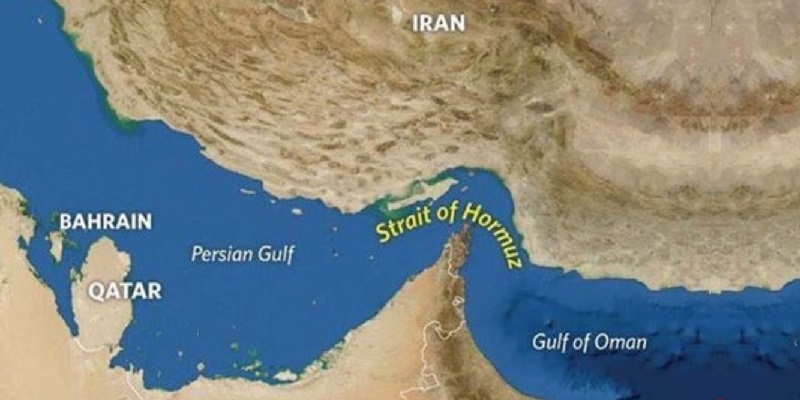
The United States has now moved beyond words. It has created a blockade—not to completely shut down the system, but to control outcomes within it. That is the distinction many are missing.
This is not about sealing off the Strait of Hormuz entirely; it is about deciding who truly benefits from passing through it.
And this is where Iran made its critical miscalculation.
Iran assumed that controlling the Strait meant controlling movement. It believed that influence over that narrow corridor translated into strategic advantage. That is the visible narrative—the one that dominates headlines and public reaction.
But geopolitics does not end at the narrow gate.

The United States has shifted the arena beyond the Strait. Through this blockade, the issue is no longer simply who passes through Hormuz, but which movements actually convert into meaningful trade.
Ships connected to Iran can be intercepted, delayed, or prevented from accessing global markets. Likewise, vessels heading toward Iran face similar constraints before completing their journey.
So even when Iran clears ships to pass—even its own oil tankers—that movement is no longer decisive. The real decision lies beyond the Strait. Whether those ships integrate into the global system is no longer within Iran’s control. That is the oversight.
Iran focused on the passage, while the United States positioned itself to control the outcome of that passage.
This is the long rope.
You allow the appearance of control at the gate. You allow movement within that confined space. But you anchor power where it ultimately matters—where movement becomes consequence. That is where dominance is exercised.

The goal here is for us to always recognize battles we cannot win no matter what. It is wisdom.
And Wole Soyinka answered it well when he was running for his dear life from Abacha in 1990s and was asked: “Why are you running away when the pen is mightier than the sword.” Guided by great wisdom, he replied “Only a fool holding a pen can face someone holding a machine gun.”
That is why I said from the beginning: Iran cannot realistically confront the United States in a conventional sense. Not because of rhetoric or perception, but because of structure.
In today’s geopolitical reality, power does not belong to the actor that controls the narrow path. It belongs to the one that determines what happens after that path is crossed.
Anyone reading this should understand that, as a student of geopolitics, I am simply exercising realpolitik analysis—not speaking against any nation.