


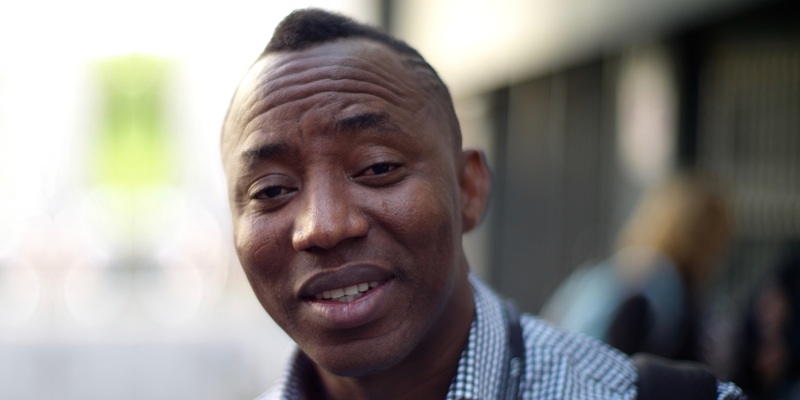

TDHuman rights activist and former presidential candidate Omoyele Sowore has launched a scathing attack on Nigerian governors following reports that they proposed a ₦100,000 minimum wage in response to ongoing calls for a living wage.
In a statement posted on his official X account, Sowore described the governors’ proposal as “wicked,” insisting that the figure is grossly inadequate to meet the basic needs of workers in today’s Nigeria.
“These wicked governors know very well that no worker can live decently on ₦100,000 per month in today’s Nigeria. That amount can barely purchase a bag of rice, let alone cover housing, transportation, healthcare, education, utilities, and other basic necessities,” Sowore wrote.
He accused the governors of living lavishly at public expense while imposing “poverty wages” on workers. According to him, the governors are in “panic mode” because Nigerians are beginning to realize that a different path is possible—one where public resources are used for the benefit of the people and prosperity is shared rather than hoarded by a privileged few.
Wider Reactions
Sowore’s remarks have ignited a wave of responses across the country:
- Labour unions have reiterated their demand for a wage that reflects the realities of inflation, arguing that ₦100,000 cannot sustain a family in the face of skyrocketing food prices, rent, and transportation costs.
- Civil society organizations echoed Sowore’s concerns, warning that the governors’ proposal falls short of international standards for fair compensation and risks deepening poverty among workers.
- Ordinary Nigerians took to social media to vent their frustrations, pointing out that in cities like Lagos and Abuja, ₦100,000 barely covers rent for a single room, leaving little for food, healthcare, or education.
- Economic analysts have noted that the debate underscores Nigeria’s broader fiscal crisis, where government officials enjoy extravagant allowances while workers struggle to survive on stagnant wages.
Context
Nigeria’s minimum wage has long been a contentious issue. The last official adjustment was in 2019, when the wage was set at ₦30,000—a figure that has since been eroded by inflation and currency depreciation. With inflation rates soaring above 30% and food prices hitting record highs, workers and unions have demanded a living wage that guarantees dignity and security.
The governors’ ₦100,000 proposal comes amid tense negotiations with labour leaders, who argue that anything less than ₦200,000 would fail to meet the basic cost of living. The debate reflects a growing disconnect between political elites and ordinary citizens, many of whom feel abandoned by leaders who prioritize personal luxury over public welfare.

Sowore’s Call to Action
Sowore concluded his statement by emphasizing that a minimum wage should guarantee dignity, not perpetual suffering, urging Nigerians to demand accountability and resist policies that entrench poverty. His intervention adds momentum to the labour movement’s push for a wage that reflects economic realities and strengthens the call for systemic reforms in governance.
Note: Official negotiations on the new minimum wage are ongoing, and no final decision has yet been reached.