

In Nigeria, parents often dream of seeing their children become doctors, lawyers, engineers, or politicians. While these aspirations are noble, they sometimes come at a cost—the child’s own dreams.
That is why I found a recent video of Anambra State Governor, Professor Chukwuma Soludo, and his wife, Mrs Nonye Soludo, dancing joyfully with their son, Ozonna Soludo, both heartwarming and inspiring.
It was more than a family celebrating together. It was a powerful statement about parenting.
Ozonna has carved out his own identity as a musician, dancer and fashion enthusiast.
His unconventional style has made him an internet sensation, earning him admiration from many and criticism from others.
Like many young creatives who dare to be different, he has been mocked, trolled and misunderstood. Yet he has remained remarkably confident, choosing authenticity over conformity.
What is even more remarkable is the unwavering support of his parents.
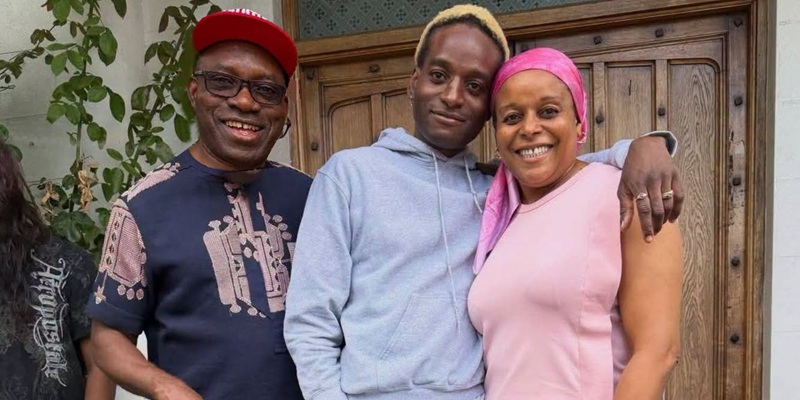
Despite occupying one of the highest political offices in Nigeria, Governor Soludo has never appeared to force his son into politics or attempt to shape him into a political successor.
While Ozonna has occasionally accompanied his father to public events, there has been no public campaign to draft him into political life.
Instead, his parents have consistently identified with his music career, celebrated his achievements and allowed him to pursue his passion without apology.
That deserves applause.
Too often in our society, children become prisoners of their parents’ ambitions.
Some are pushed into careers they neither enjoy nor excel in simply because those professions carry prestige.
Others abandon extraordinary talents in music, sports, technology or the creative arts because they fear disappointing their families.
History has shown that excellence is achieved not by coercion but by passion. People thrive when they are allowed to pursue what they genuinely love.
Parents have a duty to guide their children, instil discipline and teach values. But guidance should never become control.

A parent’s responsibility is not to write the script for a child’s life but to provide the support that enables the child to write it successfully.
The Soludo family offers an important lesson for every Nigerian family. Raising successful children is not about producing replicas of ourselves.
It is about nurturing individuals who are confident enough to become the best versions of themselves.
Professor Soludo’s legacy will undoubtedly include economic reforms, governance and public service.
But as a father, he may be leaving behind something equally valuable: the example that true parental success is measured not by the careers our children choose, but by the confidence, happiness and fulfilment with which they pursue them.
Every parent should reflect on this simple question: Are we helping our children discover their own purpose, or are we asking them to fulfil ours?
The answer may shape not only the future of our children but the future of our society.