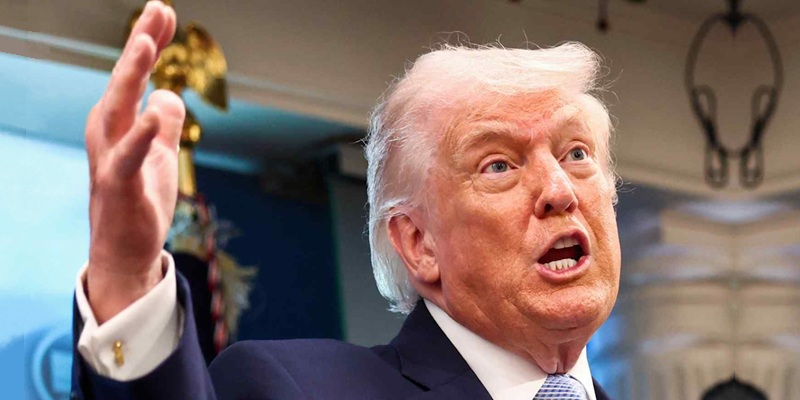
TDU.S. President Donald Trump has issued a stark military directive, ordering the United States Navy to “shoot and kill” any vessels suspected of laying mines in the strategically vital Strait of Hormuz.

In a strongly worded statement, Trump declared there should be “no hesitation” in neutralizing such threats, regardless of the size of the boats involved.
The directive signals a significant escalation in U.S. military posture in the region amid ongoing tensions with Iran.
The Strait of Hormuz, through which roughly 20% of the world’s oil supply passes, has become a focal point of confrontation in recent weeks.
U.S. officials have accused Iranian-linked forces of attempting to disrupt maritime traffic by deploying naval mines—an allegation Tehran has repeatedly denied.
Escalating Military Rhetoric
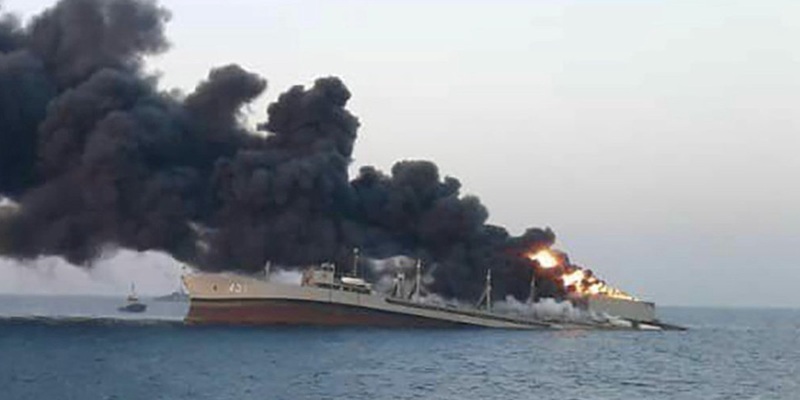
Trump’s comments also included a controversial assertion that Iran’s naval capabilities had been severely degraded.
He claimed that “all” of its naval ships were “at the bottom of the sea.”
Currently, Iran retains significant asymmetric naval capabilities, particularly through its Islamic Revolutionary Guard Corps naval division.
The President further intensified rhetoric against Tehran by suggesting internal instability within the Iranian leadership.
“Iran is having a very hard time figuring out who their leader is,” Trump said, implying political disarray at the highest levels of the Iranian government.
Iran in Bullets:
-
President Trump orders US Navy to shoot and kill any Iranian boat putting mines in the Strait of Hormuz.
-
President Trump says Iran’s regime is in “chaos” following US and Israeli military strikes.
-
US military intercepts 2 Iranian oil supertankers attempting to bypass blockade.
-
Iran escorts 2 seized container ships to Bandar Abbas port after capturing them near the Strait of Hormuz.
-
Video Footage shows US military seizing another Iranian oil tanker:
-
Demonstrator threw paint on Iranian Exiled Crown Prince Reza Pahlavi in Berlin, Germany today.
-
Exiled Crown Prince Reza Pahlavi denies being an Israeli asset, says he is a “friend to Israel and the Jewish people.”
-
Iranian Foreign Minister Araghchi calls on other countries to condemn US-Israeli attacks.
-
Two-thirds of Iran’s air force is still operational despite US-Israeli strikes, CBS reports.
-
US military says it ordered 31 ships to turn around or return to port as part of its blockade against Iran.
-
Iran says Saudi Arabia, UAE, Bahrain, Qatar, and Kuwait are complicit in attacks by US.
Strategic and Global Implications
Security analysts warn that the authorization of lethal force against small vessels raises the risk of miscalculation and unintended escalation.
This is because small vessels are often difficult to distinguish from civilian or commercial craft
The congested nature of the Strait of Hormuz, with heavy commercial shipping traffic, complicates threat identification and response.
Any sustained disruption in the waterway could have immediate global economic consequences.
Energy markets are particularly sensitive to instability in the region, with oil prices historically spiking during periods of heightened military tension.
Diplomatic Fallout
The directive comes at a time when diplomatic efforts to stabilize relations between Washington and Tehran remain fragile.
Ongoing backchannel negotiations and ceasefire arrangements risk collapse if military engagements intensify.
Iranian officials have not formally responded to Trump’s latest remarks.’
However, previous statements from Tehran have warned that any aggression in the Strait of Hormuz would be met with “decisive and proportional” retaliation.
International Reaction
Global stakeholders, including European and Asian economies heavily reliant on Gulf energy supplies, are closely monitoring developments.
Calls for restraint and de-escalation are expected to intensify as concerns grow over the potential for a broader regional conflict.
Military experts note that rules of engagement in such sensitive waterways are typically governed by strict protocols to avoid civilian casualties and unintended clashes.
Trump’s directive, however, suggests a shift toward a more aggressive deterrence posture.
With both sides maintaining hardened positions, the situation in the Strait of Hormuz remains volatile.
The combination of military escalation and political rhetoric underscores the fragile balance in one of the world’s most strategically important maritime corridors.
As events unfold, the international community faces mounting pressure to prevent further deterioration.
Any such deterioration could impact not only regional stability but the global economy at large.