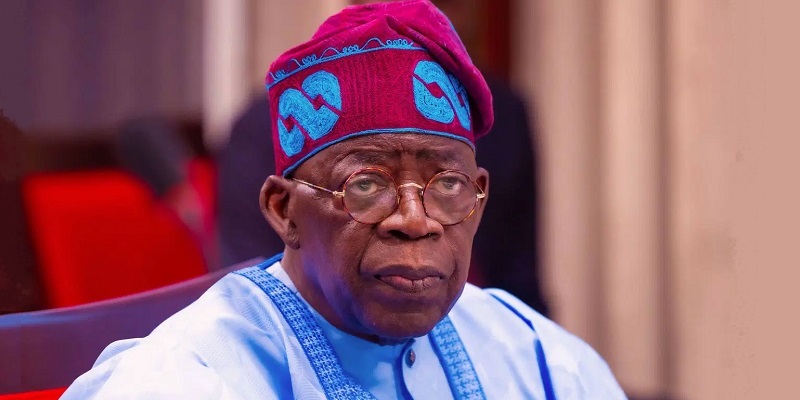
TDAs President Bola Ahmed Tinubu marks three years in office, a damning new report from the Committee to Protect Journalists (CPJ) exposes a troubling pattern of arrests, attacks, and harassment targeting Nigerian media professionals.

The report contradicts the high-level government claims of a press-friendly environment.
CPJ’s interactive map, released today, identifies 91 Nigerian journalists who have been arrested, attacked, or harassed since Tinubu’s inauguration on May 29, 2023.
The data highlights widespread incidents across states including Abuja, Lagos, Kano, Ogun, Delta, Bayelsa, and others.
Larger circles on the map indicate hotspots of violations by the government.
This revelation directly challenges statements made by Vice President Kashim Shettima.
In February 2026, Shettima told members of the Nigerian Press Council: “For the past three years, have you heard of any harassment of journalists?”
He described Tinubu as “a friend of the media” who fostered an environment “conducive for journalists to carry out their duties without harassment.”
CPJ and local partners describe these assertions as disconnected from documented reality.
In response, CPJ, alongside the Centre for Journalism Innovation and Development (CJID), Media Rights Agenda (MRA), International Press Centre (IPC), International Press Institute (IPI) Nigeria, and others, sent an unanswered letter to President Tinubu in April 2026.
The coalition detailed numerous abuses and urged accountability ahead of the 2027 elections.
Pattern of Repression
Incidents span physical assaults, arbitrary detentions, cybercrime charges, and intimidation.
In August 2024, during nationwide #EndBadGovernance protests, CPJ documented at least 56 journalists assaulted or harassed by security forces and others.
Nigeria ranks among West Africa’s most dangerous countries for journalists, according to Reporters Without Borders (RSF).
Masked operatives fired bullets and tear gas toward working journalists in several locations.
Notable cases include:
- Investigative reporter Daniel Ojukwu of the Foundation for Investigative Journalism, secretly arrested in May 2024 over a corruption exposé involving government funds. He endured prolonged detention and transfers between police units.
- Journalist Segun Olatunji, abducted by armed men in March 2024 after publishing on alleged corruption linked to high-level officials. He reported being chained and blindfolded during detention.
- Publisher Fejiro Oliver (Tega Oghenedoro) of Secret Reporters, detained since mid-September 2025 on cyberbullying charges after investigative reporting, despite reforms to the Cybercrimes Act.
- Multiple journalists charged under the Cybercrimes Act for publishing court documents or reports on alleged fraud, even after 2024 amendments intended to curb misuse.
Broader data reinforces the trend.
The International Press Centre documented 65 attacks in 2024 alone, while Media Rights Agenda tracked 86 incidents of press freedom violations in its 2025 report.
CJID verified at least 231 attacks since Tinubu took office.
Police and politicians are reportedly responsible for around 70% of harassment cases.
Impunity and Broader Context
Nigeria ranks among West Africa’s most dangerous countries for journalists, according to Reporters Without Borders (RSF).
Without urgent action to end impunity and safeguard journalists, the Tinubu administration risks further damaging Nigeria’s democratic credentials on the global stage.
Security forces frequently monitor, arbitrarily arrest, and detain reporters, particularly those covering protests, corruption, or sensitive political issues.
Impunity Remains Rampant
CPJ has documented at least 23 journalists killed in Nigeria since 1992, with 13 confirmed work-related murders.
Many cases, including that of student journalist Onifade Emmanuel Pelumi (shot in 2020 while in police custody), see no justice.
Critics argue the government weaponizes laws like the Cybercrimes Act and defamation provisions to silence dissent.
Journalists face threats not only from state actors but also from thugs, data boys, and powerful individuals collaborating with authorities.
Karina Adobaba-Harry of NewsCentralTV told CPJ: “When the Nigerian government says the sky is blue, you should go outside and check again.”
Her comment underscores deep skepticism toward official narratives.
Calls for Reform
Press freedom advocates warn that unchecked persecution erodes democracy, especially with 2027 elections approaching.
Historical patterns show spikes in attacks during electoral periods.
The coalition’s letter to Tinubu demands:
- Investigations into abuses,
- Return of slain journalists’ bodies to families,
- Repeal or proper reform of repressive laws, and,
- Concrete protections for media workers.
As Nigeria grapples with economic hardships, insecurity, and political tensions, a free press remains vital for accountability.
Yet, the CPJ map and supporting reports paint a picture of a government increasingly intolerant of scrutiny.
Without urgent action to end impunity and safeguard journalists, the Tinubu administration risks further damaging Nigeria’s democratic credentials on the global stage.
Local and international organizations continue monitoring the situation, urging the government to match rhetoric with reform.
For now, the 91 documented cases serve as a stark counterpoint to claims of press freedom.
They highlight the perilous reality faced by those tasked with informing the public.