
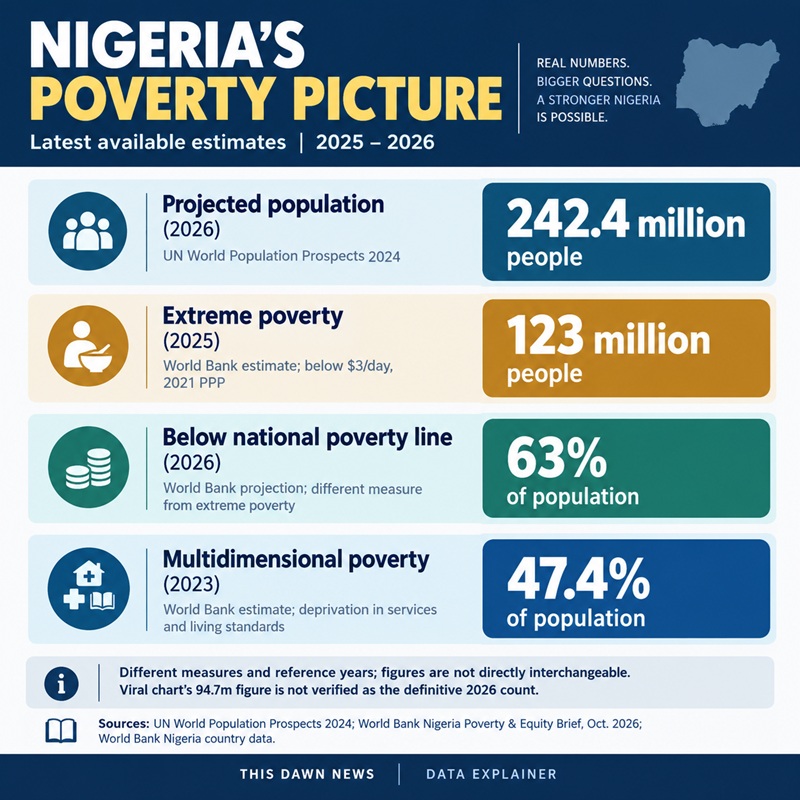
Nigeria is facing a severe poverty challenge, with the World Bank estimating that approximately 123 million Nigerians were living in extreme poverty in 2025.
This represents 50.8 per cent of the population, according to the bank’s current country overview.
At the same time, Nigeria’s population is projected to reach approximately 242.43 million by mid-2026, making the country Africa’s most populous nation.
However, the reported 94.7 million figure and the World Bank’s more recent estimate of 123 million must be treated carefully.
Differences in poverty thresholds, purchasing-power-parity calculations, data revisions and reference years can produce substantially different estimates.

The central question remains: are Nigeria’s economic reforms translating into meaningful improvements in the living conditions of ordinary citizens?
Nigeria’s Population in 2026: Approximately 242.4 Million
Nigeria’s population is projected to reach 242,431,832 by July 1, 2026, according to estimates based on the United Nations’ World Population Prospects 2024.
This is a demographic projection, not the result of a new national census.
The country’s rapidly growing population creates additional pressure on employment, housing, healthcare, education, electricity, transport and food supply.
It also complicates efforts to reduce poverty.
Even when the proportion of people living in poverty declines, the absolute number of poor people can remain high if population growth offsets the improvement.

For this reason, the poverty rate and the total number of people affected should be examined together.
These figures measure different aspects of poverty.
They must not be added together or presented as though they describe identical populations under the same methodology.
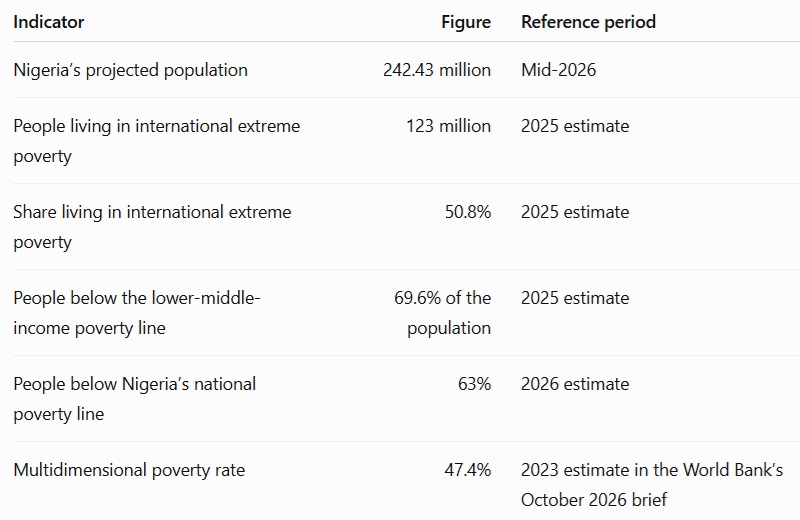
Nigeria’s Poverty Figures at a Glance
How Many Nigerians Are Living in Extreme Poverty?
The World Bank’s current Nigeria country overview estimates that 123 million people, representing 50.8 per cent of the population, were living below the international extreme-poverty line in 2025.
The bank also estimates that 69.6 per cent of Nigerians lived below the lower-middle-income poverty line of US$4.20 per person per day, measured in 2021 purchasing-power-parity dollars.

These are not two separate groups that can be added together.
The lower-middle-income poverty threshold is higher and includes people who are above the extreme-poverty threshold.
The international extreme-poverty line was revised in June 2025 from US$2.15 per person per day, expressed in 2017 purchasing-power-parity dollars, to US$3.00 per day in 2021 purchasing-power-parity dollars.
The revision reflected updated international price comparisons and changes in the national poverty lines used to establish the global benchmark.
Consequently, the increase in a reported poverty headcount between different World Bank data releases does not necessarily mean that the same number of additional people fell into poverty during that period.
Some changes result from revised measurement methods.
Nevertheless, the current estimate of 123 million people living in extreme poverty demonstrates the scale of Nigeria’s challenge.
Important qualification: The 123 million estimate refers to 2025, not a directly observed headcount for October 2026. It should not be labelled as a verified 2026 count.
World Bank’s October 2026 Poverty Assessment
The World Bank’s Nigeria Poverty and Equity Brief, October 2026, published on October 8, reports that the proportion of Nigerians living below the national poverty line rose from 40.1 per cent in 2019 to 56.2 per cent in 2023, reaching an estimated 63 per cent in 2026.
The brief also reports that multidimensional poverty increased from 43.5 per cent in 2019 to 47.4 per cent in 2023.
These findings suggest that the poverty challenge extends beyond household income and expenditure.
Access to essential infrastructure and public services also remains a major concern.
The national poverty line and the international extreme-poverty line are different measures.
The 63 per cent national poverty estimate must therefore not be interpreted as meaning that 63 per cent of Nigerians are necessarily living below the international US$3-a-day threshold.
Likewise, the 47.4 per cent multidimensional poverty figure refers to 2023 and should not be described as a 2026 multidimensional poverty estimate.
The distinctions are essential for responsible reporting. 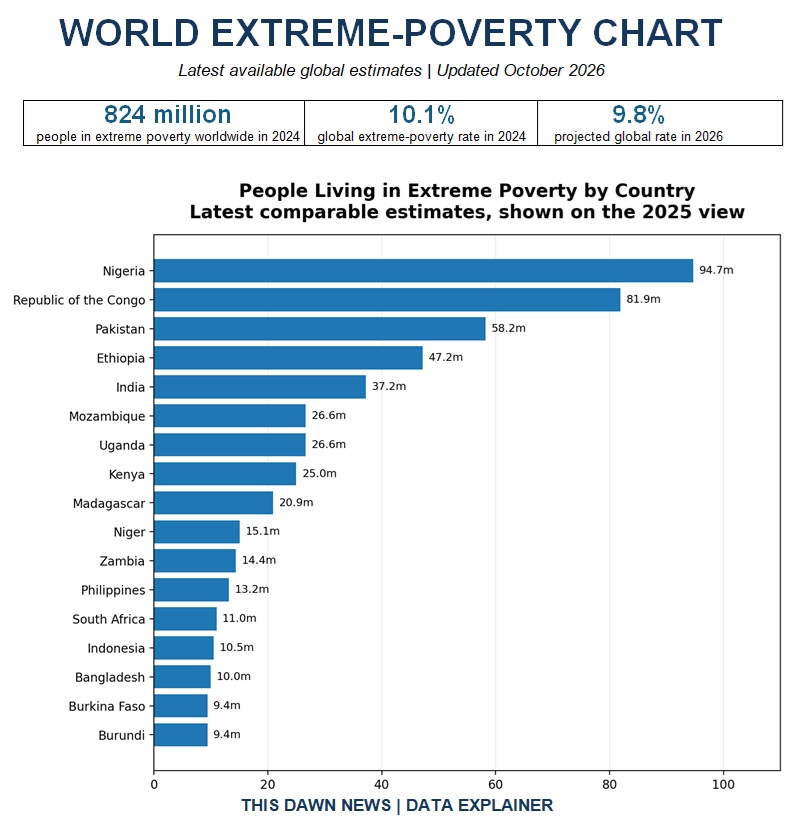
What the chart shows: Nigeria has the largest country-level headcount in this ranking, at about 94.7 million people, followed by the Democratic Republic of the Congo (81.9 million) and Pakistan (58.2 million).
India’s updated estimate is about 37.2 million in this data release—substantially lower than the older figure shown in some circulating graphics.
Odinkalu’s Criticism of Tinubu’s Economic Reforms
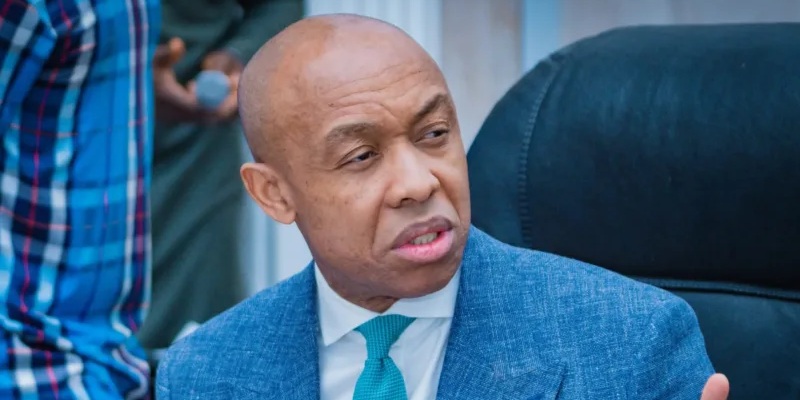
The figures provide important context for a viral post by legal scholar Chidi Anselm Odinkalu.
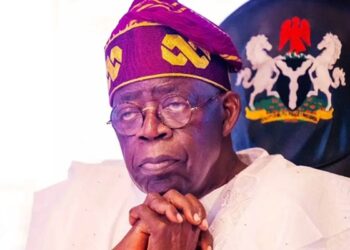
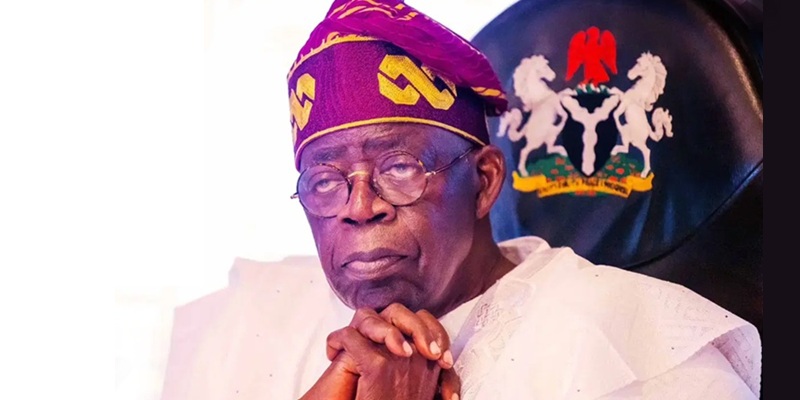
Odinkalu criticised President Bola Ahmed Tinubu’s economic reforms by highlighting Nigeria’s position in a global ranking of people living in extreme poverty.
Odinkalu’s post, shared on X, features an animated chart reportedly showing Nigeria with approximately 94.7 million people in extreme poverty by 2026.
His sarcastic description of the ranking as the “league table that truly matters” draws attention to the human consequences of economic policies introduced since Tinubu assumed office in May 2023.
In his post, Odinkalu uses Nigeria’s reported position in the global extreme-poverty ranking to challenge the government’s presentation of its economic reforms.
The criticism centres on the contrast between the administration’s claims about economic stabilisation and the persistent hardship experienced by households.
What Tinubu’s Reforms Means for Households, Businesses
Since taking office in 2023, President Tinubu’s administration has implemented major policy changes, including the removal of the petrol subsidy and foreign-exchange market reforms.
The government has argued that these measures are necessary to address fiscal pressures, improve market efficiency and establish a more sustainable economic framework.
However, the changes have also contributed to a difficult adjustment for households and businesses.
Higher transport and energy costs, food-price pressures and weak real income growth have placed substantial strain on household budgets.
The poverty figures raise an important question: how quickly can improvements in macroeconomic indicators translate into better living standards for ordinary Nigerians?
Odinkalu’s post is political commentary. It does not, by itself, establish that every change in Nigeria’s poverty level was caused by Tinubu’s policies.
Establishing causation requires a broader examination of economic data, household surveys and the effects of individual policy decisions.
Nevertheless, the scale of poverty provides a legitimate basis for questioning whether the benefits of reform are reaching the population quickly enough.
Economic Stabilisation Versus Household Welfare
The World Bank’s current country overview presents a mixed picture of Nigeria’s economy.
It reports that headline inflation declined from 27.4 per cent in March 2025 to 15.1 per cent in February 2026, before averaging 15.7 per cent between March and July 2026.
Food inflation reached 20.3 per cent in July 2026.
The bank also notes that Nigeria’s growth remains insufficient to generate enough productive jobs and materially reduce poverty.
A reduction in the inflation rate does not necessarily mean that prices are falling. It generally means prices are rising more slowly than before.
If food, transport, rent and electricity-related expenses have already risen sharply, slower inflation may not restore the purchasing power households previously lost.
For families with low or irregular incomes, the critical issues are whether earnings are growing faster than living costs, whether nutritious food is affordable and whether essential services are accessible.
This is why economic performance cannot be assessed solely through GDP growth, foreign-exchange stability or government revenue.
The ultimate test must include improvements in employment, real incomes, food security and access to basic services.
Why Nigeria’s Global Poverty Ranking Requires Careful Interpretation
The animated chart referenced by Odinkalu reportedly places Nigeria at approximately 94.7 million people living in extreme poverty by 2026.
The World Bank’s current country overview, however, estimates 123 million people in extreme poverty in 2025.
These numbers should not be directly compared without establishing whether they use the same poverty line, purchasing-power-parity base, population estimates, reference year and underlying dataset.
The World Bank’s 2025 poverty-line revision illustrates why this matters.
Under the revised US$3-a-day line, its estimate of the number of people living in global extreme poverty in 2022 rose from approximately 713 million to 838 million.
That increase reflected a methodological revision, rather than a sudden increase of 125 million people becoming poorer overnight.
The September 2025 update subsequently incorporated additional country data and revised projections, demonstrating that estimates can change as the evidence improves.
A defensible global ranking must compare countries using a consistent methodology and data vintage.
Without the original source and technical notes for the animated chart, its precise 2026 ranking cannot be independently confirmed from the reported figure alone.
Multidimensional Poverty: The Wider Crisis
Income-based poverty does not capture every form of deprivation.
Multidimensional poverty examines overlapping disadvantages, including inadequate education, poor sanitation, limited access to electricity, substandard housing and insufficient access to essential services.
Nigeria’s National Bureau of Statistics reported in its 2022 Multidimensional Poverty Index survey that approximately 133 million people were multidimensionally poor, representing about 63 per cent of the population covered by that survey.
The World Bank’s October 2026 brief reports a multidimensional poverty rate of 47.4 per cent for 2023, using its own reported measure.
These figures should not be treated as interchangeable. Different surveys, reference years and measurement frameworks can produce different results.
The reported claim that Nigeria added 17.9 million multidimensionally poor people between 2021 and 2024 also requires a specific, verifiable source and a consistent methodology before it can be presented as an established finding.
The broader point remains that poverty is not only about the amount of money a household earns. It also concerns whether people can obtain education, healthcare, clean water, electricity, adequate housing and other basic necessities.
What Should the Tinubu Administration Be Measured Against?
The debate should move beyond political claims and counterclaims to measurable outcomes.
Five indicators deserve particular attention:
1. Real household purchasing power: Are wages, pensions and informal-sector earnings keeping pace with the cost of essential goods and services?
2. Food affordability: Can low-income households afford sufficient and nutritious food without sacrificing healthcare, education or other necessities?
3. Productive employment: Is economic growth generating enough stable, adequately paid jobs for Nigeria’s expanding working-age population?
4. Access to essential services: Are electricity, healthcare, education, clean water and sanitation becoming more affordable and accessible?
5. Poverty reduction: Are the poverty rate and the absolute number of people affected declining under comparable, transparent statistical measures?
These indicators would provide a stronger basis for assessing the social impact of economic reforms than political messaging alone.
The government’s case for reform should be evaluated against actual household outcomes. Equally, criticism of the administration should distinguish between policy effects, inherited structural problems, external shocks and changes caused by statistical revisions.
Conclusion: The Real Test of Economic Reform
Nigeria’s poverty challenge remains enormous.
The country’s population is projected to reach approximately 242.4 million in mid-2026, while the World Bank estimates that about 123 million Nigerians were living in international extreme poverty in 2025.
Separately, the World Bank’s October 2026 poverty brief estimates that 63 per cent of Nigerians were below the national poverty line in 2026.
These figures describe different poverty measures and reference periods, but together they underline the urgent need for policies that improve living standards.
Chidi Anselm Odinkalu’s criticism has brought renewed attention to the question of whether Nigeria’s economic reforms are delivering sufficient benefits to ordinary people.
The viral chart’s reported figure of 94.7 million should not be presented as the definitive current estimate without verifying its source and methodology. The World Bank’s more recent published estimate provides a stronger headline figure for international extreme poverty, with the important qualification that it refers to 2025.
Ultimately, economic reform must be judged not only by improved fiscal balances, exchange-rate conditions or inflation statistics, but also by whether Nigerians can afford food, secure decent employment, educate their children and access essential services.
For millions of households, the most important economic indicator is whether life is becoming more affordable and secure.
That is the poverty league table against which Nigeria’s leaders should be held accountable.
Editorial note
This report was prepared using publicly available material available as of October 16, 2026.
Population figures are projections, and poverty estimates are tied to their stated reference years and methodologies.
The reported 94.7 million figure in the referenced social-media chart has not been independently verified against its original underlying data