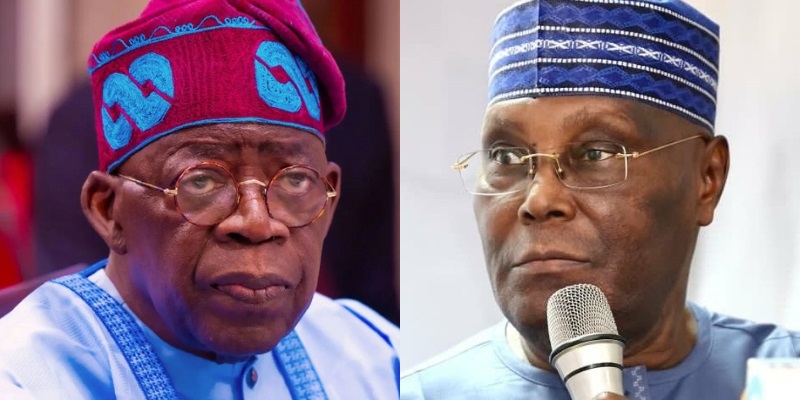

ABUJA, Nigeria — Paul Ibe, media adviser to former Vice President Atiku Abubakar, has challenged the Federal Government’s explanation of Nigeria’s debt-servicing figures, questioning why interest payments reportedly exceeded federal revenue by ₦1.5 trillion in the first half of 2026.
Ibe’s comments followed a statement by the Federal Ministry of Finance dated October 18, 2026.
The statement disputed interpretations of figures indicating that federal interest payments reached 124 per cent of revenue between January and June 2026.
According to the figures cited by the ministry, the Federal Government recorded ₦6.2 trillion in revenue during the period, against ₦7.7 trillion in interest payments.

The figures imply a difference of ₦1.5 trillion, with interest payments exceeding reported revenue by approximately 24 per cent.

In a public response, Ibe argued that technical explanations of the figures did not adequately address concerns about the benefits Nigerians were receiving from government borrowing.
“The Tinubu-led APC government can dress up the figures in technical explanations, but it cannot explain away the fundamental concern,” Ibe said.
He questioned what the borrowings had delivered in terms of infrastructure development, employment creation and improvements in living standards.
Finance Ministry Disputes Interpretation of Debt Figures
In its statement titled Setting the Record Straight: Interest Payments and Revenue in H1 2026, the Federal Ministry of Finance described the 124 per cent interest-to-revenue ratio as misleading, countering the permutations of Atiku Abubakar’s aide.
It argued that the calculation compared figures that did not cover the same fiscal responsibilities.
The ministry offered three principal explanations.

First, it said the interest-payment figure included debt serviced by the Federal Government on behalf of other tiers of government, including external loans to state governments.
Comparing those obligations with federal revenue alone, it argued, overstated the ratio.
Second, the ministry maintained that the reported revenue figure was incomplete.
This is because it excluded independent revenue earned by government agencies and enterprises but not yet remitted to the Treasury.
It also pointed to seasonal variations in revenue collection.
It explained that certain tax payments are typically received in greater amounts during the second half of the year.

Third, the ministry argued that debt sustainability should be assessed using full-year figures rather than a six-month snapshot.
Citing the World Bank’s October 2026 Nigeria Development Update, the ministry said the report projected Nigeria’s full-year 2026 debt-service-to-revenue ratio at 46 per cent.
The measure covers both interest payments and principal repayments, unlike the 124 per cent figure, which relates to interest payments alone.
The ministry also cited the full-year 2025 debt-service-to-revenue ratio.
It noted that it was below 60 per cent, compared with 97 per cent before the current administration’s reforms.
Government Points to Revenue Growth
The Finance Ministry further argued that the trend in revenue and interest payments showed an improvement in the government’s fiscal position.
According to its statement, federal revenue increased from ₦3.6 trillion in the first half of 2025 to ₦6.2 trillion in the corresponding period of 2026, representing growth of approximately 72 per cent.
Interest payments, meanwhile, rose from ₦5.6 trillion to ₦7.7 trillion, an increase of approximately 38 per cent.
Challenging Atiku Abubakar’s aide, the ministry said revenue was therefore growing faster than interest costs.
Meanwhile, the interest-to-revenue ratio declined from 156 per cent in the first half of 2025 to 124 per cent in the first half of 2026.
It added that the gap between interest payments and reported revenue narrowed from ₦2 trillion to ₦1.5 trillion over the same period.
The government attributed the changes to its economic reforms, describing the figures as evidence of progress rather than an indication of fiscal distress.
Atiku Abubakar Questions Capital Spending Priorities
Atiku Abubakar’s aide, Paul Ibe, however, drew attention to capital expenditure.
He argued that the amount spent on development projects was disproportionately low compared with the cost of servicing debt.
Citing the World Bank, he said capital expenditure fell to approximately ₦700 billion in the first half of 2026.
That amount is roughly one-eleventh of the ₦7.7 trillion reportedly spent on interest payments during the same period.
The comparison, Ibe argued, deserved greater public scrutiny than the ministry’s technical defence of the interest-to-revenue ratio.
He maintained that the government needed to demonstrate the practical outcomes of its borrowing programme.
He regretted that the government rather relies primarily on projected improvements and explanations of fiscal calculations.
“A projected improvement is not an achieved improvement. And legislative approval of borrowing is not proof of fiscal prudence,” he said.
Ibe also called for greater transparency in the management of public finances.
he insisted that Nigerians should be able to assess whether borrowing was translating into measurable development outcomes.
Atiku Calls for Publication of Reconciled Accounts
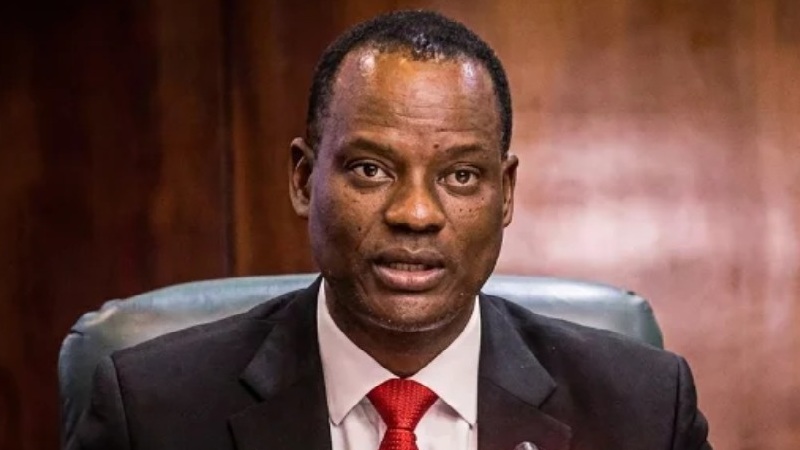
The Atiku aide urged the Federal Government to publish a fully reconciled account showing its revenue collections, interest obligations and capital expenditure.
According to him, such disclosure would enable the public to assess the relationship between government borrowing, debt-servicing costs and spending on public infrastructure and services.
The Finance Ministry, for its part, said all federal borrowing was conducted within limits approved by the National Assembly under the 2026 Appropriation Act and the approved borrowing plan.
It also stated that the government’s borrowing activities complied with the Fiscal Responsibility Act 2007 and the Debt Management Office (Establishment) Act 2003.
It added that borrowing information was regularly published by the Debt Management Office.
The ministry said it welcomed scrutiny of public finances.
it urged analysts and commentators to compare figures covering equivalent levels of government and to consider the context in which the data was compiled.
The Central Issue
The disagreement highlights two distinct questions in assessing Nigeria’s public finances.
The first is methodological: whether the reported interest-to-revenue ratio accurately compares the Federal Government’s interest obligations with the appropriate revenue base.
The second concerns public spending priorities: how much government revenue is available for capital projects and essential services after debt obligations are met.
It also concerns what measurable benefits Nigerians receive from borrowing.
The ministry argues that the half-year ratio does not provide a complete picture of debt sustainability.
However, Ibe insists that the scale of interest payments relative to reported revenue and capital expenditure warrants greater accountability.
A reconciled set of fiscal accounts, clearly distinguishing federal obligations from debts serviced on behalf of other governments and identifying outstanding revenue remittances, would help clarify the competing claims.