





TD The Central Bank of Nigeria (CBN) has revealed that it received authorisation from the Office of the Accountant-General of the Federation (OAGF) to open two domiciliary accounts for the controversial Presidential Foreign Investment Promotion Council (PFIPC).
CBN Director Hamisu Abdullahi made the disclosure while appearing before the House of Representatives ad hoc committee investigating the council’s legal basis and budgetary inclusion.
Abdullahi disclosed that the accounts—a U.S. dollar account and a Pound Sterling account—were opened on July 30, 2025.
He noted, however, that the accounts have remained inactive with zero balances due to the absence of authorised signatories.
Abdullahi explained that the apex bank only acts on mandates from the OAGF when opening accounts for Ministries, Departments and Agencies (MDAs).
He stressed that no financial activities—foreign exchange allocations, remittances, inflows or outflows—have been linked to the accounts since inception.

Contradictions and Allegations
The revelation comes amid conflicting claims between the OAGF and the Presidency.
The OAGF, on one hand, insists that the disputed council has no account with the CBN.
On the other hand, the Presidency maintains that PFIPC’s purported Director-General, Prince Adeniyi Adeyemi, used fake documents to mislead officials into opening the accounts.

Adeyemi had reportedly secured approvals for over 300 staff and office space at the Federal Secretariat.
He had accused Chief of Staff to the President, Femi Gbajabiamila, of demanding 48 percent of the council’s ₦27.3 billion take-off grant.
He further claimed to have paid ₦400 million through an intermediary to secure his appointment.

Gbajabiamila has denied the allegations and has filed a ₦15 billion defamation suit against Adeyemi.
He was questioned by the Independent Corrupt Practices and Other Related Offences Commission (ICPC) as part of a presidential directive to probe the matter within 30 days.
Budgetary Concerns and Civil Service Position
Lawmakers are particularly alarmed that ₦1.3 billion was allocated to the PFIPC in the approved 2026 budget despite uncertainty over its legal foundation.
Speaker Abbas Tajudeen, while inaugurating the ad hoc committee, stressed that the investigation aims to establish facts rather than validate speculation.
He underscored the House’s commitment to transparency and accountability.
The Speaker noted that Nigerians deserve clarity on how a “phantom” agency found its way into the federal budget.

Head of the Civil Service of the Federation, Mrs. Didi Esther Walson-Jack, told the committee that her office has no constitutional responsibility for establishing government agencies.
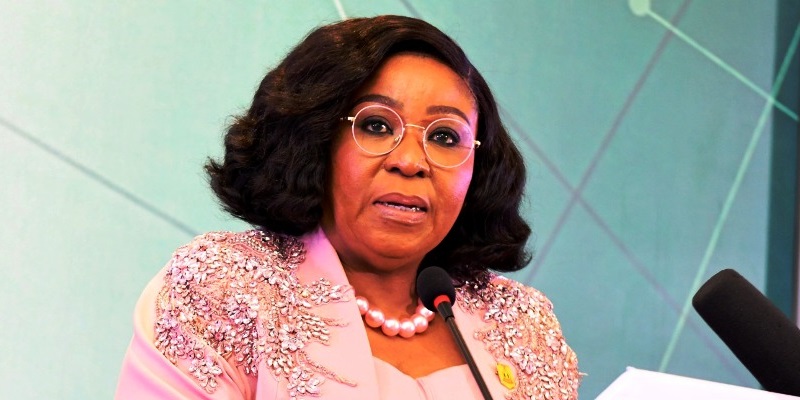
She explained that while the office approves administrative structures, the creation of agencies lies outside its mandate.
She revealed that PFIPC’s request for organisational approval in August 2025 was denied due to incomplete documentation.
However, manpower approvals for 314 positions were later granted during the annual budget defence exercise.
However, she admitted that irregularities were later discovered in PFIPC’s enabling documents, which lacked requisite legal features.
She denied deploying civil servants to the council or allocating office space at the Federal Secretariat, countering reports that linked her office to such actions.
House Committee Mandate
The committee, chaired by Rep. Yusuf Adamu Gagdi, has been tasked with determining the council’s legal basis, governance structure, funding sources, and relationship with statutory agencies.
It will also investigate how PFIPC was included in the federal budget and whether due process was followed.

Key government officials—including ministers of finance, budget, justice, and trade—alongside heads of agencies such as the CBN, EFCC, ICPC, DSS, and NIPC, have been summoned to testify.
Gagdi assured Nigerians that the investigation would be conducted with fairness and impartiality, guided by constitutional principles and natural justice.
He pledged that every individual and institution connected to the matter would be given a fair hearing.
Broader Context of Legislative Oversight
The PFIPC probe adds to a growing list of investigations by the 10th House of Representatives into alleged corruption and mismanagement across sectors.
Previous inquiries have examined issues ranging from the Anchor Borrowers Programme to cement price manipulation and job racketeering.
Critics, however, argue that many of these probes stall or yield little tangible action due to weak enforcement powers.
As the controversy surrounding PFIPC deepens, the House committee’s findings will be critical in determining whether the council was a legitimate government body or a fraudulent creation that infiltrated Nigeria’s budgetary framework.
For now, the CBN’s disclosure of inactive accounts authorised by the OAGF raises more questions than answers, underscoring the urgent need for transparency in public administration.