


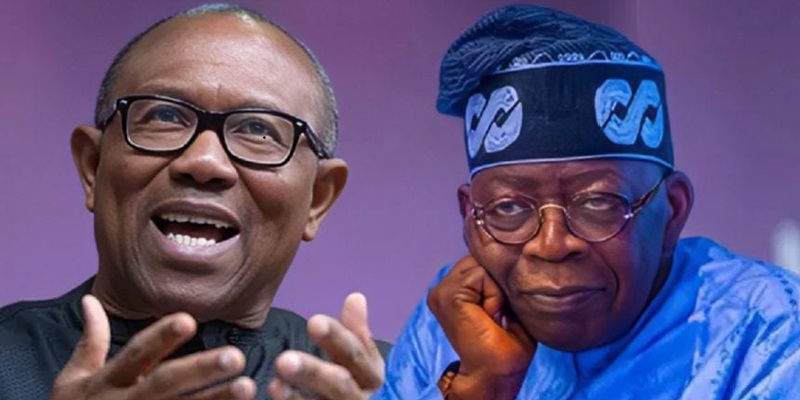

TD Former Labour Party presidential candidate Peter Obi has criticised President Bola Tinubu’s administration over its 30-day petrol discount initiative, describing the measure as a reactive policy that fails to address Nigeria’s worsening cost-of-living crisis.
Obi, in a statement reacting to the Federal Government’s announcement, argued that the temporary discount offered at Nigerian National Petroleum Company Limited (NNPC) retail stations was inadequate to ease the economic hardship Nigerians have experienced since the removal of petrol subsidy in May 2023.
He said he delayed his response to the October 1 announcement to allow time to assess the policy’s implementation and outcomes, but concluded that the initiative substituted “political optics” for sound economic policymaking.
Obi Faults Tinubu’s Economic Policy Sequence
The former Anambra State governor recalled that Tinubu announced the removal of petrol subsidy on May 29, 2023.
He argued that the decision was taken without adequate consultation or a comprehensive assessment of its potential impact on ordinary Nigerians.
He also criticised the subsequent foreign-exchange reforms, including the floating of the naira, and the government’s tax reforms, which he said were implemented in a poorly coordinated manner.

According to Obi, the combined effects of these policies have contributed to rising prices across sectors of the economy, putting additional pressure on households and businesses.
He listed increasing multidimensional poverty, rising costs of goods and services, unemployment, business closures, insecurity, widening inequality and the migration of young Nigerians among the challenges facing the country.
Obi further called for transparent governance, accountability and detailed regulatory impact assessments before major economic policies are introduced or implemented.
Questions the Impact of the 30-Day Discount
Obi questioned the economic benefits of a petrol discount lasting only one month, asking whether a reduction of less than five per cent in fuel costs could significantly address poverty, unemployment, insecurity and inequality.
He also questioned whether the initiative was intended to test public reactions to the possibility of restoring fuel subsidy or represented a political calculation ahead of the 2027 general election.
“These are questions that require clear answers,” he argued, maintaining that temporary price relief would not substitute for a comprehensive economic recovery strategy.

Says Fewer Than Four Per Cent of Petrol Stations Will Participate
Obi also challenged the limited reach of the initiative, citing the Federal Government’s indication that the discount would be available at approximately 900 NNPC retail stations.
Using his estimates of about 24,000 petrol stations nationwide, he argued that fewer than four per cent of outlets would participate in the programme.
He further cited Nigeria’s estimated population of 243 million, calculating that there would be approximately 243,000 people for every NNPC retail station if the outlets were evenly distributed across the country.
Obi noted, however, that petrol stations are not evenly distributed geographically, raising concerns about access to the discount for Nigerians living in areas with limited NNPC retail coverage.
He questioned the practical benefits of requiring large numbers of consumers to compete for a discount he put at about ₦66 per litre, particularly when the initiative is limited to participating outlets and gives priority to public transport operators.
Obi Advocates Subsidy Restoration and Broader Economic Relief
Beyond his criticism of the temporary discount, Obi reiterated his position that petrol subsidy should be restored, arguing that Nigeria could mobilise sufficient revenue and revenue potential under a productive economy supported by transparent and accountable governance.

He also advocated subsidies or targeted support in agriculture, healthcare, education and infrastructure, presenting them as part of a broader strategy to improve citizens’ welfare.
According to him, the country needs policies that sustainably reduce the cost of living through fair pricing mechanisms and honest administration, rather than short-term interventions.
Obi said he was preparing to provide a more detailed explanation of his position on subsidy and a policy roadmap for achieving fair, transparent and affordable petroleum product prices.
“Time for Real Change”
Concluding his statement, Obi described the October 1 announcement as political messaging rather than a comprehensive economic policy, arguing that Nigerians needed lasting solutions to the rising cost of living.
He called for a shift towards inclusive and sustainable economic growth policies that prioritise productivity, employment, affordability and improved living standards.
The Federal Government’s petrol discount initiative has therefore become a point of debate over whether temporary relief at selected filling stations can meaningfully address the broader consequences of fuel subsidy removal and other economic reforms.
Obi ended his statement with his familiar message: “A new Nigeria is POssible. Nigeria will be OK!”