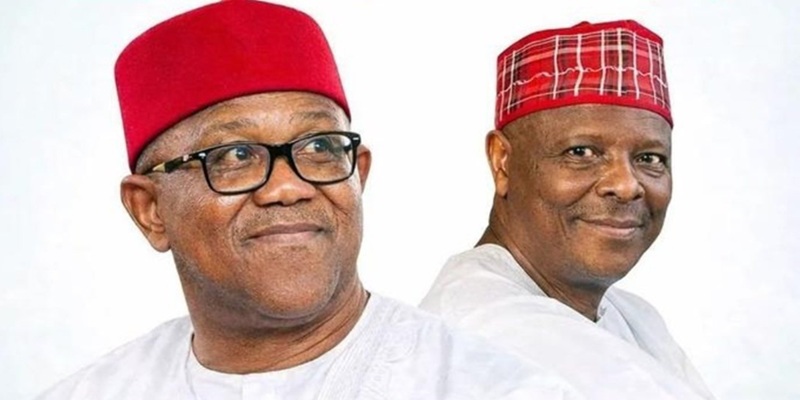
TDNigeria’s political landscape is set for another dramatic shift as former Kano State governor, Rabiu Musa Kwankwaso, and former Labour Party presidential candidate, Peter Obi, prepare to exit the African Democratic Congress (ADC) next week.
The move, confirmed by ADC chieftain Buba Galadima, is expected to culminate in their joint defection to the National Democratic Congress (NDC).
Both men will reportedly contest the 2027 presidential election on a combined ticket on the platform.
Kwankwaso’s Bloc Moves First
Kwankwaso joined the ADC only a few weeks ago after leaving the New Nigeria Peoples Party (NNPP).
He has already instructed his supporters to resign from the ADC ahead of the planned defection.
Sources within the Kwankwasiyya Movement revealed that representatives from all 44 local government areas in Kano met at Kwankwaso’s residence and unanimously endorsed his move to the NDC.

Although Kwankwaso has not formally resigned, insiders say discussions with NDC leaders are “about 90 percent complete.”
He is expected back in Abuja on Sunday to finalize arrangements, with the official announcement slated for Monday or Tuesday.
The Kwankwasiyya spokesperson explained the rationale behind the decision: “The ADC is engulfed in leadership crises and legal battles.
The Supreme Court recently sent the party’s leadership dispute back to the Federal High Court, creating more uncertainty. For serious contenders, this instability is untenable.”
Peter Obi’s Parallel Move
Peter Obi, who defected to the ADC earlier this year with a bloc of lawmakers, is also expected to announce his departure.
According to sources close to the coalition, Obi and Kwankwaso have been in advanced talks to run on a joint ticket under the NDC platform.

The move is seen as a strategic realignment ahead of the 2027 elections, combining Obi’s strong appeal in the South-East and South-South with Kwankwaso’s entrenched influence in Kano and the wider North.
Political analysts suggest that such a coalition could reshape Nigeria’s opposition politics and challenge the dominance of the ruling All Progressives Congress (APC).
Gawuna Set for ADC Defection
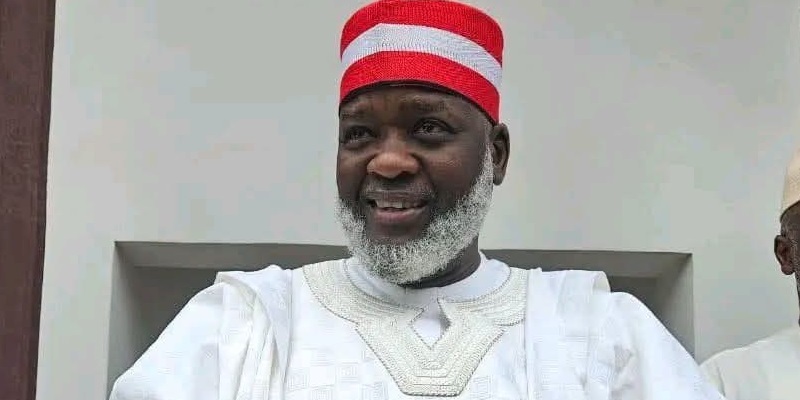
Meanwhile, sources from the camp of former Deputy Governor of Kano State, Dr. Nasiru Yusuf Gawuna, indicates that, barring any last-minute changes, he is expected to officially announce his defection from the ADC to the NDC soon.
Dr. Gawuna, it could be recalled, dumped the All Progressives Congress (APC) for the ADC few weeks ago.
He made the move shortly after Kwankwaso left NNPP for the ADC.
Lawmakers to Follow Suit
The defections are not limited to the two presidential hopefuls.

Lawmakers who followed Kwankwaso from the NNPP to the ADC are expected to resign en masse, alongside those who defected with Obi.
This coordinated exit will significantly weaken the ADC, which has struggled to consolidate its position amid internal disputes and court battles.
Meanwhile, last-minute efforts by some coalition leaders to halt the planned defections appear unlikely to succeed.
Kwankwaso’s bloc reportedly held a meeting with NDC leaders late Friday night to finalize discussions, signaling that the decision is already sealed.
Binani Joins NDC
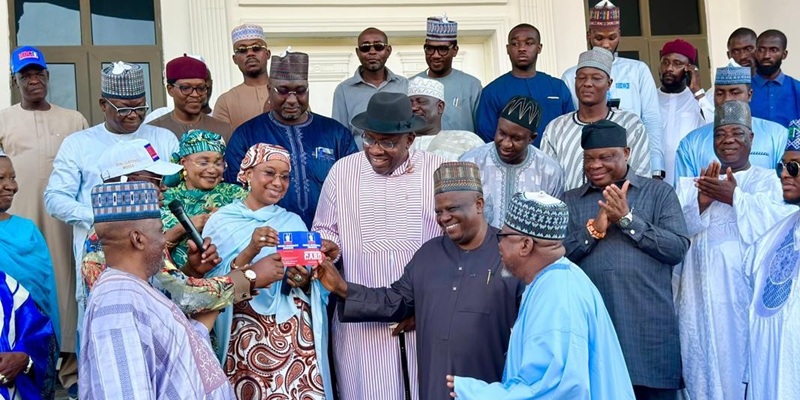
In a related development, Senator Aishatu Dahiru Ahmed, popularly known as Binani, has officially joined the NDC.
Widely regarded as one of the strongest politicians in Adamawa State, Binani’s defection is seen as a major boost for the party.
Analysts note that her grassroots support base could rival that of former Vice President Atiku Abubakar in the state, further strengthening the NDC’s position in the North-East.
Implications for 2027
The impending defections of Obi and Kwankwaso mark one of the most significant realignments ahead of the 2027 general elections.
Both men bring substantial political capital: Obi with his reformist appeal and youth-driven movement, and Kwankwaso with his established Kwankwasiyya network across Northern Nigeria.
Observers believe that the NDC, which has been relatively quiet on the national stage, could emerge as a formidable force if it successfully integrates these blocs.
The party’s ability to manage the influx of high-profile politicians and harmonize competing interests will be critical in determining its viability as a national contender.
ADC’s Future in Doubt
For the ADC, the defections represent a major setback.
Already weakened by internal leadership disputes and legal challenges, the party now faces the loss of its most prominent figures and their supporters.
Without Obi and Kwankwaso, the ADC risks fading into political irrelevance ahead of 2027.
Party insiders admit that the Supreme Court’s recent ruling, which returned its leadership dispute to the Federal High Court, has further complicated matters.
With uncertainty hanging over its structures, the ADC may struggle to retain serious aspirants or mount a credible campaign.
Conclusion
As Nigeria’s political chessboard continues to shift, the planned exit of Obi and Kwankwaso from the ADC to the NDC signals a new phase of opposition politics.
Their joint ticket, combined with the defection of influential figures like Binani, could reshape the balance of power ahead of 2027.
While the ADC grapples with internal crises, the NDC appears poised to capitalize on the moment, positioning itself as a rallying point for dissatisfied politicians and voters seeking an alternative to the ruling APC.
The coming week will be decisive, as formal announcements are expected to confirm what many already see as a sealed deal: the birth of an Obi-Kwankwaso alliance under the NDC banner.