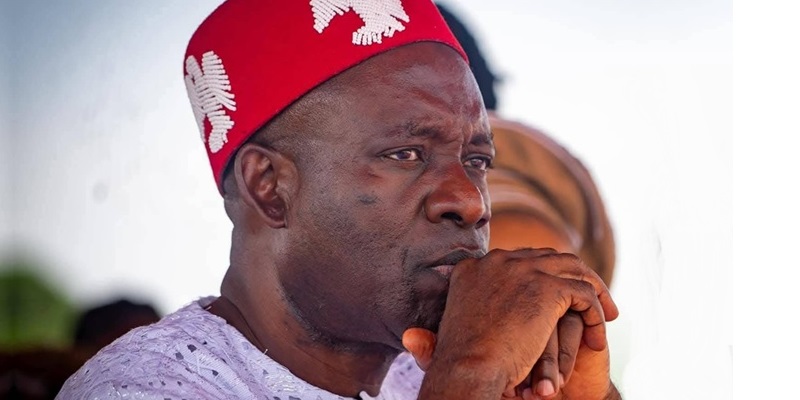
TDAnambra State Governor Charles Chukwuma Soludo has ignited a storm of controversy with remarks suggesting that the South East contributes only 7.9% to Nigeria’s Gross Domestic Product (GDP).

Governor Soludo also stated that the nation would remain largely unaffected if the region were to collapse under a “volcanic eruption.”
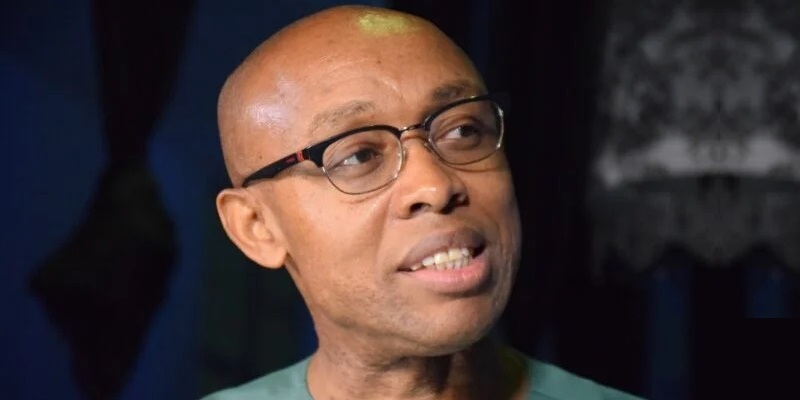
The comments were widely circulated after being highlighted by human rights lawyer and public intellectual, Chidi Anselm Odinkalu.
Odinkalu condemned the comments as dismissive, insensitive, and dangerously misleading.
He argued that Soludo’s framing reduces human lives and communities to mere numbers, stripping away dignity and humanity in the process.
According to Soludo’s reported claim, Lagos, the Niger Delta, and Abuja are the true economic engines of Nigeria, while the South East is expendable.

Odinkalu Wades In
Odinkalu counters that this narrative is not only statistically dubious but also morally bankrupt.
“If the South East accounts for about 15% of Nigeria’s population but allegedly produces only 8% of GDP, then by Soludo’s logic, the region must be home to the least productive human beings in Nigeria.
“That is clearly unsupportable,” Odinkalu stated.
He further noted that insecurity across Nigeria has not been addressed based on economic weight.
The North West, with nearly 29% of the population, remains plagued by banditry.
The South West, despite being an economic hub, faces routine kidnappings and attacks.
The Middle Belt continues to suffer violence, while the North East has endured insurgency for nearly two decades.
Even the Niger Delta’s relative calm, Odinkalu observed, is the product of pipeline security contracts handed to militants — a form of “sovereign capitulation” rather than effective governance.
Odinkalu’s critique underscores a broader point: Nigeria’s informal economy, which accounts for over 70% of productivity and employment, is not captured in GDP statistics.
To dismiss the South East’s relevance based on formal GDP numbers alone is misleading and dangerous.
“What Governor Soludo achieves through his argument is to promote or excuse irresponsibility as a directive principle of state policy,” Odinkalu warned.
Broader Constitutional Insight
The constitutional implications are equally damning.
Section 17(2)(c) of the 1999 Constitution requires that governmental actions be humane, while Section 17(2)(b) demands that they promote the dignity of all citizens.
By suggesting that an entire region is expendable, Soludo’s remarks appear to violate these principles.
Critics argue that such rhetoric deepens feelings of marginalization in the South East, a region already grappling with insecurity, economic stagnation, and political alienation.
Rather than fostering unity and constructive dialogue, Soludo’s words risk inflaming tensions and reinforcing perceptions of inequity.
Odinkalu stressed that he is not defending the controversial Monday sit‑at‑home protests in the South East.
Rather, he insisted that dismissing the region’s grievances as irrelevant is counterproductive.
“When people are complaining of inequity, it is not an effective or useful response to tell them they are useless and irrelevant, especially in a country that has demonstrated an incapacity and unwillingness to care,” he said.
Wider Perceptions
The backlash against Soludo’s remarks has sparked calls for a more nuanced debate about Nigeria’s economic realities.
Analysts emphasize that GDP figures alone cannot capture the complexities of regional contributions, particularly in a country where informal trade, remittances, and entrepreneurial activity play a massive role in sustaining livelihoods.
For many, Soludo’s comments represent a failure of leadership — a cold, technocratic dismissal of human suffering dressed up as economic analysis.
a nation struggling to hold itself together amid insecurity and economic hardship, such rhetoric is seen not as visionary but as corrosive.
As Odinkalu concluded, the issue is not politics, economics, or law alone.
It is about humanity.
And in that regard, Governor Soludo’s remarks have been judged harshly: not just inaccurate, but appalling.