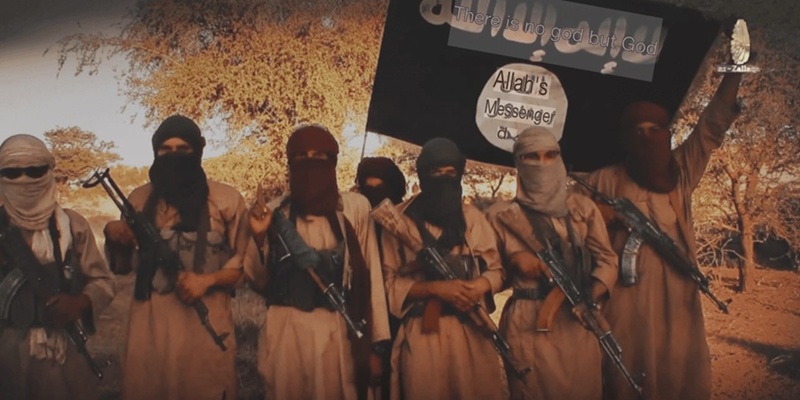
TDA joint U.S.-Nigerian military airstrike has eliminated more than 13 senior leaders of the Islamic State West Africa Province (ISWAP) in the Southern Tumbuns area of Lake Chad.

Fresh intelligence reports confirm that the recent joint Nigerian–U.S. airstrike killed notorious ISWAP commander Abu-Bilal al-Minuki’s three of his most trusted lieutenants — Abu Huraira, Ba Yuram, and Mallam Haruna.
The strike was described by military officials as part of a “festival of fire” sweeping across insurgent strongholds.
It marks one of the most significant blows against the extremist group in recent months.
The operation targeted ISWAP camps in the volatile Lake Chad basin.
Simultaneous strikes were reported in Sambisa Forest, the Timbuktu Triangle, and the Mandara Mountains.
These areas have long served as sanctuaries for insurgents, enabling them to launch attacks across Nigeria’s northeast and into neighboring countries.
Battle damage assessments and multiple intelligence sources established that the precision strike in the Lake Chad Islands west of Dogon Chukun wiped out his closest aides.
These men were not ordinary fighters; they collectively formed the operational, logistical, and security backbone of ISWAP, one of Africa’s most dangerous terror organizations.
Their deaths, taken together with al-Minuki’s elimination, represent not just the loss of individuals but the dismantling of ISWAP’s current command ecosystem.
A Continuation of Intensified Campaigns
The latest strike follows a May 16 announcement by President Donald Trump that U.S. and Nigerian forces had successfully killed Abu-Bilal al-Minuki.
Al-Minuki was identified as the Islamic State’s second-in-command worldwide.
Trump hailed that mission as “meticulously planned and very complex,” declaring it a major victory against global terrorism.
Al-Minuki, a Nigerian national, had been designated by the U.S. State Department in 2023 as a key figure in ISIS’s Sahel operations.
He was also listed by the Treasury Department as a specially designated global terrorist, subject to sanctions and financial restrictions.
His elimination was seen as a crippling setback for ISIS’s ability to coordinate operations across Africa.
ISWAP Under Heavy Pressure
The latest airstrike builds on that momentum, targeting ISWAP’s leadership cadre in the Lake Chad basin.
Military sources confirmed that at least 13 commanders were neutralized, though the full extent of casualties is still being assessed.
Analysts say the loss of so many leaders in quick succession could severely disrupt ISWAP’s chain of command and operational planning.
Despite these successes, experts caution that ISIS and its affiliates remain resilient due to their decentralized structure.
Even with the removal of senior figures, local cells often continue to operate independently, sustaining insurgent violence across Nigeria and the wider Sahel.
Regional and Global Implications
The joint U.S.-Nigerian operations underscore the growing military cooperation between Washington and Abuja.
Nigeria has struggled for over a decade to contain Boko Haram and ISWAP insurgencies in its northern regions, where thousands have been killed and millions displaced.
The involvement of U.S. forces, particularly in precision airstrikes, signals a renewed international commitment to stabilizing West Africa.
Trump, in his Truth Social post, emphasized that the elimination of al-Minuki and subsequent strikes represent a major blow to ISIS’s global network.
“He will no longer terrorize the people of Africa or help plan operations to target Americans.
“With his removal, ISIS’s global operation is greatly diminished,” Trump wrote.
Persistent Threats
Still, the fight is far from over. In recent months, ISIS-linked groups have carried out attacks in Nigeria, Burkina Faso, Mali, and Niger.
These include assaults on military bases, kidnappings, and clashes with rival Islamist factions.
The International Crisis Group has warned that extremist violence in the Sahel remains a destabilizing force, threatening regional security and humanitarian stability.
For communities in Borno and Yobe states, the strikes offer a glimmer of hope that the tide may finally be turning against insurgents who have terrorized them for years.
Yet the humanitarian toll remains staggering, with displaced families struggling to rebuild amid ongoing insecurity.
Conclusion
The elimination of over 13 ISWAP leaders in Lake Chad represents a decisive moment in the fight against terrorism in West Africa.
Coupled with the earlier killing of Abu-Bilal al-Minuki, the operations highlight the effectiveness of joint U.S.-Nigerian military collaboration.
It also highlights the enduring challenges of dismantling extremist networks.
The “festival of fire” continues across insurgent strongholds in northern Nigerian.
The world watches closely to see whether these strikes will translate into lasting peace or merely mark another chapter in Nigeria’s long battle against terror.