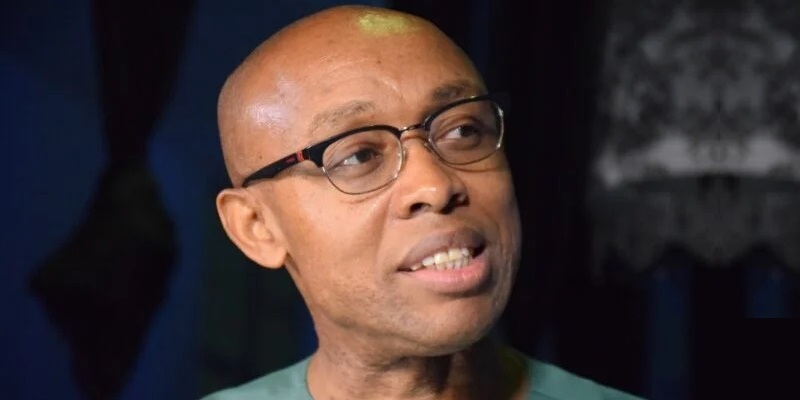
TDFresh controversy has erupted over the Federal High Court’s ruling in the legal dispute surrounding the registration and logo of the Nigeria Democratic Congress (NDC), following a blistering critique by constitutional lawyer and public affairs commentator, Prof. Chidi Odinkalu.
In a detailed legal assessment after reviewing the court’s 18-page ruling delivered by Justice Isa H. Dashen on June 26, 2026, Odinkalu argued that the judgment raises fundamental procedural questions capable of undermining confidence in the judicial process.
According to Odinkalu, the application before the Lokoja Division of the Federal High Court contained two distinct prayers.
The first sought an extension of time within which the applicant, Barrister Emmanuel Uzowuru, described in the proceedings as the Protem National Legal Adviser of the Peace Movement Party (PMP), could apply to set aside an earlier judgment delivered on December 10, 2025.
The second prayer sought an order setting aside that judgment.
Ordinarily, he argued, the second application depended entirely on the court first granting the request for an extension of time.

However, after examining the certified true copy of the ruling, Odinkalu contended that Justice Dashen proceeded directly to grant the substantive application setting aside the December 10 judgment.
However, the court failed to first determine whether the applicant was entitled to the extension of time required to bring that application in the first place.
The omission, he suggested, represents a significant procedural defect with potentially serious legal consequences.
The certified ruling indicates that the applicant specifically prayed the court for “an order… extending the time within which the Party Affected/Applicant may apply to set aside the judgment” before requesting that the judgment itself be vacated.
The court eventually granted the application and set aside the earlier judgment.

Odinkalu maintained that the ruling failed to expressly determine the threshold issue upon which the substantive relief depended.

“The application before the court asked for two orders,” Odinkalu explained.
“The first was an order for an extension of time within which the applicants could apply to set aside the judgment of 10 December 2025.
“The second was an order setting aside the judgment.
“The second prayer was contingent on the first being granted,” he explained.
He continued by pointing to what he described as a glaring omission in the court’s reasoning.
“In the event, the judge proceeded to consider and quickly grant the second prayer without at all considering the first.

“In other words, the court did not consider the question whether or not to extend the time within which the applicants could apply for the order that he issued with such alacrity and perfunctoriness,” he noted.
The legal scholar questioned the procedural basis upon which the court exercised jurisdiction to entertain the substantive application without first resolving whether the applicant had permission to bring it outside the prescribed time.
“I am wondering, without considering that underlying first application for extension of time, to whom did the court grant the order on the second prayer?” Odinkalu questioned.
His criticism suggests that the omission goes beyond a mere drafting oversight and touches on the fundamental principles governing judicial procedure.
This is particularly so where applications filed outside statutory timelines require leave of court before they can be entertained.
The ruling itself states that the court found the applicant had established exceptional circumstances warranting the exercise of its inherent jurisdiction.
Justice Dashen further held that the December 10, 2025 judgment had been entered without the participation of a necessary party whose legal interests were directly affected, thereby amounting to a denial of the constitutional right to fair hearing.
On that basis, the court concluded that the earlier judgment was liable to be set aside ex debito justitiae—as a matter of justice—to preserve the integrity of the judicial process.
Justice Dashen consequently granted the application, vacated the December judgment, ordered the suit to revert to the stage immediately preceding the earlier judgment, and directed that all parties be allowed to participate fully in determining the substantive dispute.
Despite those findings, Odinkalu insists that the procedural pathway adopted by the court remains deeply problematic because the applicant’s request for an extension of time—the legal gateway through which the substantive application was brought—appears not to have received independent judicial determination before the court proceeded to grant the principal relief sought.
In a remark laced with sarcasm, the former chairman of Nigeria’s National Human Rights Commission also took a swipe at the presiding judge’s surname.
“I am struck that the first four letters of the name of the presiding judge spell ‘dash.’
“Was the name of the presiding judge a predictor of what transpired?” he quipped, suggesting that the ruling was delivered with undue haste.
The controversy has added another layer to the already contentious litigation surrounding the registration and logo of the Nigeria Democratic Congress.
Legal observers are expected to scrutinize whether the alleged procedural omission could become a fresh subject of appellate review.
As debate intensifies, the case is likely to remain under close public and legal scrutiny, not only for its political implications but also for the questions it raises about adherence to established judicial procedure and the administration of justice.